
Ethiopia says the dam is their last best hope to banish poverty. I was planning to call bullshit. If that’s not a great story, what is?
It was an excellent lead, and I fucked it up.
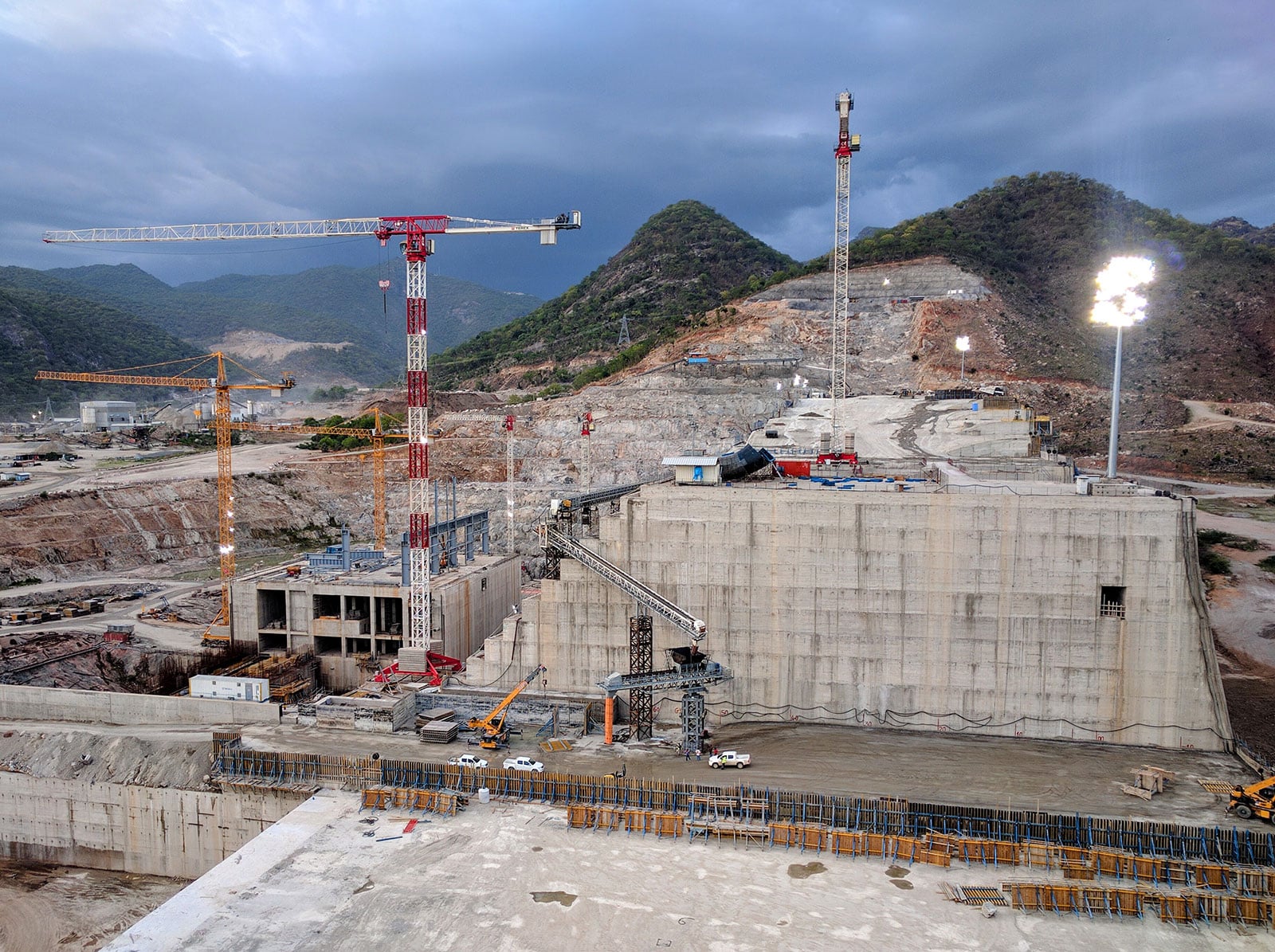
A few years ago, I went to Ethiopia to see a dam, and right away, I was refused permission to see it. And yet, I was seeing it everywhere. You couldn’t watch TV without seeing it. You couldn’t walk five blocks without seeing it on a billboard, or on government propaganda posters in advance of Ginbot, Ethiopia’s national holiday. I couldn’t read any of these items—I have zero Amharic—but their gist was clear: check out our monster dam! The modestly named Grand Ethiopian Renaissance Dam was being built on the Blue Nile, in Ethiopia’s northwest, just 15 miles from the Sudanese border. It’s crazy remote, but every Ethiopian knew the dam’s name. Completed, it will be Africa’s largest dam, expected to produce 6,000 megawatts of power. That’s roughly three Hoover Dams. That’s enough to power six million power-guzzling American McMansions. That’s more than double the electrical consumption of the entire Ethiopian nation. International Rivers says the dam is a tragedy. Sudan says it threatens their existence by giving Ethiopia control of the Nile. The Egyptians have threatened to bomb it. Ethiopia says the dam is their last best hope to banish poverty. I was planning to call bullshit. If that’s not a great story, what is?
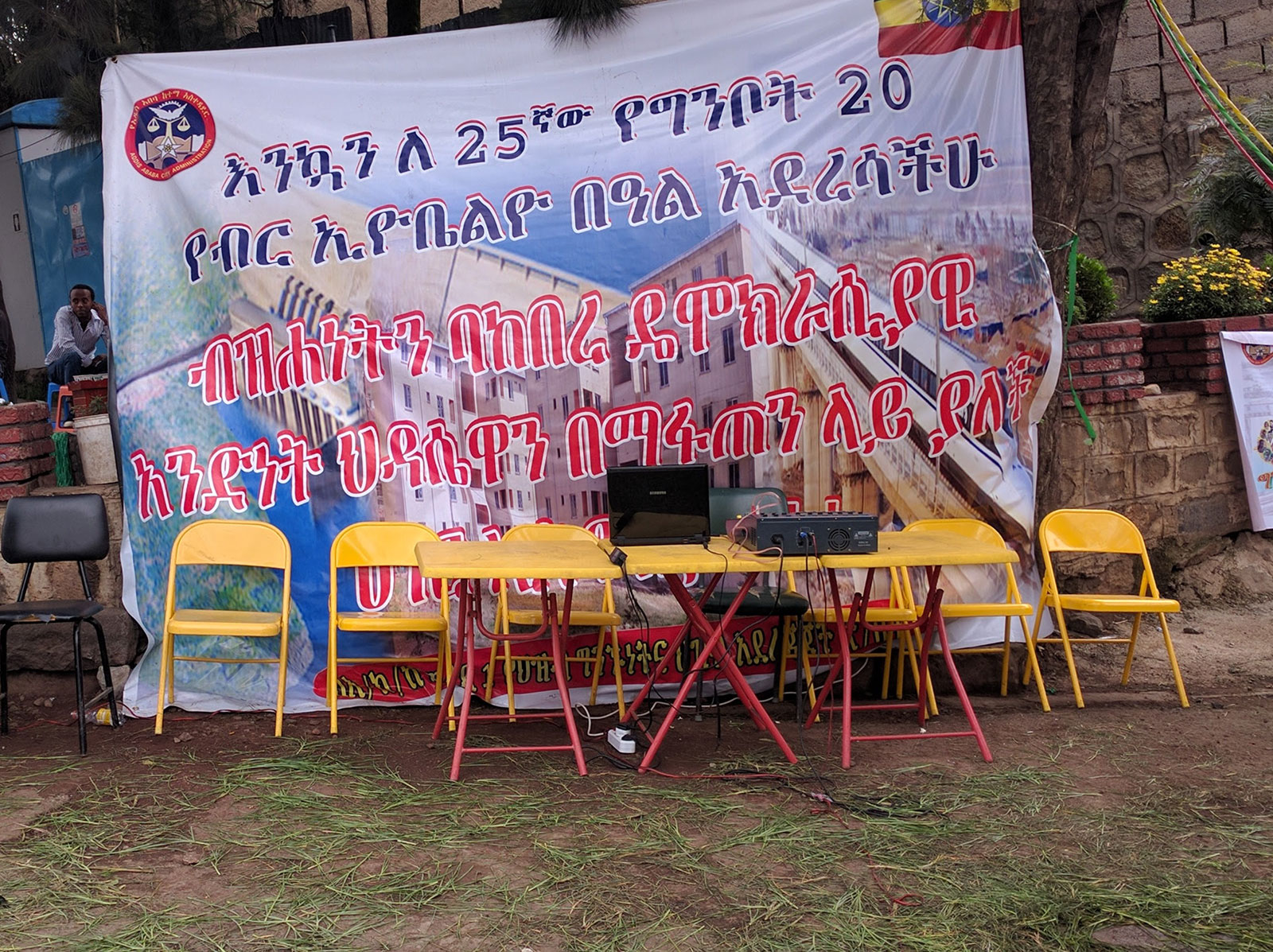
Photo by Ginger Strand.
Now, one day in, I was sitting on the floor of my hotel room in Addis Ababa, as the WiFi cycled in and out, writing furious emails. I was writing to my source, Dick, who was unaccountably not in Addis but in Rome. I was writing to the deputy corporate communications director, Angela, who was unaccountably not in Addis but in London. Angela had emailed me to say that the Ethiopians were refusing to let me see the dam.
When I envision the scene now, I hear a crackle, the sound of my story splintering around me, as flimsy as the bamboo scaffolding everywhere in Addis, a city Chinese construction firms were apparently rebuilding from scratch. I was failing and I knew it. I just didn’t know exactly how. I thought my problem was denied access. It’s tempting for writers to think stories depend on access. Land a good lead, get in first, write. But sometimes a good lead is a trap. I should have realized that the moment I saw Asrat.
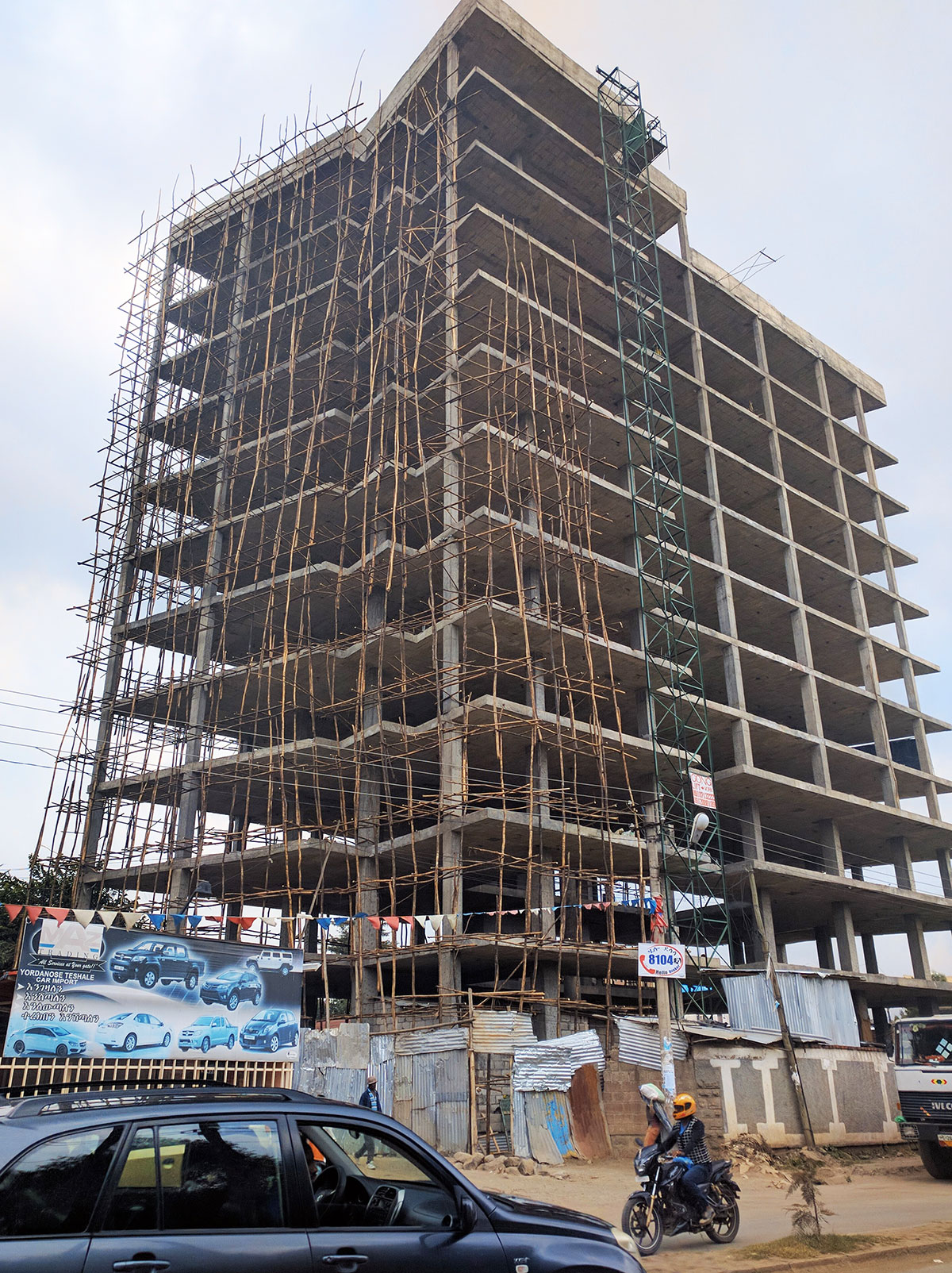
Photo by Ginger Strand.
Seychelles is an archipelago in the Indian Ocean, a honeymooner’s paradise replete with giant tortoises, pristine beaches, and sexy coconuts that look like butts. The country had just refinanced their crippling national debt in exchange for a variety of ocean preservation initiatives: just the sort of wonky thing I like writing about. The assigned photographer, Jason, liked the idea of the dam, and had offered to tag along to Ethiopia and take photos, once we were done reporting in Seychelles. Puzzle pieces seemingly fell into place.
We arrived in Ethiopia at midnight and immediately things started going wrong.
“Jason! Ginger!”
In a maneuver that would get one tazed at JFK, a beaming Ethiopian man had parted the wall-like divider between the secure area and the airport’s main entrance. He was calling out sotto voce.
“Jason! Ginger! I’m Asrat, I’m here to help you!” The security guards studiously ignored him.
“I’m with Salini! I’ll meet you outside, okay?”
He was the Salini fixer. He started fixing right away, fixing us through the gauntlet of drivers outside the airport and into his waiting car, then fixing us straight to our hotel, where he gave the place a once-over, chatted up the night clerk, and declared it adequate. Then he offered his continued services. Could he fix us up with some breakfast? Dinner? We didn’t quite know what to do with Asrat. He wasn’t part of the plan. Seeing Dick was the plan. Seeing the dam was the plan. Asrat just seemed like the death knell for any semblance of journalistic integrity.
Of course I was failing at that already, in planning to take Salini’s private flight to the dam site. I had no other choice than take Salini’s help, no matter how much they hoped to co-opt me. There was no other way to get there. No flights, no trains, no roads even, just a small private airstrip Salini had built themselves inside the future reservoir. I’m not a real journalist, I reasoned. But then even that access was withdrawn.
The Grand Ethiopian Renaissance Dam—let’s call it Grander Dam—is just the most grandiose component of Ethiopia’s dam-building program. A batch of memos by global intelligence firm Stratfor released by Wikileaks revealed the Egyptian plan to bomb the Grander Dam. Stratfor outlined the scope of the dam program. The subject line was: “Ethiopia be dammin’ it up, yo.”
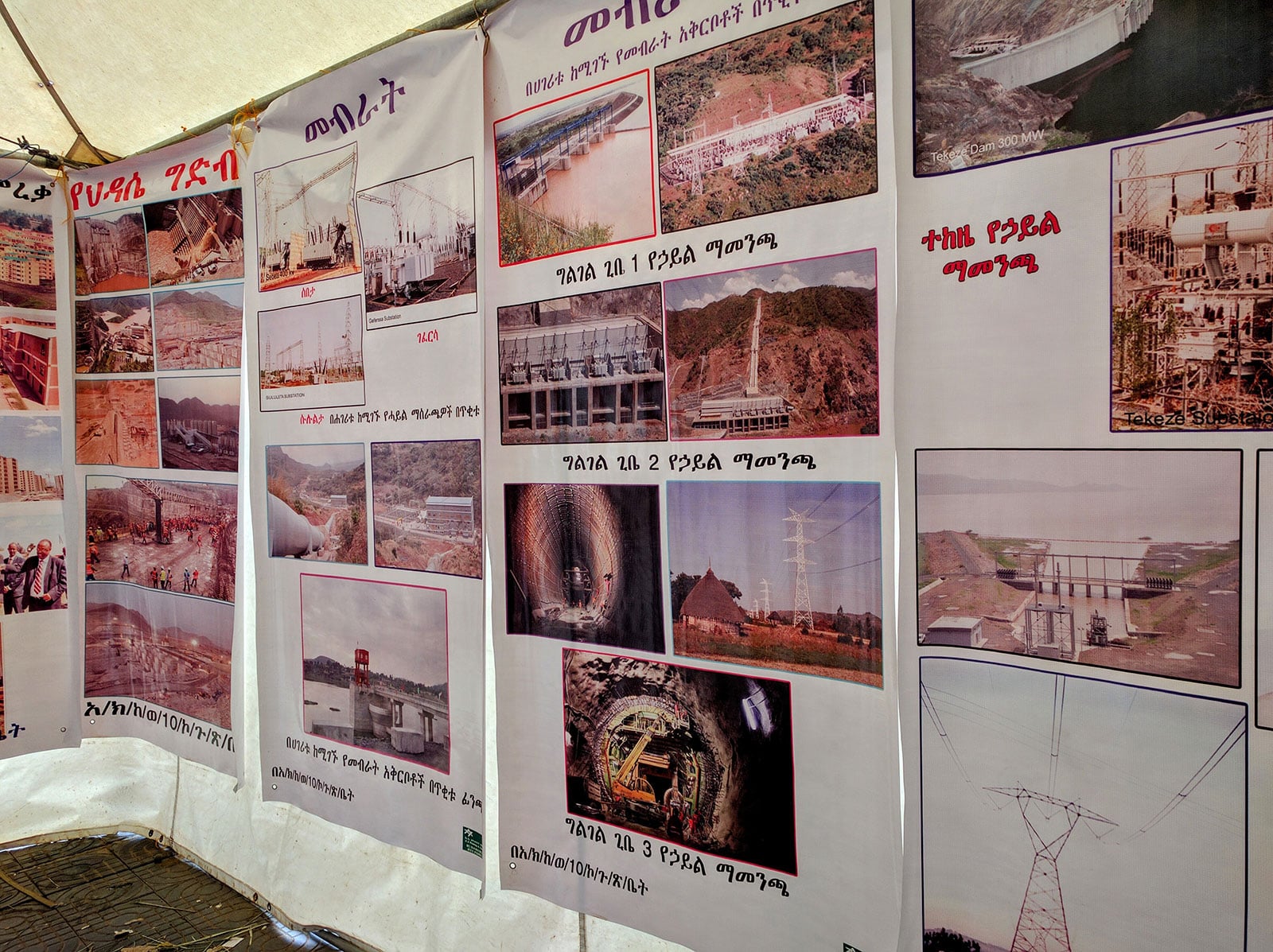
Photo by Ginger Strand.
In fact, all of Africa is dammin’ it up, yo. In 2012, the African National Congress launched an infrastructure building plan that included the construction of 13 large dams. International Rivers surveyed 11 of them and concluded that the down sides—cost overruns and corruption, environmental degradation, displacement of 100,000 people—outweighed the benefits. According to them, the Grander Dam would displace 20,000 people, wreak havoc on fisheries, flood critical forests and scrubland, and—during the few years it took to fill the reservoir—essentially reduce the Nile to a trickle in Sudan and Egypt.
Earlier, I had contacted Narissa Allibhai at International Rivers’s Kenya office. “It’s kind of like it’s a fashion to build big dams right now,” she told me. “They’re big, they’re shiny.” She pointed out that since only 12 percent of Ethiopians have access to electricity, the dam was hardly benefiting the people. Much of its electricity would be sold elsewhere. What did stay in Ethiopia would go to cities, not to the indigenous people whose villages would be sacrificed to it.
And yet, just two days in, it was clear to me that even Addis could use more electricity. The air was filled with lung-punishing smog, yet a new electric transit line sat idle. Electricity was erratic. Our hotel periodically lost power and fired up a diesel generator. On our second day there, Jason and I got a cab to the Ethnological Museum on the campus of Addis Ababa University. Our cab driver hadn’t heard of it, so he drove to the campus, pulled onto a sidewalk and got out to question a guard. As we waited in the back seat, there was a thud. Three blind men, walking arm in arm, had crashed into the back of our sidewalk-blocking car. The scene was unnervingly comic and unequivocally sad. It felt like a metaphor for our presence. After that, we kept noticing a surprising number of blind people.
One way stories fail is by lacking context. Back at the hotel, I got on my computer and started searching medical databases. I managed to download a couple of papers before the WiFi failed. It turns out that Ethiopia has one of the world’s highest rates of blindness—5.7 percent of the population has blindness or low vision. The main cause is trachoma, a bacterial infection that roughens the inner eyelids until they abrade the eye. It is completely preventable with good sanitation. Electricity—hot water on demand—may seem like a luxury. It’s not. Damn it, I wanted to see that dam.
The next day, Asrat called to tell us we had been granted access—to the Salini administrative headquarters in Addis. What could we do? Asrat picked us up, and drove us to what looked like a 1960s-era school. The hallways were lined with photos of dams: in Nigeria, Burundi, Ethiopia. “Even in China,” Asrat said proudly. He showed us a model of a master-planned farming cooperative he said Salini had designed for the socialists. We assumed by socialists he meant the Derg, Ethiopia’s murderous communist government. We weren’t sure how we should feel about this. Then he introduced us to administrative director Libero Catalano, who sat in an office hung with more dam photos. A beautiful woman served us delicious coffee. The Grander Dam, Catalano told us, was his “baby.” I asked him some pro-forma questions: Did he think the 6,000 MW rating was realistic (yes). How could so much electricity go over Ethiopia’s unreliable grids (the Chinese would fix that). Then he offered to show us some scale models of the dam. He asked Asrat where they were.
“They took them,” Asrat said. “They are being dusted.”
“Are they in the storeroom?” Catalano asked. An uncomfortable pause ensued, in which it felt like more was going on than I understood.
“No,” Asrat said at last. Catalano gave us a wan smile.
“Pity,” he said.
A hole gaped open in my conviction. What was I doing here, I who had no way to interpret the reticence of this distinguished man who had told me precisely nothing? Was it a hint of corruption I was seeing, or something else entirely? How would I know?
On our way out, the office assistants, a crowd of improbably gorgeous women with brilliant smiles asked if they could take a photograph with us.
The next day, I got a triumphant email from Dick Appuhn. We had been booked on Salini’s private flight to the Grander Dam site tomorrow. We would stay overnight and come back the following day. To celebrate we went to dinner at a touristy Ethiopian restaurant called Yod Abyssinia. The cab driver promised to come back for us, and after a delicious dinner, he was out there waiting. As we drove home, I asked him how things were for the people in Ethiopia. He said things were good, because there was peace. I asked him if people were happy. He laughed.
“No one is happy,” he said. “Not even you, in America, are happy. It is not the way of humans.”
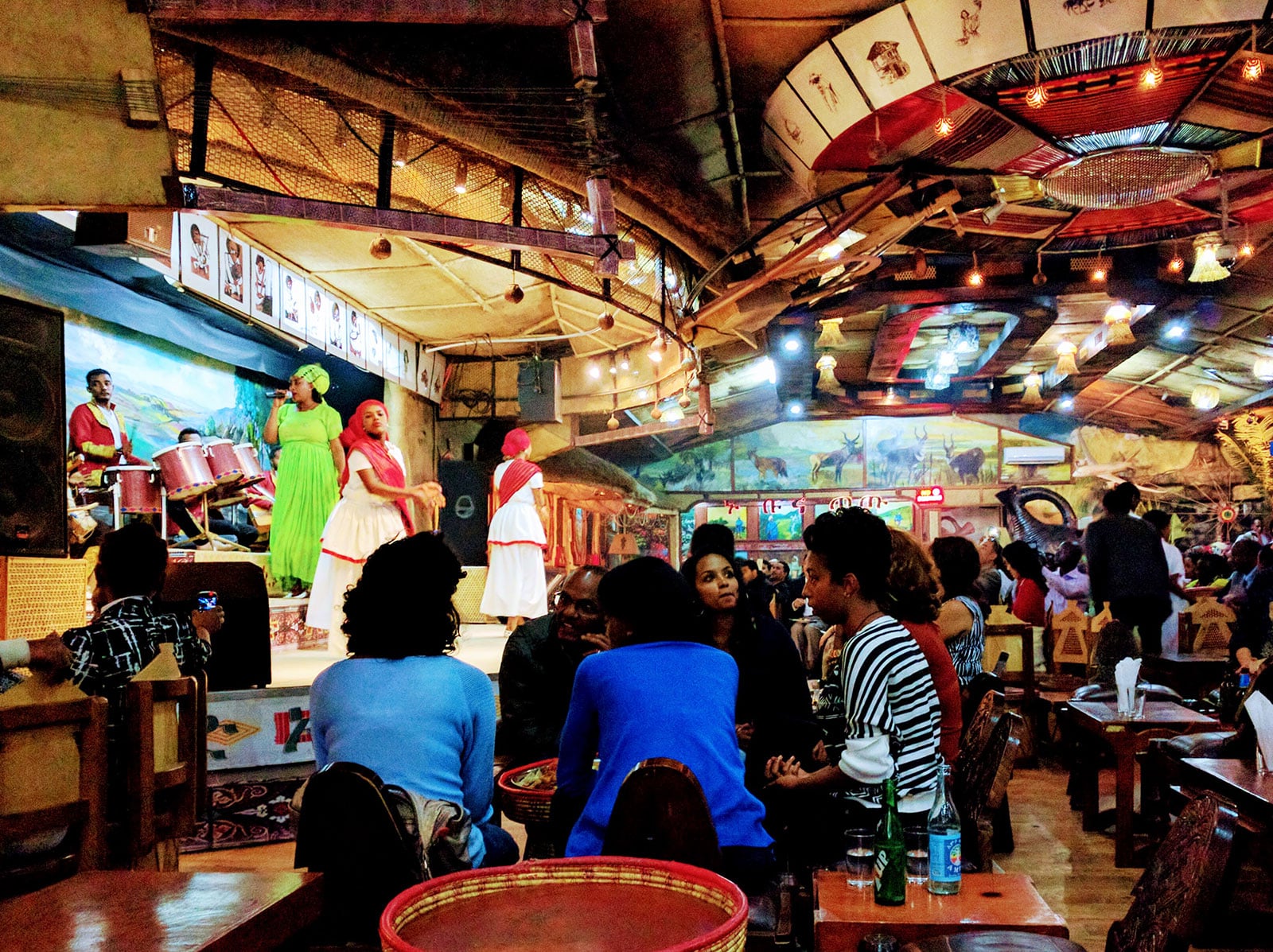
Photo by Ginger Strand.
Some wrecked aircraft carcasses regarded us listlessly as a van bounced across the sunny tarmac to our small plane. In addition to Angela, Jason, and me, there were four workers going to the site, two accompanied by women. One woman sat with her arm draped cheerfully over her man, the other looked gloomy. Jason scored the rear seat, which went all the way across the back, so he could get to both windows. The pilots promised to circle the dam before landing.
The flight was stunning. We flew straight northwest. Addis sprawled outward for miles, finally giving way to agricultural land. Farms continued as the landscape grew mountainous, patchwork fields running over mountains like a rumpled quilt. Eventually, the land began to look arid, taking on a ghurka tan, then it grew green again. Brown rivers snaked through fields. One was the Nile. Everyone dozed except Jason and me, even the co-pilot.
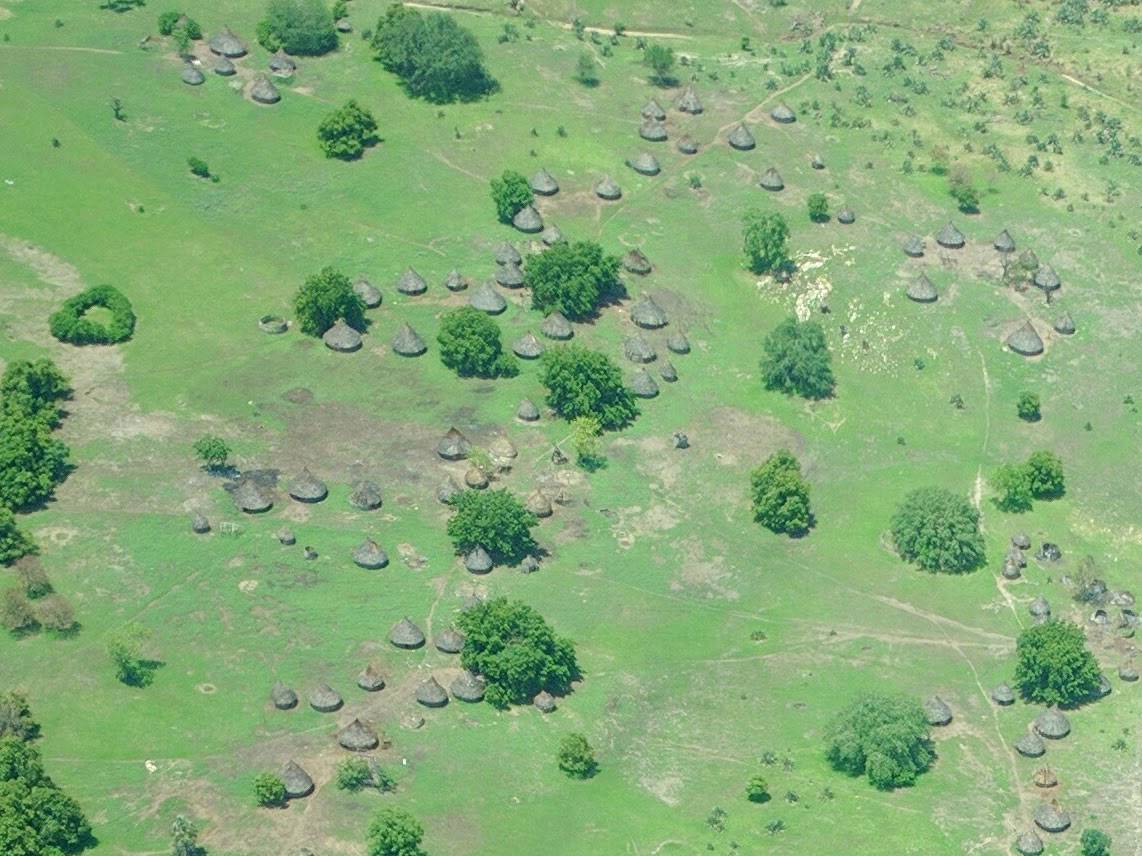
The airplane descended toward a vast brown plain: the future reservoir. A few clusters of empty round huts passed beneath us as we circled to land. We touched down on a dirt airstrip: a few vehicles, a small makeshift building. All this would be underwater once the dam was in service.
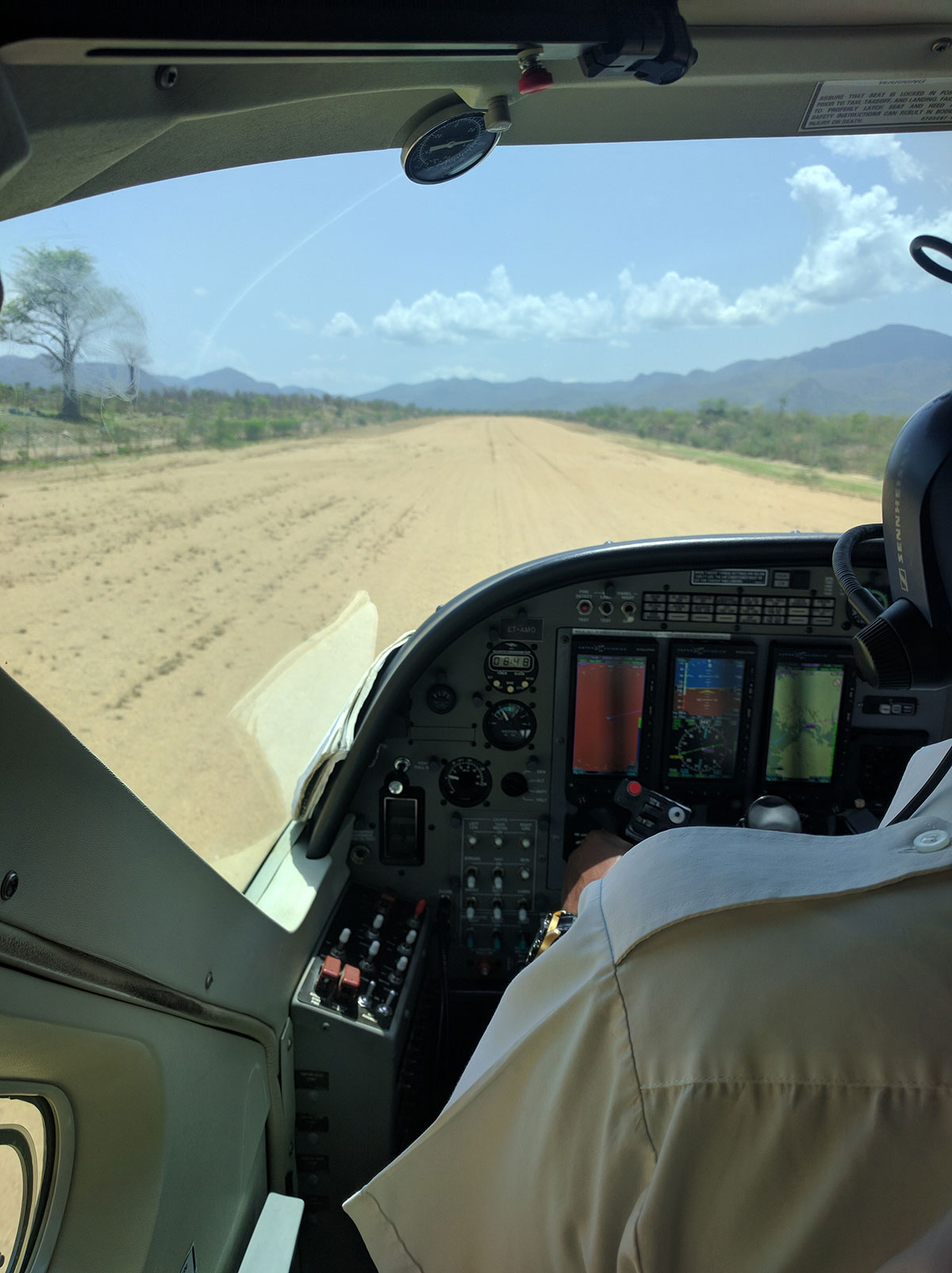
Photo by Ginger Strand
A driver was waiting for us. His name was Bokonon, like the prophet in Kurt Vonnegut’s Cat’s Cradle. We passed more abandoned, round huts as he drove us to our lodgings. Bokonon drove quickly past bunkhouses Salini had built for the around 8,000 Ethiopians who worked here, then past a hospital, a quarry, a rock crusher, a cement plant, and up a winding road for three and a half miles into the hills above the construction site. This was the “employer camp,” where a few hundred management types lived. The place looked like a nice suburban neighborhood in Fresno. Fire safety placards were in English, Spanish, and Italian, but not Amharic. Bokonon showed Angela and me to an adobe duplex with flowering shrubs stuck incongruously in the dirt front yard. He took Jason somewhere else. Inside, the house was neat and airy. A basket of fresh fruit sat on the coffee table. The fridge was stocked with water and juice.
“Do you feel co-opted yet?” I asked Jason after I’d dropped my things and come back outside to find him waiting with Bokonon in the car. After a bit, Angela came and got in the front and we drove back down the winding road toward the project offices. A baboon scowled at us from the shoulder.
“Too much monkey,” Bokonon said.
“He means, too many monkeys,” Angela said, but watching the hefty baboon glower at us, I thought no, Bokonon is right, that there is too much monkey.
The project headquarters, like the offices in Addis, were filled with Salini glamour shots: a highway in Kazakhstan, a new subway line in Rome, dams in Guinea and Malaysia. We were put in a small room while Angela went off to talk with the project manager. Beautiful women brought us coffee. We waited. We looked at our phones. It seemed like Angela was negotiating to get us an interview right there and then.
Finally, she returned. We were taken to meet Salini’s manager, an Italian named Bruno Ferraro. He began to tell us about the dams. It turns out there are two dams for this project: the Grander Dam itself, made of roller-compacted concrete, and a rock-filled saddle dam on one side of the reservoir. At this point my notes turn into a swarm of statistics. Ten and a half cubic meters of concrete. Six gigawatts of stored capacity. One-thousand eight-hundred seventy-five square kilometers of reservoir. After being inundated with numbers, I was taken to another office and introduced to the site technical services manager, Riccardo Marinai, who showed me photos of the dam: from one end, from the other end, from below, from above, at night, in the day, with a sepia effect.
“We take pictures with drone,” he said, and on his computer a video unspooled soaring shots of the dam set to classical music.
I am not a very good interviewer. I’m good at listening and observing, but not so good at asking questions. My reporting technique has always leaned toward just sort of hanging around, in an unobtrusive way, until I really begin to see.His guileless guile was in stark contrast to the Italians, who treated my questions with the distant forbearance they would bestow upon a group of schoolgirls.
But in Ethiopia, I had limited time. So when Angela told me, triumphantly, that Semegnew Bekele, the project director from Ethiopian Electric Power had agreed to an interview, I knew I should ask this man hard questions: Who is this power for? Who benefits? Who has been displaced? And what about the concerns of downstream nations?
Once the Italians were convinced I was sufficiently impressed with the size of their dam, I was taken back to Bruno Ferraro’s office. Everyone sat down at a conference table and Semegnew Bekele came in. He was a man small in stature but large in effect. The Italians treated him with an ever-so-slightly exaggerated deference that seemed forced. Italy, after all, had tried to grab Ethiopia twice. The Ethiopians stopped them in 1896, and the world made them give it up after Mussolini’s fascists got it in World War II. Bruno and Ricardo were machine-makers from the nation that birthed Leonardo da Vinci and Lamborghini. But Semegnew Bekele represented a proudly independent government that had handed Salini Impregilo $5 billion dollars’ worth of work with a no-bid contract. The politics of this situation were spectacularly complex, and when there was a minor agitation, I thought they might have simmered to the surface. But no, it was simply the call for beautiful women to bring us coffee. No interview in Ethiopia, I was comprehending, could commence until this ritual was observed. Finally, the espresso cups were carted off, and I turned to Mr. Bekele.
“Thank you for agreeing to meet with me,” I said. “I’d like to start by asking you some questions about the choice of siting for the dam.”
The room fell silent. I had done something shocking. Semegnew Bekele looked helplessly at Angela. Angela turned to me.
“Mr. Bekele will now brief you on the dam project,” she said.
What followed was a canned presentation, with slides, listing the exciting statistics all over again, and offering up anodyne statements of good will. I can’t be more specific than that, because sitting there in mute rage, I purposefully did not write down one word of it.
At the end of this travesty, Bekele bestowed upon me a four-page document outlining the points he had just made. I did not even look at it until I was back in the U.S. It included useful information like:
GERD is a practical way of win-win-development undertaking, which will contribute to overcoming centuries of mistrust among Nile Basin countries. The project will pioneer a new era of cooperative regional development and improved water management…. Etc.
I had wanted to figure out this dam, to really look at it, so that others could see it for what it was. But what was it? Environmentalists have a kneejerk hatred of dams. As John McPhee wrote, “Conservationists who can hold themselves in reasonable check before new oil spills and fresh megalopolises mysteriously go insane at even the thought of a dam.”
After the propaganda slideshow, I was vouchsafed a look at the dam itself. And then it became clear why I was even there. In exchange for letting Jason come along, Angela had extracted a promise that Salini could have copies of his photos. Now they piled us into SUVs and drove us to every possible vantage point. Their appetite for dam pictures was insatiable.
I rode in a car with Bekele, and once we were on the road, separated from the others, Bekele had a kind of transparency. I asked questions, and when he didn’t want to answer, he stared glumly and uncomfortably ahead. I asked him if the government had conducted an environmental impact study of the dam. He said of course. I asked if I could read it. He stared glumly and uncomfortably ahead. His guileless guile was in stark contrast to the Italians, who treated my questions with the distant forbearance they would bestow upon a group of schoolgirls.
As for the dam, what can I say? It was a concrete behemoth, stretching from one range of starkly gorgeous mountains to another one, lying across the entire river valley as incongruous as an amputated arm. It was horrific. It was beautiful. Tiny specks were moving around on top of it: cement trucks with wheels taller than our SUV. When we drove down into the valley and looked at the dam from below, it loomed over us, stepped like a Mayan pyramid. Then we drove to the other side and walked out on top of the dam and looked at the roiling waters of the Blue Nile as it sluiced westward towards Sudan and the setting sun. Dam crews work all day and night, so the lights were coming on, and the entire scene took on the appearance of a movie set. The Blue Nile was the color of chocolate milk.

Photo by Ginger Strand.
“Hoover Dam built America,” Bekele told me in the car. “The people who built Hoover Dam have passed away but they are still alive for their people.” This is true. We in America—in the entire developed world—spent the greater part of the mid-20th century building roughly 50,000 large dams, transforming practically all of our navigable waterways and reaping the economic benefits. Then we spent a few decades helping less developed countries dam up their waterways and reap the economic benefits. Like in Egypt, where we competed for influence with the USSR by funding construction of the High Aswan Dam on the lower Nile. Or in Ethiopia, where in 1958, Haile Selassie invited engineers from our own Bureau of Reclamation to survey Ethiopia’s hydropower resources. Fourteen volumes of plans were published in 1962, not long before Ethiopia was taken over by the communist Derg. The Derg were overthrown in 1991. Not long afterward, the new government dusted off Reclamation’s plans and put them in play. The Grander Dam will be the fifth dam built to the specifications America’s Eisenhower-era engineers.
Now we’ve reversed course and try to convince developing nations not to build dams, which we must admit is hypocritical. We already have our dams, and with a few overpublicized exceptions, we are not taking them down. We like to talk about the damage dams do while ignoring their ongoing necessity to our lifestyle. But make no mistake: if an extraterrestrial salmonid race arrived on planet Earth and vaporized every large dam, the developed world would collapse.
That night, we had dinner on the deck of a clubhouse at the edge of the employer camp. Its airy bar opened out onto a sprawling pool area with cabanas. The pool was a double hexagon, with a bridge arching over the spot where the hexagons linked. Bruno Ferraro told me he designed it. The Italians stood around drinking prosecco, waiting for Bekele. Lightning flickered over distant mountains. Riccardo Marinai introduced me to his young daughter, who asked in Italian if I was her zia. I asked him why he would choose to work on a project that involved moving his family so far from home.
“Did you look around?” he asked.
Finally Bekele arrived, freshly showered, and we all sat down at a table on the deck. Waiters brought risotto and Italian wine. Then came a Nile perch which someone had caught that day. Marinai pulled out a phone to show me a photo of the fish. It was 56 kilos, he said.
I was across from Bekele, and after a glass or two of wine, he grew more animated, charming even. He had a delicious accent, rolling his r’s with gusto. He seemed genuinely eager to please.
“I do not understand this motto of Donald Trump, make America great again,” he said. “You are already great. You are our role model. People have role models and nations too have role models.”
I tried to get him talking about the dam again.
“Nobody wants to talk about the dets!” he said suddenly. It wasn’t clear to me whether he meant “debts” or “deaths.” But before I could inquire, Bruno interrupted and changed the subject.
After dinner, the Italians walked us out to a small gazebo they had built where they could look down on the brightly lit dam. From space, it must be the single bright point in the dark Ethiopian night.
The next day we went to see the saddle dam, a five kilometer-long, crescent-shaped retaining wall on one side of the valley. On the way there, I mentioned to Bekele that many people had been displaced in the construction of Hoover Dam. This is not, as far as I know, true, but Hoover Dam seemed to be the touch point that would get Bekele talking.It was hard not to love them, as it’s always hard not to love engineers, the last true believers in the perfectibility of earth.
“When you are moving people,” he declared, “some short-sighted people say you are displacing people, but you must have visionaries. Because those people will one day be gone. You must think of the next generation.” He spoke with an unstudied rapidity that made me think, He believes it all.
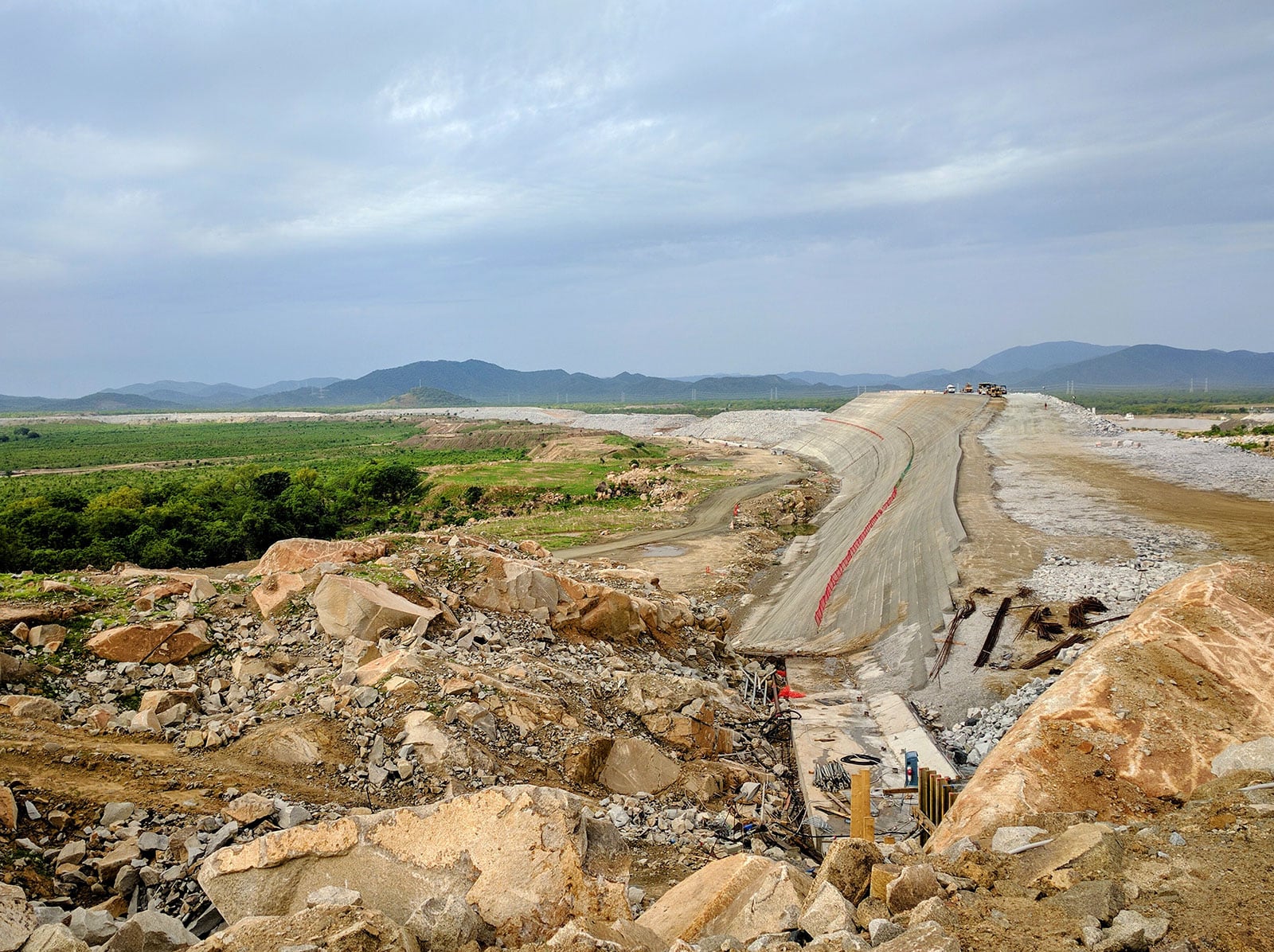
Photo by Ginger Strand.
We got out of the SUV and looked at the saddle dam from the inside, standing where the reservoir will be. The Italians clustered around, explaining how transversal galleries built into the wall would allow for inspection and drainage. It was hard not to love them, as it’s always hard not to love engineers, the last true believers in the perfectibility of earth. They remain convinced that with enough drafting and concrete and capacitors, the world can be built into a better place.
On our way back, we took a road that went on the other side of the saddle dam, through land that will not be inundated by the reservoir. Suddenly everything felt different. A man drove goats along the shoulder. A donkey lay in the road. Some people were hitchhiking, and a couple men with machetes hung from trees. The place was not barren after all. As our little motorcade of SUVs zoomed through, the people looked at us with… what? curiosity? hostility? I can only say what I felt, which was that suddenly we were in a different world, one in which our presence was an unwelcome fact. Semegnew Bekele seemed to want to acknowledge the change.
“If there were some areas that were occupied by people, they were compensated by the government,” he said, “and they were given a new place to live and to conduct their business. As you can see it is a sparsely populated area compared to the size of the reservoir.”
A story has to be told by you for a reason. I know about dams. But I know little about Ethiopia. Like most Americans, I know shockingly little about Africa, except that the continent is on a dam-building tear. A chasm was opening up around me, the empty bubble of what I did not know expanding outward from the little I did. I was moving through this world like an underwater explorer, encased in the diving bell of my ignorance. The dam was big. But the story of the dam was bigger.
What I did not know: after I left, protests against the authoritarian government would break out across Ethiopia. The uprisings expressing the frustration of ethnic groups at being excluded from government, denied free speech, and displaced from their lands would reignite the country’s ethnic violence. Some of the worst fights would be in the Amhara region, in the city of Bahir Dar, which sits on Lake Tana, the source of the Nile. These protests would start the nation’s downward slide into a new civil war.
What I did not know: in July, 2018, Semegnew Bekele would be found dead in his car in Addis, a bullet through his head, just hours before he was scheduled to address a public increasingly concerned about delay, mismanagement, and corruption on the Grander Dam project. The official story was suicide. Online commentators would suggest both that the Egyptians had murdered him, and that Ethiopian officials had murdered him because he about to turn whistleblower.
I cannot satisfyingly tell any of these stories. My only story is my own: a story of how I didn’t get the story. And the story continues. Talks between Ethiopia, Egypt, and Sudan have repeatedly deadlocked, despite intervention from the U.S. and others. Nevertheless, in July of 2020, the Ethiopians began filling the reservoir. In a December 2024 letter, the U.N. Security Council and Egypt accused them of violating international law. One recalls former U.N. Secretary General Buotros Buotros Ghali’s warning that the next war in Africa will be fought over the waters of the Nile.
Bokonon took us to the airstrip that afternoon. We passed the abandoned villages we had passed on the way in. When we got to the airstrip, Angela went inside the shack labeled Check point with scraps of tape. A man who was friends with Bokonon came over to the car window. He looked awful. His eyes were rimmed in red and his flesh sagged. He and Bokonon spoke in rapid Amharic, from which I recognized two words: “Addis” and “malaria.” We had been shown the site’s medical facility, where we learned that malaria was the most common complaint.
We climbed into the plane. Malarial man got in last, stretching himself across the seat at the back. It seemed humane to get him to a hospital as quickly as possible, but the pilot announced he would make two circles over the dam on takeoff, so Jason could take some more photos. We took off. Jason shot photos. Malaria man sprawled across his row looking miserable.
My flight left the day after we returned to Addis. I sat on my little balcony in the hotel and watched the sun set on the city, on its idled train, on the bamboo scaffolds, on my dreams of figuring it all out. I thought about Vonnegut’s Cat’s Cradle, and Bokonon’s promotion of foma: the harmless truths we live by. Like, development is good. Or development is bad. I thought about how to tell a story with no real heroes or villains, with no conclusions beyond inconclusions and a glimpse of the sad and gorgeous mystery of the world.
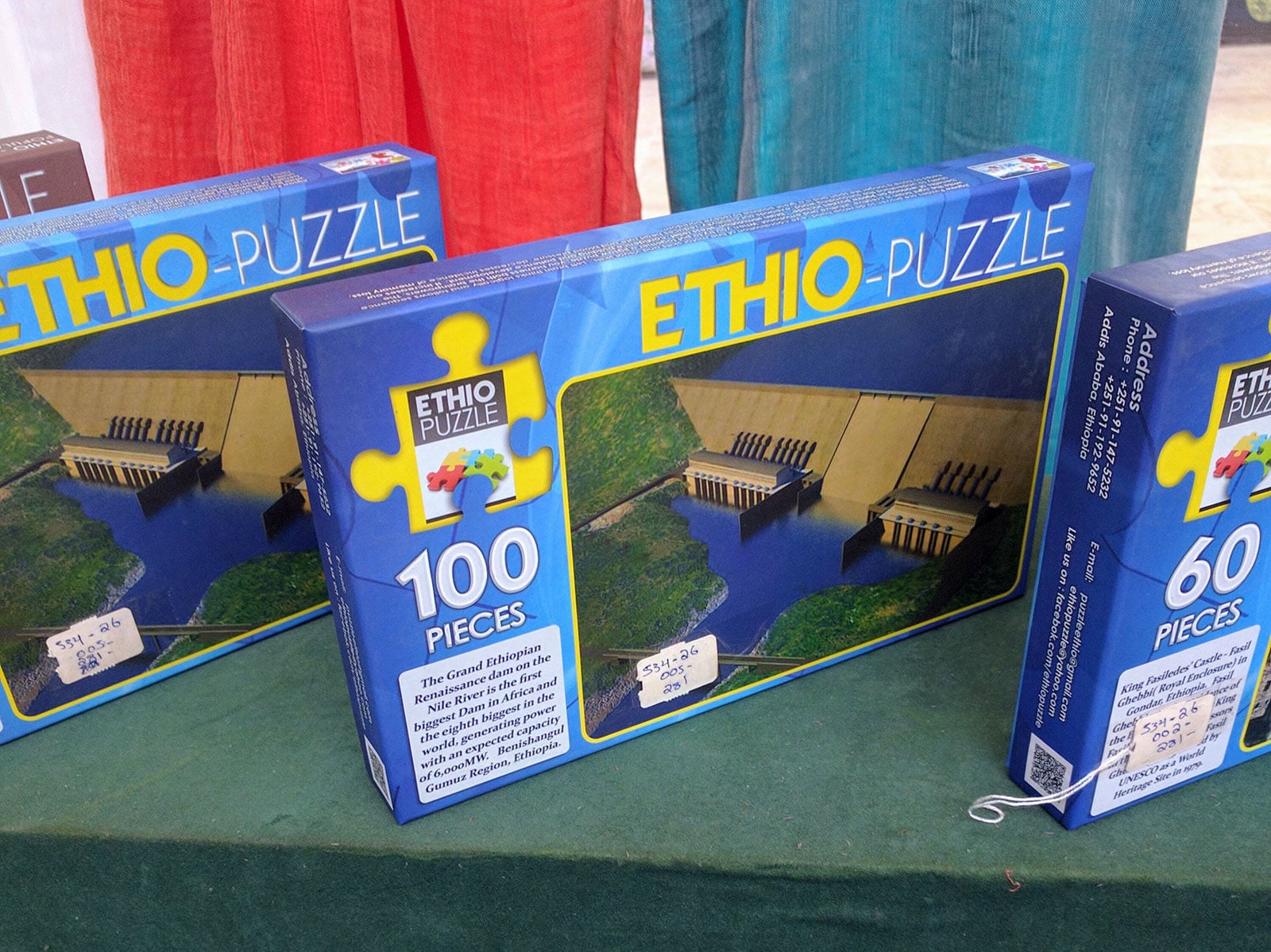
Asrat drove me to the airport the next day. Awaiting my flight, I realized I still had some Ethiopian birr in my wallet. I wandered the airport’s gift shop, looking for something to buy. And there, lined up on a shelf, was a row of jigsaw puzzles. On each one was a photorealistic rendering of the completed Grander Dam. I’d have bought one, but I didn’t have enough birr.
 Ginger Strand is the author of one novel and three books of narrative nonfiction, most recently The Brothers Vonnegut: Science and Fiction in the House of Magic. Her essays have appeared in a wide range of places including Harper’s, The New Yorker, The Believer, Tin House, and Orion.
Header photo of Grand Ethiopian Renaissance Dam by Ginger Strand. Photo of Ginger Strand by Orianna Riley.