

Truly public spaces, where protests and celebrations can take place. Subversive works of art. Neighborliness and in-person interaction. We can’t take these things for granted.
Introduction
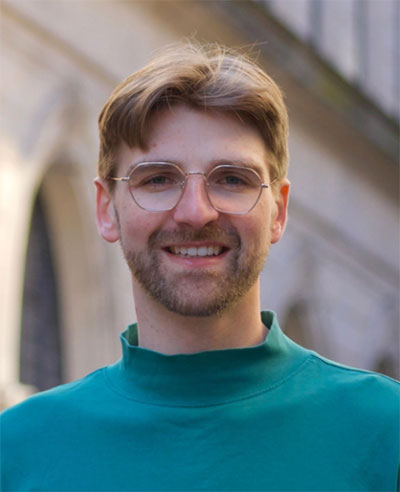
Benjamin Schneider is an investigative and policy reporter at Remapping Debate. His work has appeared in Bloomberg CityLab, MIT Technology Review, Slate, The Nation, Los Angeles Times, and many other publications. Born and raised in San Francisco, Schneider has lived in Los Angeles, Manhattan, and Washington, D.C. He currently lives in Brooklyn with his fiancée.
I started to develop a unifying framework that helped explain why so much had gone wrong in American urban planning, and what it would take to fix those challenges.
Interview
Galina Tachieva: To begin, could you share with Terrain.org readers how this book came into being? How long did it take to develop, and to what extent did it grow out of your journalism versus emerging as a new, independent inquiry?
Benjamin Schneider: I began working on the book in earnest in 2023, but I had been thinking about it long before that. I felt there was a need for a book that synthesized the many significant societal challenges that are rooted in the built environment, while also offering solutions to those challenges. There are great books on the problems with urban highways (Megan Kimble’s City Limits), parking (Henry Grabar’s Paved Paradise), and housing (Shane Philip’s The Affordable City, among many others), but nothing that shows the interconnectedness of these issues. That’s what I wanted to offer with my book.
As I wrote, I started to develop a unifying framework that helped explain why so much had gone wrong in American urban planning, and what it would take to fix those challenges. All of it, I found, is downstream of a built environment that is no longer able to adapt to our changing needs and wants as a society. That big, intuitive idea was going unsaid in the broader public discourse around urbanism.
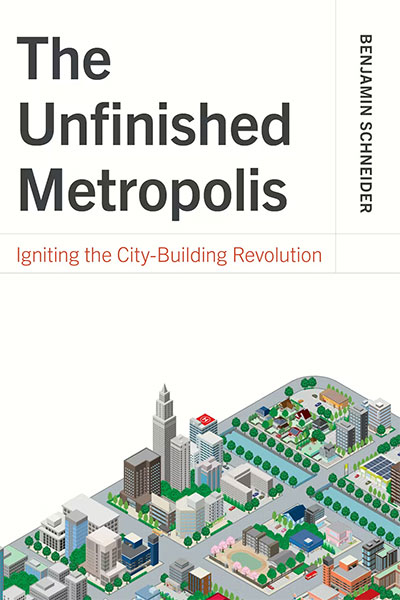 Galina Tachieva: Your title is evocative. You frame American urbanism as inherently unfinished: a living, evolving project. Yet, you also describe a kind of stagnation in recent decades. Earlier generations pursued bold, even audacious efforts: subways, large-scale housing, and transformative infrastructure. What shifted politically, culturally, institutionally, to quiet that spirit of experimentation?
Benjamin Schneider: The short answer is that the last great spasm of city-building was a particularly brutal affair. Highways and urban renewal and suburban sprawl did so much harm that a broad cross-section of communities and interest groups began to view all urban development as inherently bad. The prevailing view became that it’s better to leave things as is than to pursue significant change. This, of course, has left us saddled with the destructive infrastructure and urban development patterns of the midcentury era. This anti city-building ideology has left us unable to update or fix the environments that were correctly identified as so destructive. It’s a real catch-22.
Galina Tachieva: Throughout the book, you connect today’s overlapping crises of housing shortages and homelessness, car dependence, and struggling downtowns to inherited and often outdated urban forms. Of these, which patterns feel most urgent to rethink, and where might change have the greatest ripple effects?
Benjamin Schneider: It’s always important to keep in mind that these challenges are all interconnected. But I think it’s clear that the housing issue is of the greatest urgency. There are so many statistics and anecdotes you can cite to illustrate the breadth and severity of the housing crisis. The number of homeless or rent-burdened households; housing production versus job growth in major cities; homes per capita compared to historical rates; migration patterns from states with low rates of housing production to those with high rates of housing production; the average age of first-time homebuyers—I could go on. Housing is without a doubt one of the most important issues Americans are facing.
Policymakers need to pull as many levers as possible to make progress on this issue. Updating zoning codes to allow for more affordable missing middle housing typologies; unlocking new financing mechanisms to get approved projects to break ground; experimenting with innovative building typologies and construction methods to build housing cheaper and faster; etc. There’s been a good deal of progress on the zoning front in many places, though there remains a lot of work to be done. The next policy frontiers will be financing and building typologies. These issues are just beginning to break through in the public discourse, but they need champions in government.
What would it take to build a coalition around a renewed project of city-building?
Galina Tachieva: You write candidly about policy directions such as expanded transit, environmental commitments, and social housing that can feel politically charged. In a deeply divided moment, how might these ideas find broader resonance? What would it take to build a coalition around a renewed project of city-building?
Benjamin Schneider: Many of the solutions I bring up in the book can be implemented at the local and state level, where there tends to be less culture war posturing and more willingness to pursue commonsense solutions. It’s interesting how different jurisdictions can take different routes to the same policy outcome. For instance, Montana and Florida have passed similar housing reforms in recent years as Oregon and California. In the former, the public debate was more about property rights and economic opportunity, in the latter it’s more about preventing sprawl and pursuing social justice. Policymakers need to tailor their message to their audience.
Outside of ultra-liberal contexts, it can be helpful to lead with an economic justification for whatever urbanist reform one is pushing. We’ve seen glimmers of that with the bipartisan housing bill that is wending its way through Congress. The bill makes a number of significant regulatory tweaks to promote increased housing production. The discourse around it has been about increasing homeownership and streamlining outdated regulations.
On transportation, it’s much harder to make the urbanist case at the federal (and often state) level, because of the car-centric myopia of American culture. Advocates and urbanist-aligned electeds have yet to find a winning approach to making progress in this arena.
Galina Tachieva: A recurring theme is that our regulatory frameworks, however well-intentioned, often constrain rather than enable innovation. Where do you see the most meaningful opportunities for reform, whether in zoning, permitting, or public process, to reopen space for ambitious urban thinking?
Benjamin Schneider: Housing is the most promising space for reform right now, and within that, zoning is the area that gets the most attention. Those are worthwhile efforts that ought to be accelerated. But I hope they can be joined by a more comprehensive housing policy reform agenda that also looks at building codes, building supply chains, construction techniques, and financing.
On the transportation front, there’s been a huge amount of progress on bike and pedestrian-friendly street redesigns in recent years. Big city streets look very different from the way they looked a decade ago. But more expensive, ambitious projects to improve transit have been much harder. That’s due to a combination of a lack of federal government support, as well as transit agencies’ lack of experience in cost-effective, timely transit project delivery.
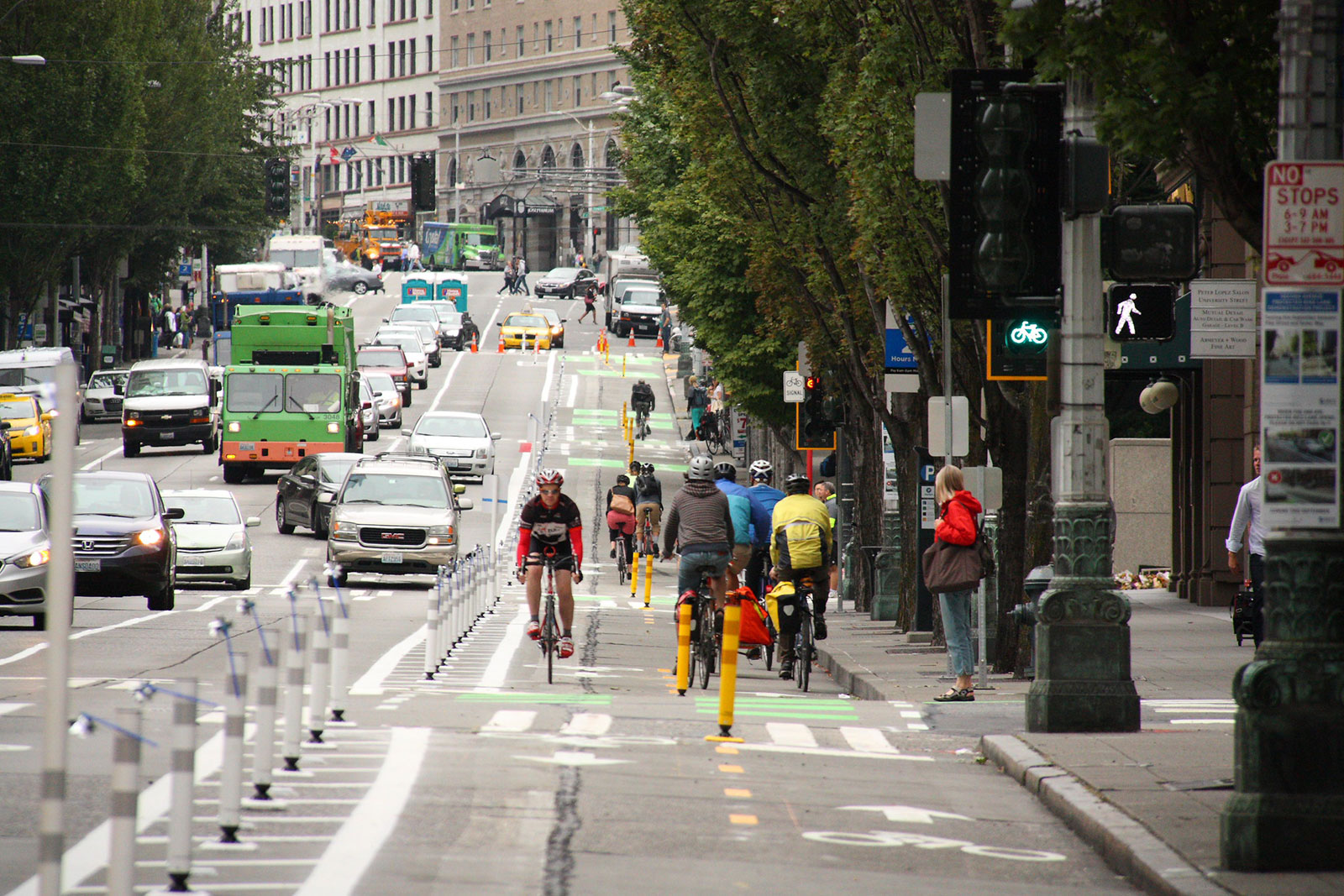
Photo by Seattle Department of Transportation, courtesy Flickr.
Galina Tachieva: Movement is central to the life of cities, and your book gives it sustained attention. The U.S. continues to lag behind many peer nations in building fast, reliable, and widely used transit, while much of its urban environment remains dispersed. What paths forward do you find most promising? And how do you see emerging technologies such as autonomous vehicles and micro-transit fitting into (or complicating) that future, especially in lower-density places?
Benjamin Schneider: Micromobility is a really exciting, really underrated area of urban innovation. E-bikes, bikeshare, and protected bike lanes massively expanded the potential pool of riders. And by all accounts, way more people are riding bikes and other two wheelers in major cities than in previous decades.
Autonomous vehicles are a mixed bag. They have significant potential to reduce traffic accidents as they are deployed at scale. At the same time, they could further entrench car dependency, making it easier and cheaper to get around in a car. Cities need to plan for the negative externalities of an autonomous future by creating road charges that disincentivize car use in the places and at the times where transit is most readily available.
Autonomy is important for transit, too. Already, many transit systems around the world operate autonomous metro systems. But in the U.S., autonomous trains are almost exclusively to be found at airports. These trains can run much more frequently than human-driven metros. That means the trains themselves, and the stations, can be smaller without sacrificing capacity, which reduces the cost of constructing the system.
Malls get a bad rap. For decades, they’ve been the bane of urban critical theorists and other highbrow critics. But there’s actually a lot to love about malls.
Galina Tachieva: Your discussion of malls is particularly compelling. Once icons of suburban expansion, they now sit at a crossroads as symbols of decline, but also sites of possibility. You write about their “complex reality” with a certain optimism. How do you see ideas like the “15-minute mall” contributing to the reimagining of these places, both locally and regionally?
Benjamin Schneider: Malls get a bad rap. For decades, they’ve been the bane of urban critical theorists and other highbrow critics. But there’s actually a lot to love about malls. These are places where teens and older people can safely spend time. They’re comfortable in-person gathering spaces, at a time when so much of life is virtual.
The real problem with malls is that they are typically poorly integrated with and accessible to the surrounding neighborhoods. They isolate shopping and entertainment away from homes, offices, and civic institutions. Malls come part of the way towards providing all of the elements of the traditional downtown or main street, and then stop short.
With so many malls now struggling and looking to reinvent themselves, there’s tremendous potential for them to go the rest of the distance. Malls can become new nodes of urbanity complete with homes, schools, public spaces, offices, and all of the other necessities of daily life in addition to shopping and movie theaters. I call this concept “15-minute malls”—the 15-minute city concept translated into the mall context. There are already a number of mall redevelopment projects moving in this direction, in White Plains, New York, in Silicon Valley and Portland, Oregon, to name just a few. These places can become genuine urban places in what are now suburban, car-centric areas.
Galina Tachieva: If we were to truly embrace a new era of innovation and experimentation in city-building, what new forms of housing, neighborhoods, and infrastructure do you imagine taking shape in the coming decades?
Benjamin Schneider: It’s such a fun question. Automated metros are a really exciting urban innovation. The small trains and stations used in these systems, combined with modular construction and improved tunnel boring technologies, could make it possible for automated metros to be more affordable and more widespread than we currently imagine. Gondolas are an interesting transportation solution in mountainous areas. And I think we will see more flying cars, or electric vertical take-off and landing vehicles (EVTOLs). Like autonomous cars, I have mixed feelings about these, but I think it’s clear that they will play some part in the future of mobility.
Modular construction for housing could really speed construction and reduce costs. I’m also interested in the technologies that could make new buildings more decorative. There’s a company called Monumental Labs that makes stone ornaments for building facades using robot carvers. Opportunities to use technology to create a more attractive and stimulating cityscape are very interesting.
Then, of course, there are the elemental, age-old aspects of city life that we’ll need to fight to preserve against the rising tide of technological mediation, government surveillance, and corporate power. Truly public spaces, where protests and celebrations can take place. Subversive works of art. Neighborliness and in-person interaction. We can’t take these things for granted.
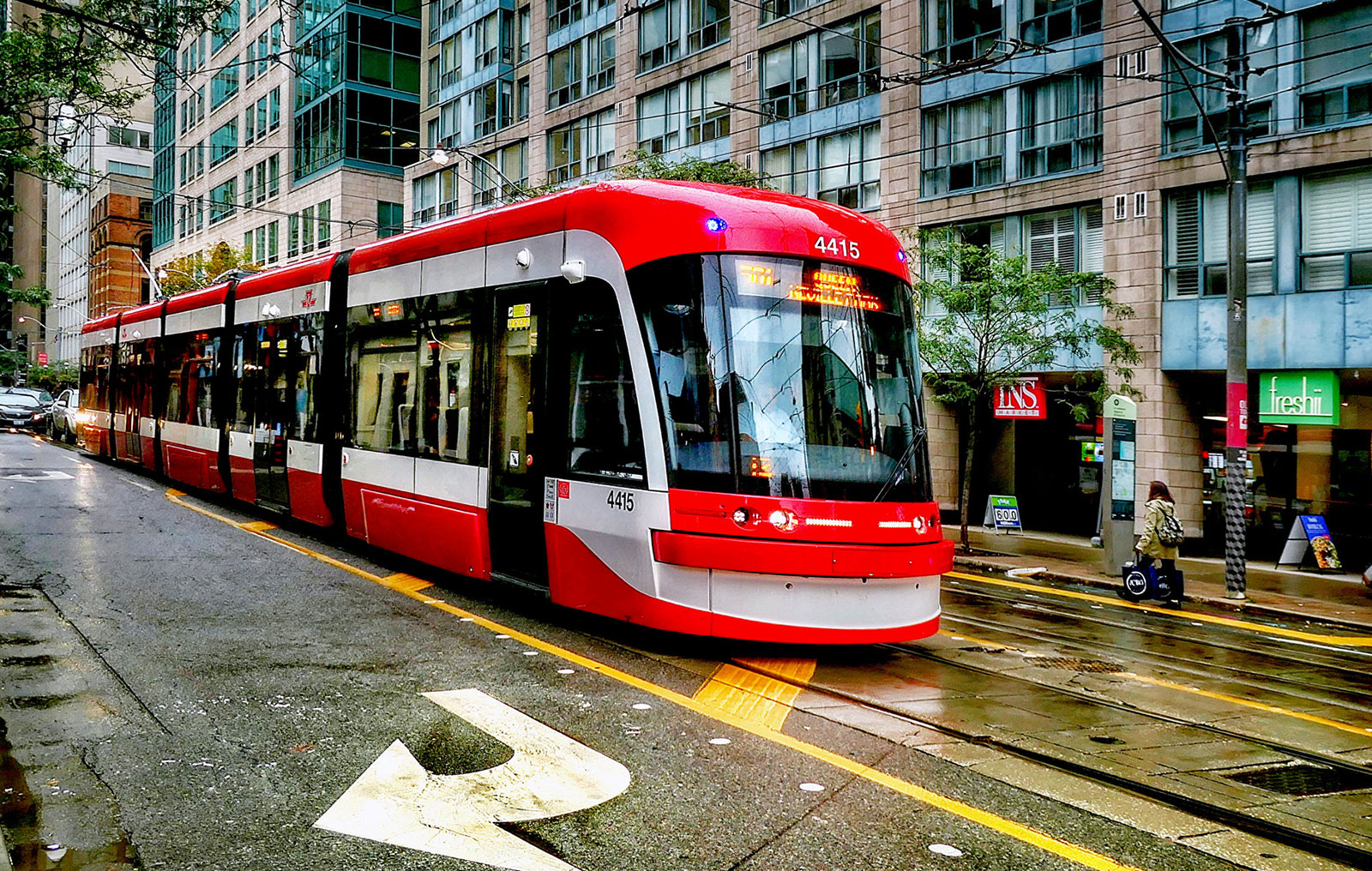
Photo by Bernard Spragg, courtesy Flickr.
Galina Tachieva: Your lens extends beyond the United States, drawing on examples such as Vienna’s social housing, Montreal’s transit, Curitiba’s BRT, and housing models in Tokyo and Singapore. Which of these resonate most strongly as lessons for American cities, and which might be hardest to translate?
Benjamin Schneider: Transit in Montreal and all across Canada is the most interesting and relevant case study for the U.S. Here is a country with very similar urban planning characteristics that has managed to create much better-functioning and well-used transit systems. There are good Canadian parallels for different kinds of U.S. cities: Toronto is like New York and Chicago; Montreal is like Boston, Philadelphia, or Washington; Vancouver is like its West Coast peers; and Calgary, Edmonton, and Ottawa are like mid-sized Heartland cities. Americans interested in improving transit in their hometown should look to these analogs to see what they can do differently.
The biggest thing that just about all Canadian cities do better than their U.S. peers is running frequent, high-quality bus service. In the Toronto suburbs, many bus lines run consistently every 10 minutes—much better than suburban bus service almost anywhere in the U.S. Canadian cities have really embraced transit-oriented development, as well. New metro stations, even out in the suburbs, are often surrounded by a cluster of high-rises. Finally, Canada is investing in the latest transit technology. Vancouver and Montreal have built automated metro lines in recent years. Toronto is currently building one. That should be a signal to American cities to do the same.
What I would like to see is a very well-capitalized, ambitious public development entity, or consortium of entities, with a mandate to build enough mixed-income housing to end the housing shortage.
Galina Tachieva: You describe the current landscape of affordable housing policy as fragmented, even incoherent, despite the many tools in play: Section 8, LIHTC, HOPE VI, rent regulation, and inclusionary zoning. Are there particular approaches, or combinations of approaches, that you see as especially promising in addressing affordability and homelessness at scale?
Benjamin Schneider: The single biggest thing that could be done to address housing affordability and homelessness at scale would be to make housing assistance—Section 8 vouchers and related programs—an entitlement, meaning every household below a certain income threshold would automatically receive assistance. Now, this couldn’t simply be enacted all on its own, because there literally aren’t enough homes to accommodate everyone. It’s already very difficult for voucher holders to find homes in expensive cities like L.A. and New York. So, making housing assistance an entitlement would need to be coupled with a massive homebuilding initiative.
What I would like to see is a very well-capitalized, ambitious public development entity, or consortium of entities, with a mandate to build enough mixed-income housing to end the housing shortage. This is what I mean when I talk about social housing, though other people use the term differently, and some even feel that social housing, as a term, is a nonstarter in the American political discourse. Whatever you call them, these entities would be different than public housing authorities in that they would construct, own, and manage housing for people across the income distribution. The rents from the lowest-income tenants would be directly subsidized by those with higher incomes. Very low-income people would probably still need housing assistance from the government to afford the full cost of maintaining and managing their homes.
A lot of the innovation needed here is in financing. There is a lot of capital floating around—public and private—that could be directed toward mixed-income housing. The key is creating the mechanisms to make use of it and providing the assurance that it will be used prudently.
Galina Tachieva: Historically, moments of urban transformation have drawn on alliances between government, private actors, and civic leadership. In our current moment, who do you see as the catalysts for a new phase of city-building? And is there a growing role for smaller-scale actors—incremental developers, local entrepreneurs, community-based efforts?
Benjamin Schneider: I’m very excited about the recent victories of zoning reform to create more opportunities for homeowner-developers, much like in previous generations. A lot of Chicago six-flats and Boston triple deckers, for example, were built by a small-time builder who then lived in one of the units and rented the rest to family members or acquaintances. Recently passed ADU and duplex laws create these opportunities once more. Homeowners can be creative about what their property can become. There’s a lot of potential for multigenerational families to have private living spaces on the same property, for instance. Or homeowners can earn some extra rental income by carving out an ADU.
Next on the policy horizon could be “accessory commercial units,” or ACUs. In certain urban neighborhoods, corner stores, restaurants, or cafes can be added to houses. (In many neighborhoods, these businesses were previously allowed, but were then zoned out of existence.) This kind of commercial presence can really enhance walkability by providing certain essentials much closer to many homes than a commercial strip a few blocks away.
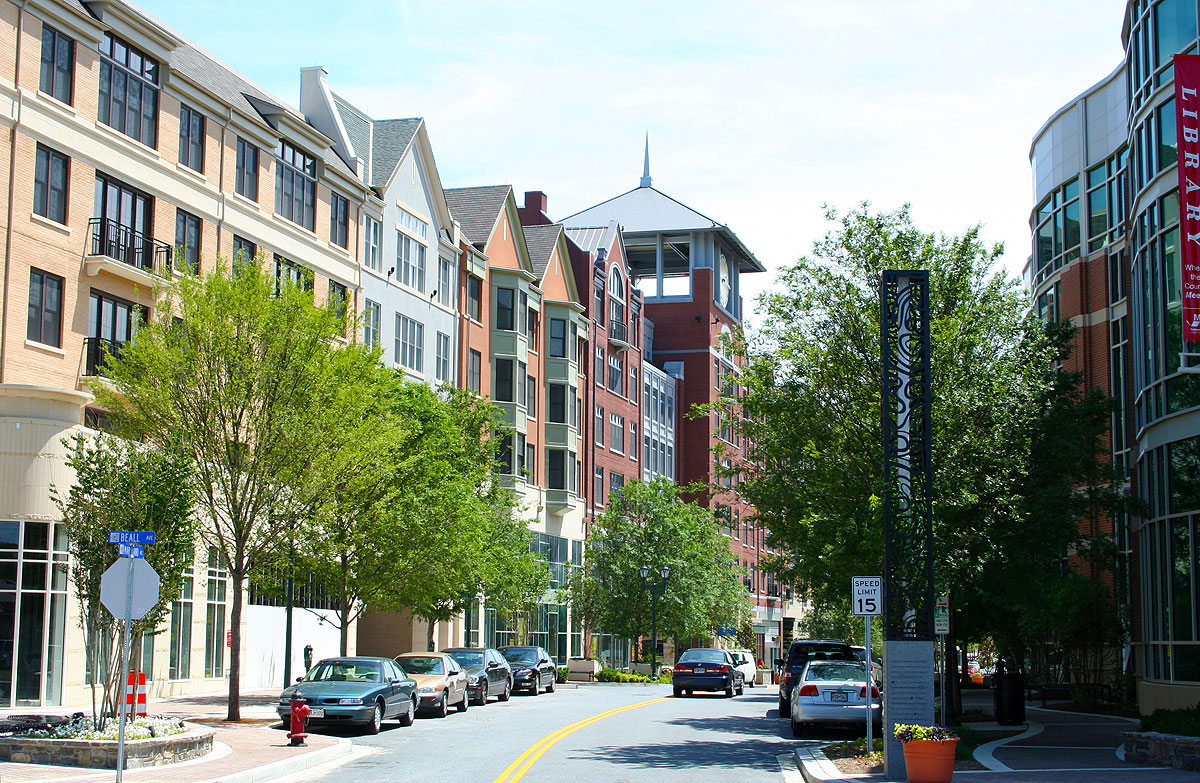
Photo by Simmons Buntin.
Galina Tachieva: Your book calls for renewed experimentation, yet it does not substantially engage with the theory or practice of New Urbanism. Over the past several decades, New Urbanists have developed widely used tools such as form-based codes and have contributed to the revitalization of many places. How do you see your vision of a “city-building revolution” in relation to that body of work, its ideas, its regulatory innovations, and its built examples?
Benjamin Schneider: I have deep admiration for the work of the New Urbanism, and view my book and my worldview as a continuation of that work. The zoning reform, or YIMBY movement, owes a huge debt to the New Urbanism. The notions of “smart growth” and “transit-oriented development” came out of the movement.
My book helps add historical context and connective tissue to this canon. The New Urbanism, for instance, has not historically been engaged with transportation network planning. Nor has it been particularly associated with the post-COVID downtown revitalization conversation. My book seeks to extend the New Urbanist worldview into these and other areas. There have also been strands of the New Urbanism that are skeptical of high-density development. Whereas I’m a big proponent of skyscraper-scale development right next to high-capacity transit stations, or in downtown cores.
Galina Tachieva: Finally, your book ranges widely, with each chapter opening onto questions that could easily sustain another volume. As you step back from this project, what directions are you most drawn to next?
Benjamin Schneider: The themes I’m most interested in are those that I’ve focused on throughout this interview. For one, highlighting the importance of transportation in a political context where housing is finally getting the attention it deserves. I’d also like to continue exploring the technological frontiers of transit, autonomous metros in particular. And, finally, I’d like to highlight innovative housing finance programs.
 Galina Tachieva, a Fellow of the Congress for New Urbanism, is the managing partner of DPZ CoDESIGN, a renowned architecture and town-planning firm. With 30 years of expertise in urban design and form-based codes, Galina directs the work of the firm in the U.S. and around the world. She is the author of the Sprawl Repair Manual, an award-winning publication focused on the transformation of auto-centric places into human-scale communities.
Read Galina Tachieva’s 2013 Terrain.org interview with Andrés Duany, “Successional Urbanism.”
Header photo of Chicago skyline by Iris_Images, courtesy Shutterstock.