
He puzzled over the old man’s odd behavior. Tossing the letters in the bin had, naturally enough, only served to pique his curiosity.
At Pearson International, passports in hand, Egg and his mother boarded a plane bound for the Bluegrass State. On American soil, they collected their rented Toyota and headed northwest out of Lexington. This route ushered them through a parcel of the renowned horse country, home to multimillion-dollar operations that produced sleek thoroughbreds for racetracks and stables the world over, but this was not their final stop. As the lonesome blue hills rolled on, displays of obvious wealth retreated by degrees. Hand-laid stone walls and horse fences were replaced by sagging lines of washing. Ancient wooden barns heaved under the weight of their roofs. Trailer homes mounted on cinderblocks were encircled by muddy dog pens and pastures grazed down to compacted earth. Soiled sofas, foaming at the seams, bedecked front porches.
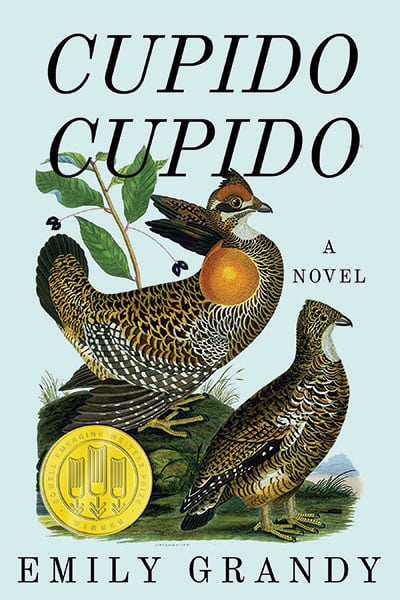
Blending dry humor with emotional depth, Cupido Cupido navigates family estrangement, cultural inheritance, and the complex act of growing up. As 16-year-old Egg wrestles with questions of identity and legacy, the farm he is spending time on with his estranged grandfather becomes a place of unlikely discoveries—about the people who raised him, the profound weight of their shared histories, and the unspoken ways love persists through distance and time.
Egg’s mom barely spoke, her attention laser-focused on the winding roads and the supersized pickup trucks that passed near enough to feel the pressure wave build and subside. The further on they drove, the narrower the roads became, first abandoning the narrow strip of shoulder, then the center line, as if funneling them toward their destination.
Egg slouched in the passenger seat, peeved by the lack of cell phone signal and the ludicrous plan he had agreed to, one that would absorb his entire summer vacation in an abyss of tedious chores. He heard his mom say something over the thumping track he was listening to and turned up the volume. She tugged his headphones off.
“Hey!”
“Egg, listen to me. I know Opa can be difficult—trust me, I know—and I know it’s my fault you have such a bad impression of him. Still, I want you to be nice, okay? You’ve been pretty grouchy ever since we left.”
“Uh, someone married a Canadian and left the country because of Opa, and it wasn’t me.”
She continued as if he hadn’t spoken. “Just think, you’ll be helping take care of the chickens again, like when we’d visit, when you were little. You loved that, collecting the eggs every morning, remember?”
“Not really.”
They turned onto a dirt track, just wide enough for a single car. Now his mom was sitting in the sun, looking hot and uncomfortable in her work clothes. She tipped her sunglasses onto her nose and cranked up the AC. The vents blew cold air in his face.
“Here we are,” she said. Ahead, a rough gravel drive wound its way up one of the tallest hills in the viewable distance. From its base, he couldn’t see the house at the top. The distance across the scrubby pastures, clusters of trees, and a single sweeping power line prevented a clearer view. His mom eased forward, cutting the wheel sharply to avoid potholes. Two filthy, fawn-colored cows stood near the fence line chewing their cud, eyeing the vehicle’s progress with bored indifference. Even in first gear, the car skidded perilously on the steep incline and loose stones. The slow pace was intolerable. By the time the house came into view, Egg had sunk so low in his seat that he could see only the roofline through the window. Outside, a dog barked.
“Looks like he got a dog,” said his mom, stepping out.
Egg followed, squinting into a slap of sunlight. The sizzling heat and deafening sound of cicadas felt unfamiliar and unpleasant.
His mom popped the trunk and with a strength that defied her size—or rather, spoke to her trade, of hauling padded cases full of sophisticated and unthinkably expensive medical equipment across continents—lifted out his suitcase. Egg had dedicated the majority of its volume not to clothes but to sketchbooks, paints, brushes, pens, pencils—both colored and lead—plus a portable scanner, his laptop, and all its essential accessories. His backpack, which he hauled from the back seat, had been reserved for the art books he couldn’t live without, collections of his favorite illustrators’ work. With the weight of masters like Jean Giraud, Hiromasa Ogura, Toshiharu Mizutani, Alan Lee, and Shinji Kimura on his shoulders, combined with the sweltering heat, the fast-food lunch in his stomach became a greasy puddle of indigestible waste. He considered throwing up.
“I don’t see him,” Mom said.
Egg wiped his already dripping forehead. They had parked directly in front of the house. If Opa was inside, there was no way he had failed to see them. The driveway continued further on and would eventually loop past the barn and workshop, skirting the pond, before heading back around behind the house, then down the hill again. After doing a full turn, Egg’s eyes came to rest on the dog tethered to the porch by a long lead. The dog’s fur was mottled gray with patches of black, and in spite of its barking it seemed friendly, more a greeting than a defensive vocalization.
“Alright, Egg, give me a hug. Better hurry or I’ll miss my flight. Tell Opa I said hi.”
Obediently, Egg draped an arm over her shoulder, then rested his chin on top of her head. He had inherited his mother’s Pacific Islander coloring but took after his French-Canadian father in other respects. He got his height, for one thing. That, and his tapered jawline and nose. Hopefully not his uncompromising disposition, though. He could do without that.
“I’ll call you tonight,” Mom said. “Love you, Egg.” She climbed in, started the engine, then rolled down the window to wave goodbye. The dog barked until the car was out of sight, then retreated to its water bowl. In the quiet that followed, a rooster crowed and a couple of hens clucked a response. Egg was left standing alone with his suitcase, his lead-weight backpack tugging at one shoulder.
Sujay’s favorite show was a reality TV program where solo contestants tried to survive the oncoming winter in the Canadian wilderness. He got off on that kind of thing, all that bushcraft, survivalist business, and had made Egg watch three seasons with him. Contestants often described the debilitating moment after setting down, left alone in the remote tundra, as “drop shock.” Disoriented, confused, aimless. Without a stable phone signal, the familiar rumbling of cars, airplanes roaring overhead, or pedestrians squawking into phones, Egg could certainly relate.
For lack of anything better to do, he hauled his luggage onto the porch. The dog hurried over, wagging its almost-tailless butt. Egg knelt and held out his fist. The dog nosed it, eager for the affection.
“Oy, oy, oy!”
The shout from behind startled Egg so badly he nearly toppled over. He rose, spinning to face the old man tottering toward him across the grass, right arm in a cast and sling, a withered cigarette pinched between his teeth. His grandfather was as thin as the wooden posts lining the driveway and equally friendly looking. A narrow, dry stick of a man, face hard as bark.
“Pearl already gone?” he asked.
“Hi, Opa,” Egg said, tentatively. The stained denim overalls seemed more familiar than the man wearing them. “She had to catch a flight. She said to say hi, though.”
“She still call you Egg?”
“Mom does, yeah, but—”
“Speak up!”
“Mom calls me Egg,” he said, louder this time. “But I prefer—”
“Fine, I call you Egg. Come inside. Air conditioning.”
Egg shouldered his weighty backpack and gave the dog one last pat before wheeling his suitcase inside the house. He thought about asking Opa whether they could bring the dog inside, too, as a kind of friendly buffer, but his grandfather was already out of earshot. As Egg shut the door behind him, his skin went from sweaty and salty to goose-pimpled, an effect that reminded him of reaching inside the ice cream cooler at the bodega near their duplex.
“No shoes in house,” Opa called from somewhere inside.
Egg kicked off his unlaced Nikes and followed the sound of his grandfather’s voice. He found the old man in the kitchen. Opa’s house, or rather the scent of it, spicy and earthy, struck a familiar note in Egg’s memory. It was made of solid stone—more like boulders, really, cemented together—and thick wooden beams, as though the house had sprouted straight from the earth. Opa built it himself, that’s what his mom said, and Egg believed her. No normal architect would design a house this way. Thanks to the number of additions tacked on over the years the home was a mishmash of incongruous rooms. Egg gazed upward. Two balconies, one on top of the other, overlooked the combined kitchen and living room. Over each railing hung bouquets of clothes, twisted sheets, wet towels, and faded blankets.
Floor-to-ceiling windows smudged with hazy dog-nose prints overlooked the porch, the scrubby hills and forested valley beyond. Undoubtedly, some buyer would kill for that view. The thought gave him hope. Egg tried imagining the place redecorated. It wasn’t hard to do. Minus the practical, wearworn décor, only subtle hints at others having once lived here remained, small testaments to those who’d moved on. A heavy black Bible sat on the end table next to a sagging couch. A funeral portrait of his grandmother was the only photograph in sight. A few trinkets that might have belonged to her lined a built-in shelf that ran along the ceiling.
Egg sat down at the table, spinning a carved wooden coaster across its surface while his grandfather shuffled around the kitchen, clattering plates and cutlery. In an attempt at amiability, Egg asked, “What’s your dog’s name?” From where he stood, he could see the animal dozing on the porch, its fur ruffling in a light breeze.
Opa sniffed loudly, dropped his cigarette in a used cup, then hacked into the sink. “Your ibu, she feed you?”
It took a moment to process the question, the unfamiliar word. Even after fifty, sixty years in America, Opa evidently still peppered in Indonesian vocabulary.
“We had lunch in the car,” he answered.
Opa appeared to register this, then proceeded to fix himself a sandwich using his one good arm. Egg almost offered to help but didn’t want to imply that he was now his grandfather’s caregiver. The old man ate standing up, mustard smeared at the corner of his mouth. When he finished, he dusted the cutting board over the sink then left without saying another word. No “I’ll show you to your room” or even “Here’s the mop and bucket.” It hardly mattered. Egg knew where he would be staying.
His mom’s old bedroom was on the top floor, the third floor, he remembered that much. He shouldered his backpack then lugged his suitcase up the oddly winding steps, trying not to bash it into the walls and railings. But the room had been converted to storage. It was so full of old junk that the single twin bed at the back was all but invisible. It felt hotter up here, too, and muggy, as if the AC couldn’t be bothered to climb the stairs. Spying an old box fan trapped between a chair with no seat and two stacked boxes labeled, curiously, “Paul” and “Pearl,” he shifted the refuse until he could plug it in. A powerful breeze followed, loud and hot as a hairdryer. He plugged his phone into the same outlet, realizing there was almost no signal, and no Wi-Fi whatsoever.
Egg swore under his breath. Sure, he had brought plenty of art supplies, which could suffice as entertainment, but how would he get any illustrations to Jay without an internet connection? It’s not like he could just walk to the library anymore, not when the nearest facility was twenty-something miles away. But that was a problem for another day. If he planned to reach the bed by sundown, he would have to begin the long process of decluttering.
He surveyed the junk pile. The fatigue and lingering cramp of air travel hardly boosted his motivation. With a sigh born equally of tiredness and dismay at the immensity of the task set before him, he decided to begin by eliminating the boxes, thinking he might, at the very least, create a serviceable walkway. Egg pulled the nearest one toward him, the one marked “Pearl.” It was taped shut, but the tape must have been opened a few times because it curled tantalizingly at the edges and pulled away easily.
As if excavating layers of earth, the deeper he dug the older the contents became.
Stacked neatly inside were notebooks, loose papers, certificates, and ribbons from the schools his mother had attended. He lifted each one out without looking too closely, as if reading any of the words might unlock a secret diary of longings; just the thought made him cringe. Egg searched for his mother’s photo in her high school yearbook. She wore black plastic glasses, the only Asian American girl in the entire school. His mom hadn’t collected any signatures or well-wishes for future success and happiness. He wondered briefly whether her brother’s yearbook, that of the charismatic Uncle Paul, would tell a different story.
As if excavating layers of earth, the deeper he dug the older the contents became. His mom’s fifth-grade report card. A birthday card from when she turned eight, signed by “Ibu, Ayah, and Paul,” all three names penned in the same exacting script his grandmother had used to sign Egg’s birthday cards, which had stopped coming the year he turned seven. There was a class photo, taken outdoors, with his mother looking sour, or stubborn. Or maybe she was just squinting into the sun. Dozens of crayon drawings, yellowed with age. At the very bottom, he found a folded baby blanket. As he lifted it out, pulling it toward him as if to catch the scent of his mother, a single snapshot and a stack of papers the size of a brick, held together with twine, fell from its folds.
The photo was of his mom, Uncle Paul, Oma, and Opa taken in black and white, all four of them posing together in their best clothes. Of the four, only Paul was smiling. On the back someone had stamped the year and the name of a church. A directory photo, but no baby pictures. Maybe his mom had those at home. Maybe this box contained items she hadn’t fully committed to saving.
Finally, he reached for the bundle of papers and carefully undid the string. Each page was folded in thirds, as if missing its envelope. He chose one at random and opened it. A date at the top, written numerically, was the only legible script. Everything else, scrawled out longhand in faded black ink, was written using an unfamiliar alphabet. The graceful arcs and confusion of dots encircling the letters made him think Arabic, but he wasn’t sure. There were so many pages and all, as far as Egg could tell from a cursory glance, were in the same handwriting. Perhaps a pen pal had written to his mother; but no, the dates didn’t add up. These were written long before she was born. Someone must have written to his grandparents, but even Opa would’ve been a teenager, a young man, back when these were penned.
He re-tied the stack of letters and tucked it in the front pocket of his backpack, thinking he would ask Opa about it later. Maybe it would give them something to talk about.
Maybe it was the heat, the lack of sufficient airflow, but sifting through that one lousy box in the attic left Egg feeling depleted, as if he had run one of the after-school interval workouts he’d always dreaded like a punch to the gut. At least this time he didn’t have Coach Cordasco on the sidelines. Defeated, Egg abandoned his task, figuring he had an entire summer to sort it out. If he had to sleep on the sofa for a day or even a week, so be it.
He emptied the art books from his backpack and replaced them with sketchbooks, pens, and pencils, then carried the bag down to the porch. He didn’t especially relish the humidity, either, but figured he and the nameless dog could keep each other company. Besides, starting the illustration project for Jay’s blog would satisfy his itch to do something amusing while also making him appear productive.
Egg unfolded a chair with scratchy woven seats and sat in it, cross-legged and barefoot. The dog crawled underneath and rested its chin on its paws. The porch overlooked a slope dotted with oak and hickory. Gaps in the branches offered glimpses of other hillsides indistinguishable from this one. Egg preferred cityscapes, both illustrating them and living amongst them, but Jay’s blog, Sujay Goes Camping, favored this sort of wild green abandonment. Egg’s images—watercolors of landscapes, detailed sketches of insects and camping gear, maybe even some botanical illustrations—would accompany Jay’s travelogues, photographs, and how-to guides. With an impressive number of subscribers, and counting, it would be the ideal addition to Egg’s burgeoning portfolio, which had to be outstanding if he hoped to get into any of the art schools in Toronto worth its admission. Besides, you never knew who might stumble upon your artwork out there in virtual space and “reach out.” He had planned on doing the majority of the work while actually camping with Jay, but that option was no longer available. This unexpected alternative, however, was not lacking in the requisite department.
He set himself up with a fresh sheet, placed the tip of his pencil to the page, and began transferring his impressions of the tree line to the paper. Only once did an airplane pass overhead, stitching a white seam over the pale blue sky. Despite the complete absence of distractions, it was impossible to achieve the meditative level of focus required to produce quality art on account of the mosquitoes and biting flies. Once, he inadvertently squashed one with the notebook, leaving an unsightly stain and mangled insect limbs he could not remove from the page without worsening the mess. With a sigh, he turned it over and started again on the verso. When this happened again, Egg decided to retreat to the air-conditioned bunker of his grandfather’s living room, but then something shifted at the edge of his vision. There, along the driveway, in the brush. Something brown, an animal. A groundhog, maybe?
But no, not a groundhog, nor even a mammal. It was a bird, in fact, very like a chicken. Meaning, of course, it was short, compact, and walking on the ground rather than flying. Though similar in size and shape to its cooped counterparts, it displayed features Egg had never seen before: specifically, a few longer feathers on its neck that pointed backwards, rather like a reverse shirt collar. Its body feathers were mottled, a bit of white but mostly reddish-brown, some black detailing around the eyes, a white chin. Do birds have chins? Throat, maybe, was the right word. Then a second one appeared, though this one seemed duller in color. Something, some long ago biology lesson, perhaps, made him think this newcomer might be a female.
Then again, what did he know about chickens, domestic or otherwise? Perhaps these two had escaped their enclosure. Maybe he should alert his grandfather of their breakout. Would this be one of his regular summer chores, chasing down fugitive animals? Then again, maybe this was what free-range chickens looked and acted like, a bit less meaty, a little more wary. He swatted another mosquito, back of his neck this time. Before he could make up his mind about what to do, the chicken-birds disappeared into the low brush and were gone.
Eventually, the cicadas’ rattle was replaced by a chorus of chirping crickets. Under the porch light a party of moths dressed all in white danced in tight circles. With night creeping up on him, Egg assessed his work. Three pages of landscape studies accompanied by a few relevant close-ups: inching caterpillars, withered leaves, gnarled branches. I’m a goddamn Beatrix Potter, he thought, though not unhappily. On the contrary, he was pleased with the result. Unfortunately, it seemed he would have to wait to share any of his creations with Jay until the twenty-first century reached this hilltop.
When he returned from wherever he had been and spotted Egg on the porch, Opa’s weathered face registered surprise, as if he had forgotten about his visiting grandson. Then his eyes crumpled to irritable slits, staring down at the ground as he walked. Without asking what Egg had been up to all afternoon or even glancing at the sketchbook lying open on his lap, Opa stomped out his cigarette, unchained the dog, and then the two of them, man and canine, went inside, Opa shutting the door behind them. Whether to keep the cold air in or unwelcome guests out, Egg couldn’t say. He followed anyhow, bringing his backpack with him.
He heard Opa pouring kibble into a metal bowl and tracked him down in the kitchen. Opa still had on his crusty overalls but had changed into worn house slippers.
“Egg? You there?”
“I’m here,” he said, setting his backpack on a chair at the dining room table. It sat there, its zippered lips puckering open, like an underfed third party waiting to be served another helping.
With a certain rigor that defied both his age and stature, Opa turned and said, “Why you stand there? Rice there, cooker there.”
Luckily, the rice cooker, with its four precisely labeled buttons, was one of the few appliances Egg could capably operate. He washed the rice, added water, then pressed the appropriate button to initiate the cooking process. This would be the first home-cooked meal he’d had in days, he realized. Even when his mom returned from work with time to spare, she rarely had the energy to fix a meal requiring any prep. More often than not, they would heat up something frozen, order takeout, or go next door to Jay’s, though Mrs. Kumar didn’t cook either, not at home. At first, Egg had found this odd, given that she was the head chef at their family-owned restaurant, Café Tandoor. Later, he’d come to understand that the last thing anybody wants to do is repeat the same work at home that they’ve been doing all day elsewhere. Like Egg, the Kumars subsisted primarily on a diet of leftovers, courtesy of Café Tandoor.
Opa was quick to extricate Egg from his reverie. “Why you always stand around? Go set table!”
Obediently, Egg hunted for dishes and cutlery. As he set them out, he noticed his grandfather struggling to dice a narrow eggplant one-handed. “Need help?” Egg offered.
“I can do,” Opa said, but his knife slipped on the waxy purple skin. With a scowl, he stepped aside, and Egg took his place. When he finished, Opa swept the cubes into a pan and slammed the tray into the oven. As it baked, Opa stood silent and stoic over the burner, sautéing pre-peeled garlic and shallot with chili shrimp paste and a squirt of lime. The intensity of the spice burned Egg’s eyes, making them water. Still, he remained close by in case he was needed, unsure what to do with his hands until the rice cooker beeped. When it did, and without being asked, Egg dished up two bowls. Opa stirred the broiled eggplant into the prepared sauce, which Egg transferred to the table.
Opa followed, setting out a small jar of homemade pickles.
“Here. You try,” he said.
As a rule, Egg was wary of any vegetable pickled by his maternal grandparents. If these were anything like the ones Oma used to send every August for Indonesian Independence Day—along with the crackers his mother called krupuk—they could ulcerate your esophagus. When he was young, he had asked his mom why they sent pickles when, presumably, they could send cookies or chocolate or toys. She had explained it was a tradition that reminded them of where they grew up, which meant nothing to Egg at that age. Later, when pressed, she told him that her parents had still been there, had been children when it happened, that fight for independence. Egg, despite being only two generations removed, knew nothing about the event, least of all who the islanders had needed independence from. The British seemed a reasonable guess. Or was it the French? Either way, the connection between pickles and crackers and the revolution against the colonialists seemed tenuous in his mind. Maybe it had something to do with restrictions imposed by the European imperialist power. Perhaps they’d instituted a pickle prohibition that, when lifted, gave the people reason to celebrate by sharing pickles so spicy that any lingering colonial inhabitants would have to keep their distance, or move away entirely. Or maybe pickles and crackers just shipped well to Canada. Now Egg chose one and set it gingerly between his teeth. As expected, his tongue blistered, the insides of his ears burned. At least Opa got a good laugh at his expense.
“Your ibu, she not cook for you?” he demanded.
“Not really,” he managed, filling his mouth with satisfyingly mild rice.
Opa’s nicotine-stained smile vanished. “Tomorrow, you help with chores.
Start early.”
Egg swallowed, then agreed, resigned.
“Your ibu not here. You not sleep all day, otherwise you turn fat and lazy, like pudding.”
“Alright.”
As if Egg had argued, Opa added, “You live here, you work.”
He snatched the letters away as if they contained some obscene or horrific contents, then shuffled straight to the bin.
A flush of heat that had nothing to do with the pickles colored Egg’s ears and neck. Feeling defensive, he spluttered, “I was cleaning out Mom’s room earlier!” not so much implying that no one had bothered to do that particular chore in advance of his arrival but stating it outright. Of course, his claim was only partially true. Opa couldn’t possibly have cleared space with his arm in a cast and sling, and Egg hadn’t actually made significant progress even with both arms intact. He’d sifted through only one lousy box, had hauled nothing out to the burn pile, which reminded him…. “Hey, Opa, I found this while I was going through stuff.” He extracted the brick of letters from his backpack and set it on the table.
For an unnaturally long moment, Opa stared at the collection, frowning. The skin around his nose wrinkled as if his grandson had emptied a bag of fresh dog waste right there on the tabletop. “Where you find this?” he asked.
“It was in a box with Mom’s name on it.”
“Give to me,” Opa said, reaching over his plate. He snatched the letters away as if they contained some obscene or horrific contents, then shuffled straight to the bin. With a slippered foot he pressed the pedal, the lid opened, and in they went. Bewildered, Egg said nothing. Then Opa returned to the table, collected his bowl, and carried it to the kitchen as well, silently tipping the last morsels into a bucket under the sink labeled “food scraps.” The final “s” was cockeyed, as if added later by a different writer.
While Opa stepped outside to smoke, Egg washed the dishes—without explicitly being asked to do so. He puzzled over the old man’s odd behavior. Tossing the letters in the bin had, naturally enough, only served to pique his curiosity. Illegible or not, Egg fully intended to retrieve them once his grandfather was sound asleep.
The house hadn’t seen a good cleaning, dishes or otherwise, since the incident that broke his grandfather’s arm. Possibly longer. Up past his elbows in suds, Egg thought of the time-saving machines at his dad’s new house, the kind that did this sort of tedious work for you. Although Egg hadn’t forgiven his father for ditching him and his mom for a newer family model, not by a long shot, he wouldn’t have minded spending the summer with him or, more to the point, with a backyard pool, a dishwasher, and neighbors with every gaming system known to exist. Then again, almost any situation outranked shifting rubbish, mowing cow fields, and picking up after elderly, cantankerous relatives.
After his smoke, Opa returned to the living room, sinking into the sagging couch to watch the news on a boxy television set no bigger than Egg’s laptop. The dog lay at his feet, its legs sprawled across the area rug. After a while, his grandfather said, “Alright, I go to bed,” and rose from the couch, turning off the TV. The dog followed. Egg heard them upstairs, Opa’s slippers scuffing the floorboards, the dog’s nails clicking. By the time he finished washing up, thundering snores could be heard rumbling overhead. Egg opened the bin and pulled out the stack of letters. Since food scraps were disposed of elsewhere, the papers hadn’t been ruined by stains or oily smudges. He gave them a quick dusting, then returned them to their hiding place in the front pocket of his backpack.
In the course of the afternoon, he had forgotten about the wall of boxes barring his access to a place to sleep. With the twin bed buried at the furthest, most inaccessible reaches of the stifling attic room, the sofa seemed a reasonable alternative. Egg retrieved his phone from the third-floor outlet then returned to the living room to check his messages. He had one missed call and one unread text from his mom. She had landed safely, she said, and would try calling again tomorrow. She also reminded him to behave and to try to have fun. She must have forgotten where she’d left him, and in whose company. Egg wanted to respond, but the phone struggled to send even the briefest of messages. Eventually, he fell asleep on the couch with the device’s indicator still spinning in circles.
 Emily Grandy is an award-winning novelist, biomedical editor, and environmentalist writing at the intersection of science and storytelling. Her debut novel, Michikusa House, was awarded the Landmark Prize, the Silver Nautilus Book Award, and was longlisted for the Edna Ferber Book Award. Her second novel, Cupido Cupido, won the Sowell Emerging Writer’s Prize and was a finalist for the PEN/Bellwether Prize. SShe writes weekly at The Outsider, a Substack of quiet reflections on nature and our place in it. She lives at the confluence of the Milwaukee, Menomonee, and Kinnikinic Rivers on the shores of Lake Michigan.
Header photo courtesy Pixabay.