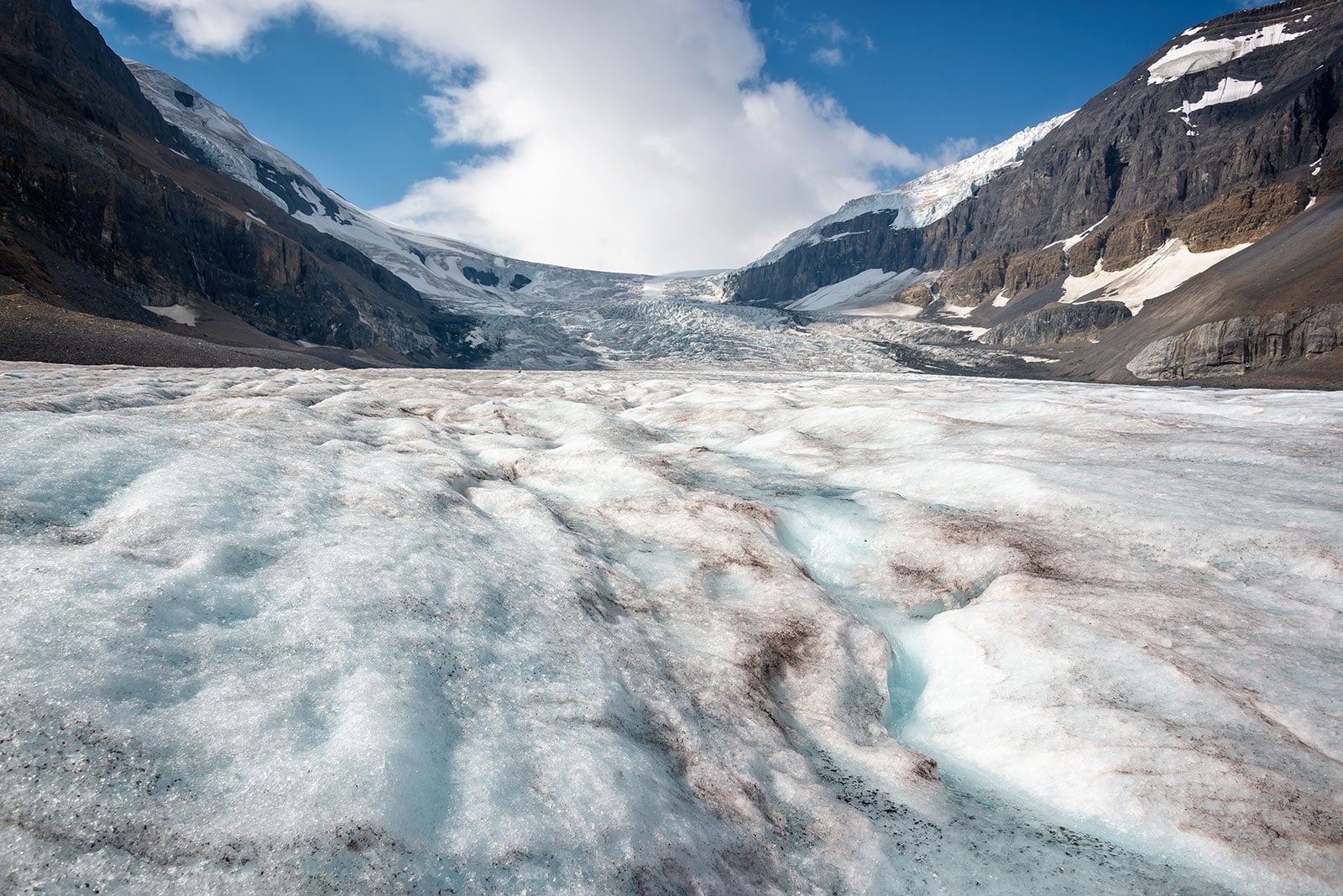

Touching a glacier is like touching history, in a way. There are so many layers of previous atmospheres and previous years, all embedded in the ice.
Introduction
I was first drawn to Dr. Sarah Boon’s writing many years ago because of our shared love of water. Her environment was a far cry from mine—I live in the Arizona desert; she on Vancouver Island—but rivers, and those who love them, speak a universal language, even if my rivers were dry and hers colored a startling turquoise by glacial rock ground into flour.Boon is a skilled science writer and a courageous one. Her first book, Meltdown: The Making and Breaking of a Field Scientist (University of Alberta Press, 2025) offers an unusually honest look at the life of a field scientist. She deeply loved her career as a glaciologist and ultimately was forced to leave it. The book is filled with loss, yet revels in the beauty of some of the wildest places on Earth. Boon has traversed glaciers in the Canadian Rockies and the Arctic, faced down a grizzly from a helicopter, lost her footing on dangerous terrain—literally and metaphorically—and reinvented herself as a storyteller and a fierce advocate for those who struggle with mental health.
We spoke, appropriately, in the Canadian Rockies at an off-grid cabin just outside Kootenay National Park, amid the pines and the sound of fast-rushing water.
Interview
Melissa Sevigny: Tell me why you became so fascinated with glaciers.
Sarah Boon: I’m not sure. I mean, I saw a lot of glaciers when I was a kid because I went to the Canadian Rockies regularly. I was on the Athabasca Glacier when I was two. I just had this feeling that I really liked glaciers. There was something otherworldly and distant about them. I wanted to know about them.
Then I met Dan Smith, who is the person who triggered my whole field career, and he was able to tell stories about glaciers to understand how they worked and what they did on the landscape. That was a “ping” moment for me: “Oh, you can actually study these things!”
Melissa Sevigny: So you remember that, standing on a glacier when you were two years old?
Sarah Boon: Vaguely. I remember it from a picture. It’s one of those things where you don’t know if you actually remember, because maybe it’s just the picture that gives you that memory.
Melissa Sevigny: Most of us have never stood on a glacier and most of us probably never will. What is it like? Can you describe it?
Sarah Boon: It’s awesome. If you go to the Icefields Parkway, they have a bus that goes up the glacier. You can get out at the top and stand on the glacier, touch the ice. That’s never been my thing. It’s too touristy. But getting close to a glacier and walking on it and touching it—it’s like it’s alive. Especially the glaciers we worked on in the Arctic, they would do a lot of creaking and cracking and sound like a subway train was going underneath. They really just feel alive.
I think a lot of people think of them as this inert mass that hardly moves, but glaciers are so dynamic. Everybody says “glacial pace” and “slow as a glacier” and stuff like that, but glaciers can move pretty fast. Touching a glacier is like touching history, in a way. There are so many layers of previous atmospheres and previous years, all embedded in the ice.
Melissa Sevigny: Is that sense of touching history something you had with your first encounter with a glacier, or is it something you developed with a scientific lens?
Sarah Boon: I think I developed it through a scientific lens, and it was particularly relevant with my first glacier field site, because the water running off the glacier was carving these caves into the ice that was still on the side of the valley, and you could go into these caves and look up, and you would see ice that used to be at the bottom of the glacier, but it had been whittled out and moved forward. That is when I thought about the history of glaciers, the history they carry, looking up in these caves and seeing all this folding and sediment and stuff that it would have carried a hundred years ago when it was moving.
Melissa Sevigny: In a nutshell, give me some of the focus of your research, when you were doing active research on glaciers. What questions were you trying to answer?
Sarah Boon: I worked on Hilda Glacier in the Canadian Rockies and I worked on John Evans Glacier in the Canadian Arctic, and very briefly on Belcher Glacier in the Canadian Arctic. All of my questions were based on water, hydrology. So: how does water move on the glacier, how does it get into the glacier, how does it come out the front again? My work on John Evans Glacier in the Arctic, I was measuring water level in lakes on the surface, and measuring water level in a stream coming out the front, and sometimes we would have an artesian fountain come up, and that would give us the information that the glacier runoff was coming through the glacier but hitting a frozen wall and shooting up and coming up as an artesian fountain instead.
Melissa Sevigny: You’re talking about doing field research in incredibly remote places. You had some rather hair-raising experiences. Do you want to share one?
Sarah Boon: The most hair-raising experience… there were two. The first one was on the John Evans Glacier, and I tripped on my crampon and started sliding toward an interglacial lake, or pond, actually. I knew the pond entered into a moulin, which means I would fall into the moulin and be stuck in the middle of the glacier somewhere.
Melissa Sevigny: What’s a moulin, exactly?
Sarah Boon: It’s a hole in the ice where the water goes in. It goes deep in.
And so I’m sliding down this hill toward the pond. I’m wearing raingear so I have no friction and I’m just sliding. Eventually I managed to flip on my stomach and get my crampons into the ice and that way I could stop. I stopped probably this far from getting into the stream.
Melissa Sevigny: Like a foot!
Sarah Boon: And I was pretty scared. That was scary. The other terrifying thing was when I went to Belcher Glacier in 2008. That field season only lasted five days because of what happened. We went out from camp to check some of our hydrological stations, and when we came back, there were slush flows everywhere. A slush flow is a glacial stream, but it’s filled with melting snow and it’s flowing, so basically it’s the time when you have a switch from a snow-covered glacier to an ice surface on the glacier. These slush flows cut us off from our camp. We could see camp, but we were stuck, we couldn’t get anywhere.
I think it was a bad decision now: my grad student crossed one of the streams because he thought we would get to camp that way. But it was like quicksand. He started getting sucked in. I yelled at him and told him to distribute his weight and pull himself out—instead of stepping out, he had to lean forward and distribute his weight. He got onto another ice island, but there was another slush flow between him and the camp, so we had to phone the base and get a chopper out, and it was the middle of the night.
And I felt stupid! There had to have been something better I could have done instead of calling the base. Maybe we could have stayed on the side of the slush flow and waited for it to disappear, but I had no idea how long it would take to disappear.
Melissa Sevigny: You’ve thought a lot about—maybe because of those experiences—what safety in the field looks like. What kind of ideas do you have for making this work safer for the scientists who do it?
Sarah Boon: I wrote an op-ed for Nature about this, because a colleague of mine stepped on a glacier out of a helicopter without her crampons, slipped, and fell down a moulin. My suggestion is that people who are going to be principal investigators, the leaders on research programs, get leadership training, so you can understand your people, assess the situation, make appropriate decisions for that situation, and feel confident about it. Some kind of field leadership training.
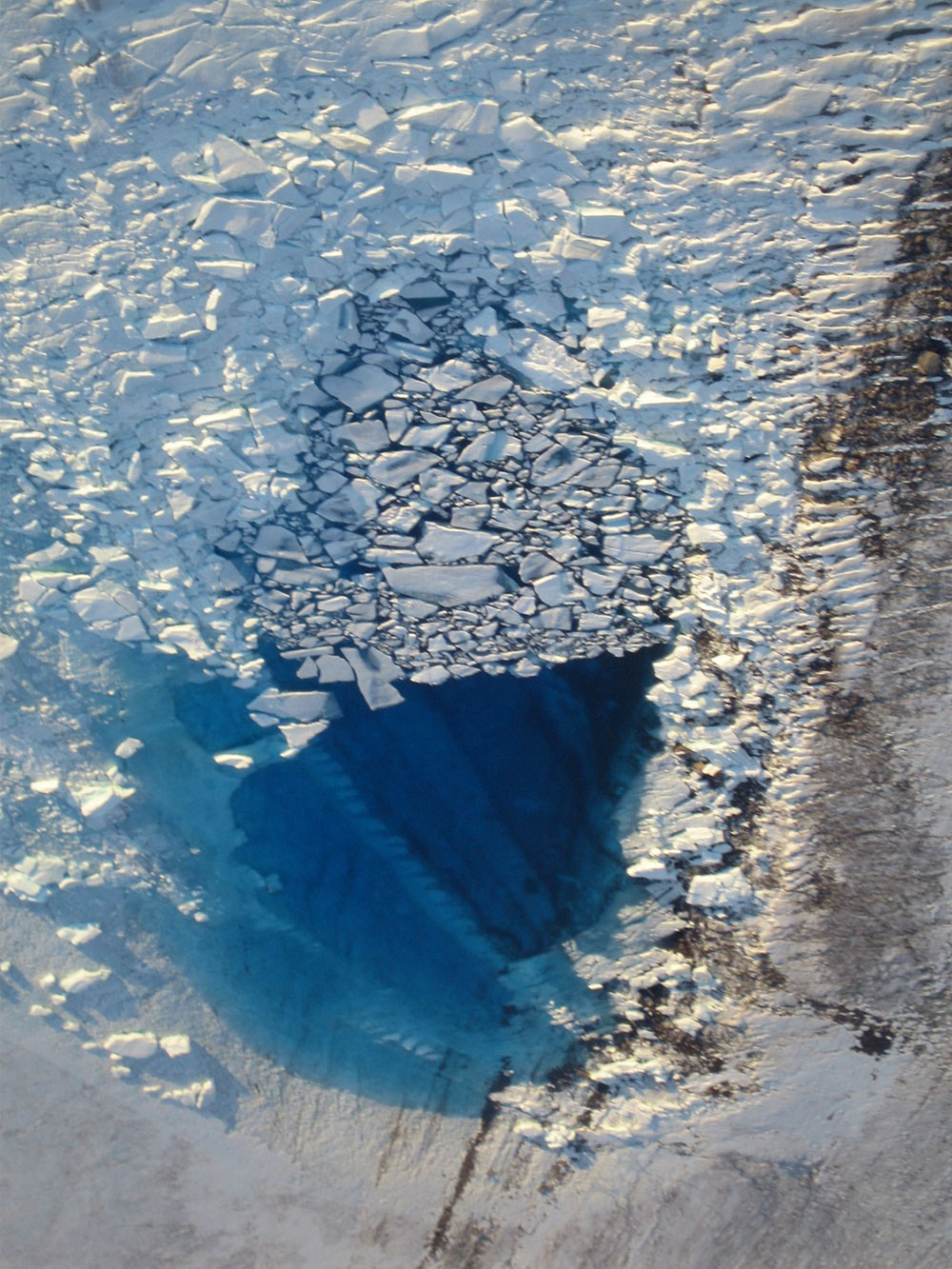
Photo by Sarah Boon.
Melissa Sevigny: Are there specific dangers or challenges for women in the field?
Sarah Boon: There’s the whole thing about going to the bathroom and everything is just flat. You have to tell everyone to turn your backs so you can go to the bathroom. I was lucky. I did not experience any discrimination in the field. One time, I was the only woman in camp. It was fine. Everybody pulled their weight and nobody said anything negative. I had great experiences in the Arctic and working in the Canadian Rockies by myself.
I have to say, though, I don’t think I was as well treated when I joined the Southern Rockies Watershed Project. But I don’t think—well, part of it was because I was a woman. Part of it was because I was junior faculty, and there was a hierarchy and I wasn’t adhering to it.
Melissa Sevigny: It seems like you’ve drawn a lot of strength from the idea that women have been going out and doing this kind of fieldwork for decades or centuries.
Sarah Boon: Yeah. I’m proud there are stories from the early 1900s of women going out in the field, and doing it with joy, regardless of what people think.
Melissa Sevigny: I really liked how you wrote about these Victorian women in hobnailed boots and skirts climbing the mountains. I was curious if you were drawn to their stories because they were so different from what you experienced, or because they were similar?
Sarah Boon: I felt drawn to them because of their personalities. I was very drawn to the fact that they upended female norms for their time periods, and that they did it in the outdoors. I felt proud of them. I felt proud to be part of their legacy, in a way. They did what they wanted. It happened to include science and the outdoors. That said something to me.
I don’t know if I saw myself in their climbing hobnail boots… which I could imagine would be terrible… but I saw them as great way markers. I may feel like I’m the first person dealing with these issues, but I’m not. It’s been happening for a hundred years.
Melissa Sevigny: I know this is an important topic for you: Why is it important that we keep doing fieldwork? It’s dangerous, it puts you out in these remote places. I think sometimes people think—maybe we can do that kind of research with satellites or robots or remote sensing. Why do you think it’s important that we get boots on the ground and really see these places?
Sarah Boon: I think it’s important because you can only get so much from remote sensing, and you always need people on the ground to verify what you’re seeing through remote sensing. For example, now with remote sensing you can identify the “firn line” on glaciers, which is the moving line between the melt area and the accumulation area. The firn line shifts as the snowline shifts. You can look at that on remote sensing, but the only reason you can do that is because someone was on the ground and measured that firn, and you can look at it and say, yep, that’s firn, because somebody in the field told me that’s what it was.
We get a lot of information from fieldwork that you wouldn’t get from a model or a remote sensing image. In Apocalyptic Planet, Craig Childs goes out with researchers on the Greenland Ice Sheet, and they have to reset all of their weather stations because they’ve all been crumpled by ice flow or snow. Those weather stations are critical because they tell you if the Greenland Ice Sheet is warming up or not. They tell you if the air temperatures are higher than they were last year or the year before. These aren’t things you can get from remote sensing.
I think sometimes people rely too much on remote methods. You really need to get out there and understand what it is you’re looking at. When we had the bad fires in British Columbia in 2023, they used the forest inventory, which is all LIDAR data, to understand the forest that was burning. Well, it turned out some of the LIDAR data were wrong. There were areas with slash piles that were marked as being forested. Slash piles are very flammable. They needed to know that information for the fire response. If somebody had been down there checking the LIDAR data, they would have known that.
Melissa Sevigny: Those are stunning practical examples. Do you also feel there’s a philosophical disconnect? Like, how you feel looking at a satellite image of a glacier verses standing on a glacier?
Sarah Boon: I much prefer standing on a glacier. I think it’s a temperamental thing. Some people don’t want to go out there and prefer working on a computer, and that’s fine, because we need people who do that. But for me, I need to be out there, seeing what’s happening, hearing what’s happening, making notes about what’s happening. I need to be there.
Melissa Sevigny: It’s clear you’re passionate about this field. Will you talk about why you left academia?
Sarah Boon: I left academia because I basically had a mental breakdown. I would have these high periods where I could get a lot of work done, and then these low periods where I couldn’t get any work done, and I had to rely on my colleagues to do the work. I took a leave of absence, because I thought, “I’ll take a leave of absence for six months and I’ll get better, I’ll go through counseling and take my medications and I’ll go back to work.”
But it just got worse and worse. My husband and I ended up moving because it was obvious I was not going to be able to do my job as a professor. I just couldn’t juggle the things I needed to juggle. I couldn’t think fast. I could hardly even write reports or analyze data.
I had been diagnosed with major depressive disorder, and when I saw the psychiatrist in the place where I moved, he diagnosed bipolar II and anxiety. That made sense, given my history. It really explained some of my troubles at the university. That’s how I left academia. It was fairly sudden and fairly chaotic.
Melissa Sevigny: Devastating, I imagine.
Sarah Boon: Devastating. Because as an academic, it’s not just a job. You’re personally invested in everything. It’s your life. To not be able to have that life anymore, the community of colleagues and friends, going to conferences and meeting up with everybody and talking science—you lose all that. When I quit, I lost my community, I lost my friends, I lost my science. It set me adrift.
Melissa Sevigny: How did you cope? What happened next?
Srah Boon: I’m still trying to cope. It’s been 12 years since I got diagnosed and I’m still trying to cope. I don’t think I coped well at first. Part of it was I was trying a lot of different medications and getting a lot of side effects, so it was hard to have any kind of life. I could be sick in the bathroom or having terrible restlessness or a migraine or something from the side effects.
I went for long walks with the dogs in the woods. That was helpful for me. Being out there, just me and the dogs—I never saw bears, even though there were bears out there—that was the best thing I could’ve done, walking for an hour or two every day with the dogs and being by myself. Not even think about what’s going on, but just be there in the woods.
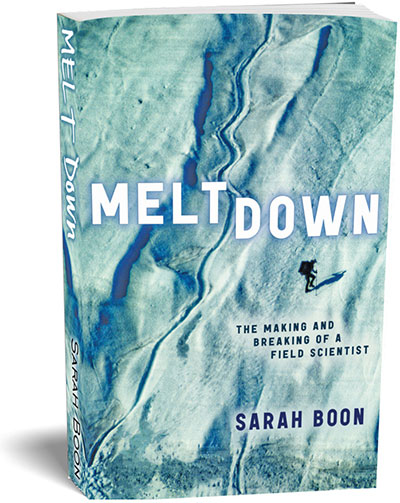 Melissa Sevigny: I always admired how openly you write about mental health on your blog, Watershed Notes, and in your book. The title Meltdown so perfectly captures this duality we’ve been talking about, the work you did as a glacier scientist and then what happened to you with your mental health. What prompts you—or maybe, what gives you the courage to do that? It’s a subject that I think in a lot of circles is still very taboo.
Sarah Boon: It is taboo, and I think that’s part of my intention, to make it less taboo. Also, I felt like I had nothing to lose, and there are people who have a lot to lose, so I feel like I’m speaking for people who can’t do it; who can’t get out there and talk about it because it will affect their job or friendships or whatever. I feel like I’m talking for them. Maybe they don’t agree.
But if I can do it, I feel like I should do it, because I want to normalize mental illness… maybe not normalize it, but tell people that we’re out there, and we have these problems, and it’s an invisible illness but it has these impacts. It’s not like having a cast or something. It’s like having a cast on your brain. I want people to have some care and consideration for other people, because you may not know what they’re going through.
Melissa Sevigny: You felt like you had nothing to lose because you had lost it all already?
Sarah Boon: Pretty much. I thought that—part of me thought that maybe I didn’t want my colleagues to read the book because I didn’t want them to know why I left. But part of me thought, this is a really important part of the story. To me, it opens up the silence around mental health, especially in academia.
One of the things I remember reading about a woman who wrote about mental health in academia is what she said: “People have mental health issues but they get normalized, and then everybody feels like, oh, if I have this issue, if I’m depressed or have anxiety, it’s normal, everybody has it.” And so I wanted to be able to say, no, it’s not normal. These are illnesses you have to treat so you can feel better, and not feel like “everybody in academia has it.”
Melissa Sevigny: As if you were pretending, “everybody has a broken leg, everybody hobbles around in a cast.”
Sarah Boon: Exactly. Like: really?
Melissa Sevigny: If you could make one change for the people coming up in academia after you, that would help support them if they’re struggling with mental health, what would it be?
Sarah Boon: Don’t feel like you have to do everything all the time. Remember to say no to things. And get yourself a mentor or two who will help you navigate the bureaucracy of academia, and listen to you and give you advice on how to manage.
Melissa Sevigny: You’ve written about the importance of women being able to find a female mentor in academia. Is it still a struggle to find a woman mentor?
Sarah Boon: At my university they just started a mentorship program the year I started, which I thought was great. I asked for what I wanted. I wanted a woman in science and someone who wasn’t in my department. I got matched with somebody in math. It was great having a mentor and being able to talk about things that happened at the university and in my department, and to hear about her struggles. She was treated really badly in her department. She actually left her department for another one because of how badly she was treated.
But for me, being able to empathize with someone and chat about what was going on—it’s like having a release valve. You feel comfortable, you can say anything, and they might give you advice or say, “Oh, that’s terrible, I hear you and I empathize with you.” Which goes a long way, when someone can do that for you.
Melissa Sevigny: After your bipolar diagnosis you reinvented yourself as a science writer. Did that feel like a reinvention? Or was that more like coming back to your roots from the start?
Sarah Boon: It felt like coming back to my roots. On the one hand, it was reinvention. It’s only the last year or so that I’ve realized it’s reinvention, because I lost so much when I left academia. I had to become someone different. I had to repopulate my life with the things—the spaces—that had been taken away when I quit my job. There were all these spaces in my life that were originally part of being on the job, and I had to fill them in with something else.
Science writing became that. I worked for Canadian Science Publishing writing blog posts for them. It was a good way to ease back into writing and science writing. Because they gave me long deadlines and I was allowed to come up with the ideas I wanted to write about, it was something I could do, even though I was ill. That made me feel better, having that. I wasn’t useless. It just brought me back to my writing roots.
Melissa Sevigny: Because writing was something you’d loved to do as a child.
Sarah Boon: Yeah, and I’d done it through university. I’d done a public affairs internship in writing. I’d done writing all through my Ph.D. So writing was a big part of my life. When I started my academic job, it stopped. Leaving that job and going back to writing was kind of vindicating.
Melissa Sevigny: Tell me about how you approached crafting your book. I don’t know if hybrid is the right word, but science memoir is this unique style and structure. What drove you to write it and how did you decide how you were going to shape it?
Sarah Boon: What drove me to write it was I would talk to people, and in some conversations it would come up that I’d been to the Arctic. People would be like: That is so cool! I got that enough times, not just with the Arctic but with working in the Rockies, that I thought maybe somebody would be interested in reading a book about it.
I also thought my life trajectory might be something that people would be interested in reading about, if they’re looking for what happens in academia, or thinking about field work, or want to know how to juggle one job with another, or struggling to find out if they want to do one thing verses another. I realized there was an audience for the book. And I realized I needed to tell my story, and in a sense, let it go. Particularly the mental health parts. Because it’s been a real struggle for me to acknowledge my mental health issues and my limitations.
It turned into science memoir because my life was science.
Melissa Sevigny: I think the traditional view is that science and storytelling use very different parts of the brain. Did you find it easy to slip between them? Did that come naturally to you? Or was it a challenge to blend the two halves?
Sarah Boon: The challenge was in making the science parts accessible. I went back to my research papers, my field notes, my calculations. Once I did that, I had to massage it so it was something other people could read. The memoir parts I could just write. The science parts I had to translate, so they would slip into the memoir easily and not trip people up.
Melissa Sevigny: Writing a book is a feat. What is it like to engage in this incredibly time-consuming, mentally and emotionally exhausting process, at a time in your life when you’re already struggling with mental health and exhaustion? You dropped out of academia because you said, “I couldn’t do it anymore.” How do you go from that to writing a book, which in itself is sort of like getting a master’s or a Ph.D.?
Sarah Boon: Well, it’s been six years. It took me six years to write it and get it published. There’s a spoon theory story—you’ve probably heard about the spoon theory; basically you have a limited amount of energy in a day and each thing you do picks away at that amount of energy. I would write for about an hour in the evenings, maybe two. That was what I could do.
It meant that it took away from the energy I had for the rest of the day. I would have to take it easy during the day, do my hour or two at night, and then decompress, go to bed and read a book or something. Writing the book took as long as it did because of that, because of the limitations of my illness. Sometimes I wonder: What if I wasn’t ill? How long would it have taken me to write that book? I think it would’ve taken a couple of years, maybe.
But I have to get used to the fact that I can’t do what I used to do.
Melissa Sevigny: Did you feel you had to choose writing the book over other things in your life, you know, gardening or spending time with your family?
Sarah Boon: Yes, I did. That’s what I wrote in my husband’s copy of the book, that I’m so glad he supported me when I used up my spoons on writing and didn’t use them on family things.
Melissa Sevigny: It’s important to have somebody in your life who understands why you want to put your energy into your art—which means sacrifice.
Sarah Boon: It definitely means sacrifice, and it’s hard because you have to make that distinction. You don’t want to totally alienate your partner because you’ve used up your energy writing your book. That’s why I tried really hard not to use too many spoons for writing.
With the concept of the “nature cure,” they talk about how being outside is going to fix you. You’re going to be cured! Sometimes, it’s not that you’re going to be cured. It’s more that you’re offsetting some of the negative things.
Melissa Sevigny: It sounds like being out beautiful places, like we are right now, has been a healing, rejuvenating, necessary part of your life.
Sarah Boon: It’s very necessary. Especially when I started hiking the hill near my house—just getting out of the house and doing it. I had a really hard time with my anxiety getting out of the house. I would do lots of things in the house or in the yard, but I was very rarely leaving the house. So getting out in nature was important.
That’s actually my next book: it’s about getting out in nature and what it does or doesn’t do for us, and how we can make the most of it, given the limitations we have.
Melissa Sevigny: Do you want to tell me more about that?
Sarah Boon: I’ve been thinking about it a long time. It’s half about the emotions you feel when you’re out in the woods—like, maybe you feel envy at people who can get up the hills better than you can, or anxious because you’re not at home, or shame because you’re not the same body shape as the other people who are out there. Those are all themes I’m going to cover. Then the next set of themes are what works to help fix it. Is it a “nature fix,” is that what’s working? Is it mindfulness? Do you need to do cognitive behavioral therapy? What about religion?
Melissa Sevigny: Maybe you won’t know until you’re done writing it, but I’m curious if right now you have advice for people who want to get outdoors, want to explore beautiful places, but maybe because of their body shape or their gender or race or physical ability, they don’t feel like they belong.
Sarah Boon: My advice is do it anyway. Like, I go to the pool. I have terrible body shape, but I put on a bathing suit on and go to the pool and feel great. I go hiking. I gasp and struggle going up hills, but when I’m done, I feel good. I think maybe that’s the thing to hold onto. Despite all the other feelings you’re going to have, you’re going to feel good after.
It’s tough, because with the concept of the “nature cure,” they talk about how being outside is going to fix you. You’re going to be cured! Sometimes, it’s not that you’re going to be cured. It’s more that you’re offsetting some of the negative things. I think that’s critical.
Melissa Sevigny: Right, you’re still going to be living with depression or whatever illness it is, but maybe it will become more manageable.
Sarah Boon: Manageable is the right word.
Melissa Sevigny: It strikes me that we’ve been talking a lot about loss. Really, your career path is about that. There’s the loss of the glaciers that you study and you love. Then there’s the loss of your identity, your chosen career, when you had a mental health crisis. I’m wondering if you see those things as tied together?
Sarah Boon: I think they are tied together, for me anyway. My mental health crisis also affected my abilities outdoors. Yes, I had this whole life in academia, I spent a lot of time outdoors doing things that maybe I shouldn’t have done—maybe they weren’t safe!—but I was out there doing them. Once I had my breakdown, my anxiety and my bipolar disorder made it difficult to get out and do things. The glaciers I studied are disappearing. What my husband and I have tried to do is come back to the Rockies once a year and visit the glaciers we are familiar with. Trying to put aside some of that anxiety and get out to the Rockies and enjoy the glaciers while they’re still there. But it takes a lot of spoons. If we hike one day, I have to sleep the next. At least we come out and reconnect with the glaciers we know; they’re like our touchstones.
Melissa Sevigny: It’s physically challenging to make that happen, but it must be emotionally challenging too. You draw solace and strength from seeing these glaciers, but you’re aware, in a more intimate way than most of us are, that they’re vanishing, they’re disappearing. What do we do with the weight of that kind of grief?
Sarah Boon: I don’t know. I know a lot of people say, “The glaciers are retreating! The glaciers are retreating!” but I don’t think they really know what that means. What that means is: our water supply is going to be affected. Ecosystems are going to be affected. Land surface reflectively is going to be affected! All people can say is “glaciers are retreating,” but they don’t know what it means.
Melissa Sevigny: You feel and see the losses much more deeply because you know from personal experience what it means.
Sarah Boon: Exactly.
Melissa Sevigny: How do we carry it?
Sarah Boon: That’s a good question, because we’re carrying so much. Yes, the glaciers are retreating, but that’s just one thing of many that are going on. I think we just have to pick and choose what things we feel are most important. Glaciers are my thing. You have to pick one thing, and that’s your focus, that’s what you worry about.
Melissa Sevigny: Conserve your resources and do what you can.
Sarah Boon: In your area of knowledge, yeah.
Melissa Sevigny: What’s next for you?
Sarah Boon: The second book is where it’s at right now for me. I’m not working super hard on it. With Meltdown, I was pretty consistent with one to two hours a day. This one, I’m still ruminating and cogitating and reading background stuff. That’s what’s next.
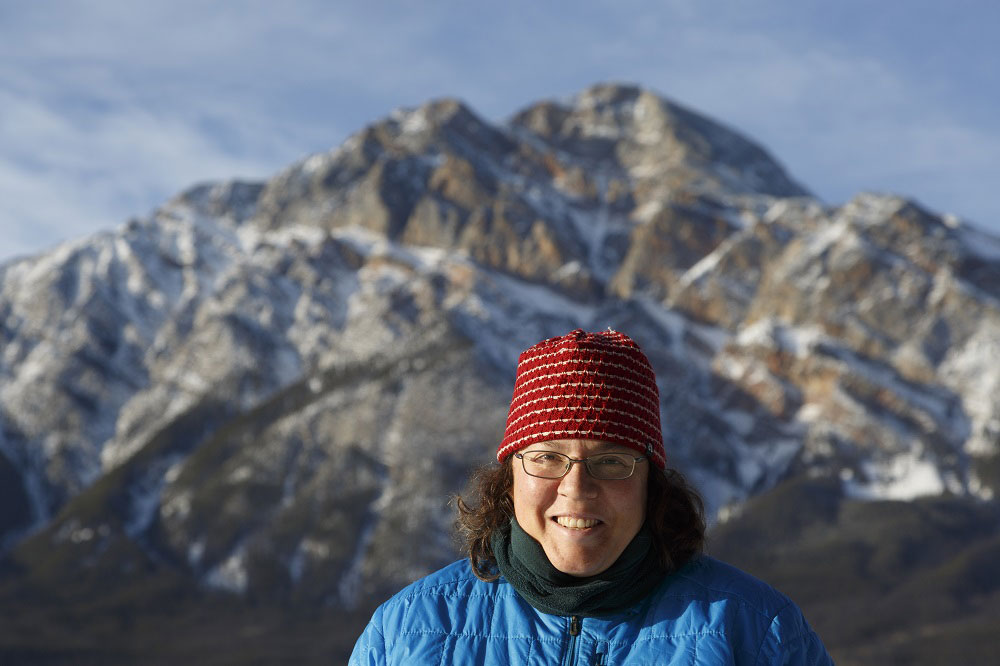
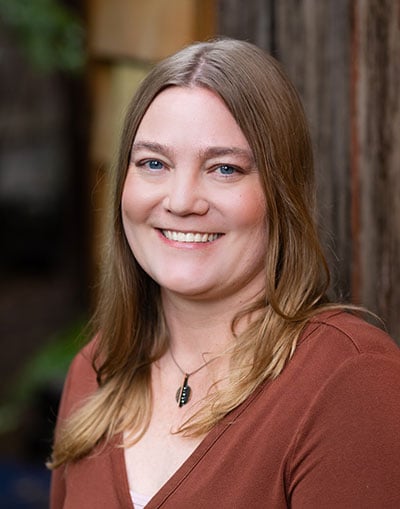 Melissa L. Sevigny is the interviews editor for Terrain.org and author of three books, most recently Brave the Wild River (W.W. Norton, 2023), which won the National Outdoor Book Award and the Reading the West award. She also wrote Mythical River and Under Desert Skies. She writes about science and nature with a focus on the American West, and her poems and essays have appeared in The New York Times, Orion, High Country News, Sierra, and elsewhere. She lives in Flagstaff, Arizona.
Read nonfiction by Melissa L. Sevigny appearing in Terrain.org: “The Bighorn’s Dilemma,” “On the Trail of Mountain Lions,” and “The Thirsty Tree.” And read an interview with Melissa: “Blush and Rouge in the Grand Canyon,” by Rebecca Lawton.
Header photo of Athabasca Glacier by Delpixel, courtesy Shutterstock. Photo of Melissa L. Sevigny by Alexis Knapp.