

Our decisions today must reflect a commitment to future generations, a promise that challenges us to think beyond our short-term privileges.
Introduction
Ajay Sawant is an ocean conservationist and communicator whose work moves fluidly between policy, education, and activism. Growing up by the coast, his understanding of the ocean was largely shaped by the cultures, traditions, and lived experiences of fishing communities. In 2023 he founded Generation Artivism, an organization that empowers young people to take action for causes through tools such as art petitions, collaborative brainstorming boards, and mind-mapping poetry exercises.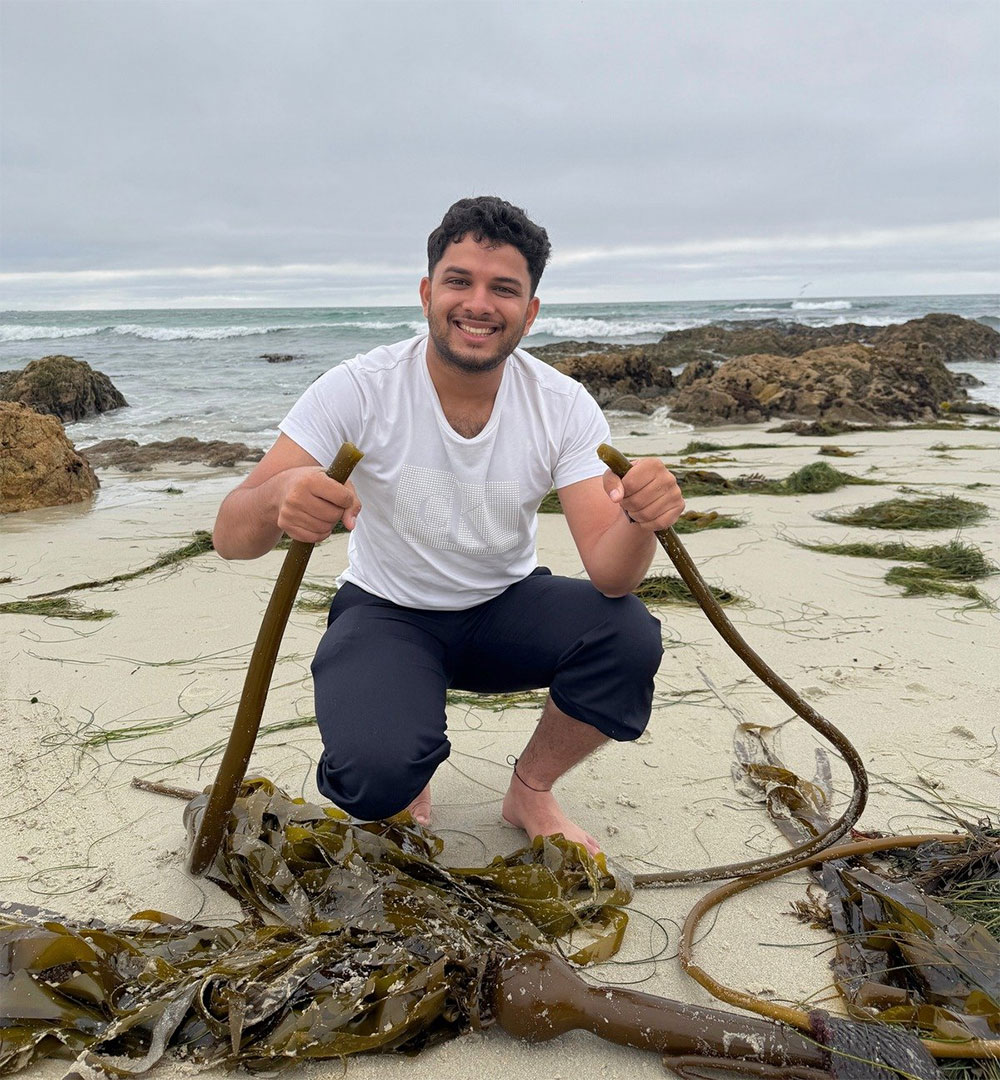
Photo by Hamza Zia.
As the president of ThinkOcean Society, Sawant leads a global network of young conservationists who restore mangroves, develop ocean-climate educational curriculum, and design community workshops that bring ocean stories closer to local audiences.
Sawant has worked with some of the most influential organizations in marine conservation and ocean literacy, including Bow Seat, World Ocean Day, The Ocean Foundation, EarthEcho International, High Seas Alliance, and National Geographic. His work has taken him from community-led conservation efforts to high-level policy discussions, where he advocates for stronger protections for marine ecosystems and the communities that depend on them.
An awardee of the Explorers Club 50, NAAEE EE 30 Under 30, the 2023 Youth Innovation Prize, the Canadian High Commission and MASH Foundation’s 29 for 29 honorour, and the LeadNext 2025 Fellowship by The Asia Foundation, Ajay is also the High Seas Youth Ambassador for Asia. He played a key role in raising awareness of the High Seas Treaty, a historic agreement that creates first legally binding framework for conserving and sustainably using marine biodiversity in the “high seas,” areas beyond 200 nautical miles of any country.
In this interview, Sawant reflects on the intersection of politics and conservation, the challenges of balancing environmental protection with livelihoods, and the need to reimagine our relationship with the ocean in a rapidly changing world.
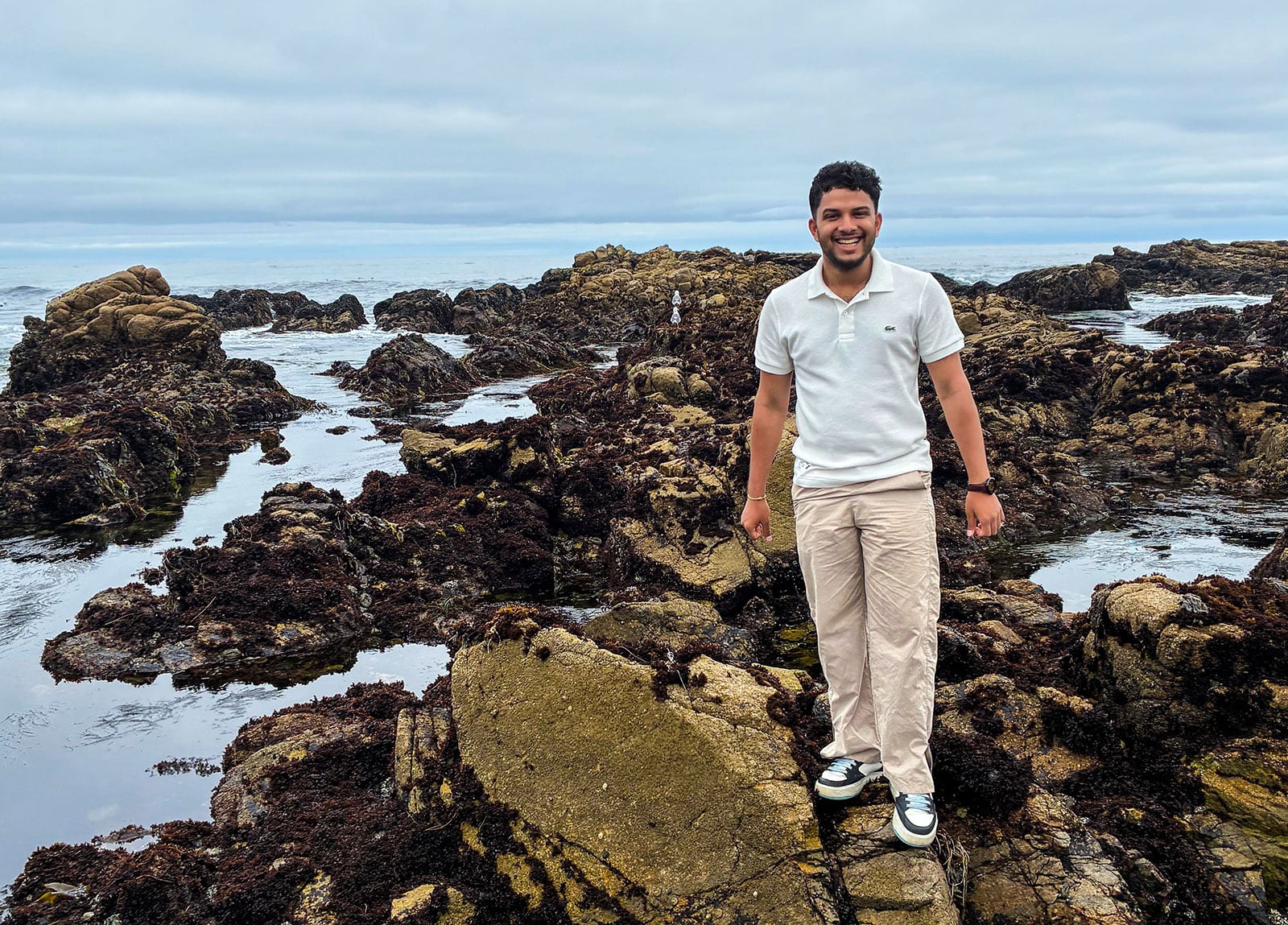
Photo by Andrew Ghastine.
Interview
Sage Hemeson: In your view, how do political dynamics influence ocean conservation efforts in India, and what strategies have you employed to navigate these complexities?
Ajay Sawant: I sometimes think of the ocean like a prized marble, something everyone admires, but its true worth ends up being decided by those with competing political interests. In a nation like India where diverse cultural legacies coexist with rapid modernization, decision-makers often prioritize short-term gains over long-term ecological health. Bureaucratic inertia, conflicting regional priorities, and the heavy weight entrenched by economic interests can all skew down conservation efforts.
My approach has been to navigate these complexities by facilitating dialogue that bridges ideological divides. By drawing on local narratives and emphasizing the tangible benefits of a healthy ocean such as coastal protection, sustainable livelihoods, and climate regulation, my work creates a compelling argument that overcomes partisan lines. It is akin to convincing someone that a rare, beautifully crafted marble is worth keeping rather than trading away for immediate profit.
In practical terms, I work to translate scientific insights into policy recommendations that resonate with both tradition and modernity. This means engaging with communities, local leaders, and policymakers in a language that honors India’s rich heritage while advocating for innovative, evidence-based conservation measures. Through persistent, culturally informed advocacy, my work strives to reframe ocean conservation as an essential investment in the nation’s future.
In India, like in many parts of the world, political dynamics have a defined influence on conservation efforts, often dictating priorities that detract from our long-term environmental health. Yet, what’s perhaps more frustrating is that young people—the very generation that will bear the brunt of the consequences—often lack the ability to have a direct say. You see, voting at the age of 18 is an opportunity many young people simply can’t yet access.
What’s even more troubling is the disconnect between older generations and their predecessors. Often, political decisions do not consider the long-term implications on future generations. As the renowned economist David Runciman once comically argued, the voting age should be lowered to six. Runciman’s controversial suggestion raises an important point: too often young voices go unheard, and their rights to a sustainable future are sidelined.
By lowering the voting age, we would give the youngest members of society a chance to challenge the decisions made by those whose actions today affect the world that will belong to tomorrow. This would not only be a step toward equitable rights, it would ensure that the ocean is preserved for generations to come.
But all the hypothetical stuff aside, the reality remains stark and undeniable. Despite the provocative idea that the voting age should be reduced to six, a notion meant to challenge our deeply ingrained inequities, the fact is that our current system systematically silences those who will inherit our environmental decisions. The older generation, who holds the power to vote and shape policies, often seems disconnected from the long-term consequences of their choices. They are too frequently focused on immediate gains, while the voices of youth, those who will live with the ocean, go unheard.
This imbalance is not just a theoretical concern; it is, in fact, a pressing issue. We need to find ways to ensure that the concerns of younger generations are not merely an afterthought in our democratic process. Furthermore, we must adopt mechanisms, such as youth advisory panels, participatory budgeting for conservation projects, and dedicated channels for intergenerational dialogue, which can help bridge this existing gap. In my view, the future of our ocean, much like a cherished marble whose value cannot be quantified by immediate profit alone, must be protected with a sense of stewardship and by sidelining age barriers. Our decisions today must reflect a commitment to future generations, a promise that, in essence, challenges us to think beyond our short-term privileges and embrace a legacy of sustainable care for our blue planet.
The ocean doesn’t belong to policymakers or scientists; it belongs to those who wake up before dawn to cast their nets and who know the weight of salt on their skin.
Sage Hemeson: Considering the socio-economic challenges faced by coastal communities, how do you balance the need for conservation with the livelihoods of these populations?
Ajay Sawant: Coastal communities don’t just live near the ocean; they live with it. I’ve spent time with fishers who can read the sea like a book and predict a storm long before the sky darkens. And I have also listened to stories of families who have worked the same waters for generations. So when conservation efforts come in the form of rigid restrictions, asking them to simply stop what they’ve always done, of course there’s resistance. It’s not just about policy, it’s about people’s lives.
But I have also seen the other side. In places where conservation is built together with communities, it doesn’t just work, it lasts. In some coastal places, across the world and not just India, fishers have been given ownership over marine protected areas, blending their knowledge with scientific monitoring to manage fish stocks sustainably. Others have turned to seaweed farming or ecotourism, because they saw an opportunity there for something better. Let’s take the example of Cabo Pulmo and Hawaii. These communities have successfully protected their coastal waters through marine protected areas and community-based fishing subsistence areas, through underwater tourism, and by putting harvesting limits on catch of particular species on basis of their ecological benefits and rate of regeneration.
The ocean doesn’t belong to policymakers or scientists; it belongs to those who wake up before dawn to cast their nets and who know the weight of salt on their skin. If we don’t make them part of the solution, we’re missing the point entirely.
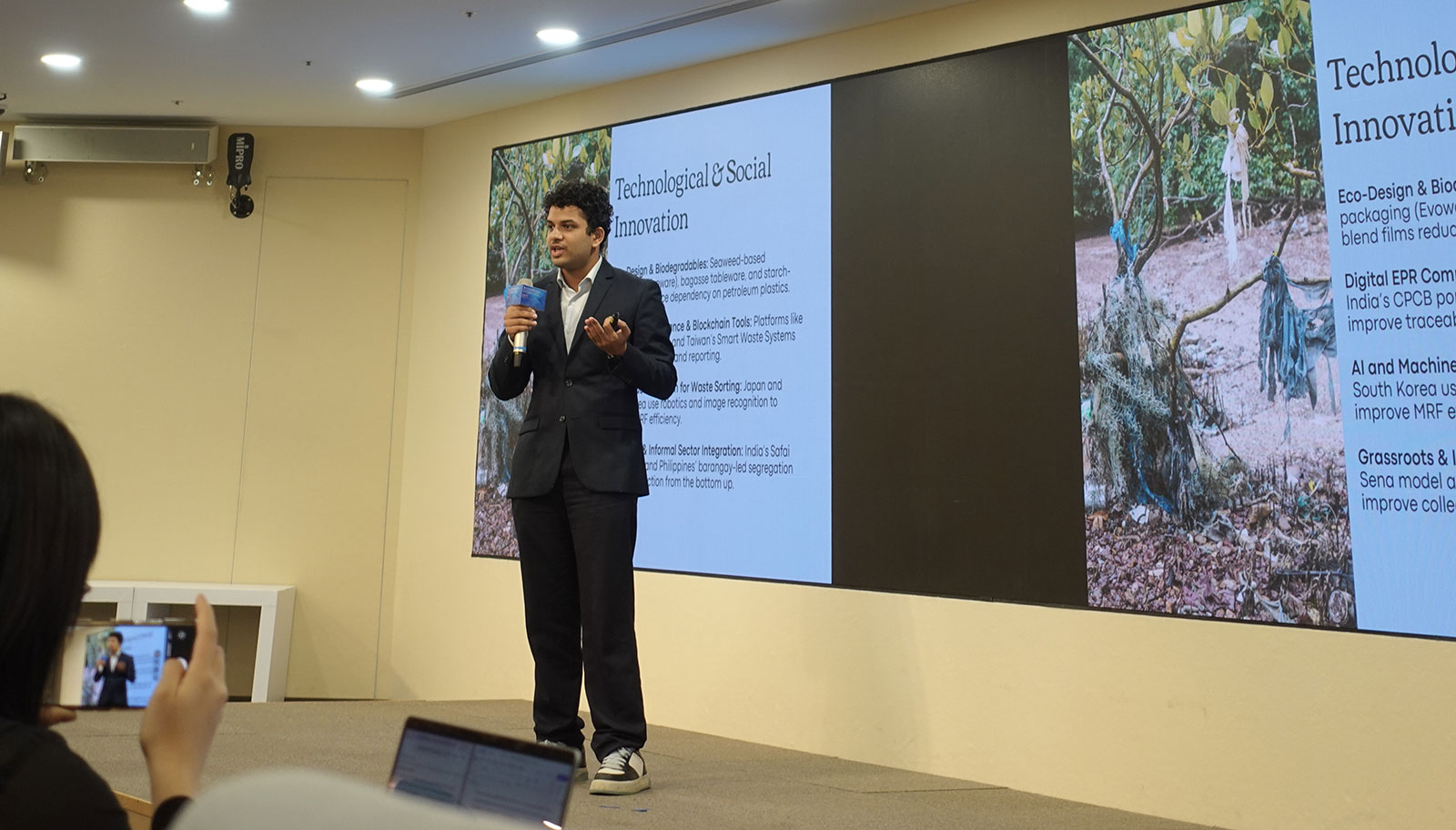
Photo by Minsing Lee.
Sage Hemeson: How do you address the varying perceptions of marine conservation across different cultural contexts within India?
Ajay Sawant: Marine conservation in India is not a singular narrative, it’s a summation of perspectives shaped by geography, tradition, and livelihood. The coastal communities of Gujarat, with their deep ties to fishing, view the ocean as both a provider and a space of economic survival. In Tamil Nadu, where centuries-old fishing traditions coexist with modern industry, conservation often intersects with battles over resource access. Meanwhile, in urban Mumbai or Chennai, where the sea is a backdrop to daily life rather than a source of sustenance, conversations about marine protection take on a more distant, policy-driven tone.
The challenge is that conservation is often framed through a Western lens—protected areas, restrictions, and top-down governance. But effective conservation in India requires recognizing the knowledge systems that already exist. Indigenous and local fishing communities have practiced sustainable harvesting for generations using seasonal bans and species-specific catch limits long before regulations were written. Yet, these practices are often ignored in favor of externally imposed policies that don’t always align with local realities.
I like to think of traditions like Narali Pooja, where coastal communities in Maharashtra offer coconuts to the sea as a way of showing gratitude before the monsoon fishing ban is lifted. This goes beyond ritualistic implications and has a reflection of a relationship with the ocean that is both spiritual and practical. Bridging the gap between modern conservation science and these deeply rooted traditions means rethinking engagement. It’s more than translating scientific reports into regional languages; it’s about listening to the communities that have lived with the ocean for centuries and integrating their expertise into national and global conservation strategies.
Sage Hemeson: In your experience, what role does policy advocacy play in advancing ocean conservation, and how can young leaders effectively engage in this arena?
Ajay Sawant: Policy advocacy has been a hands-on experience for me, especially in shaping conversations around the High Seas Treaty. When negotiations were underway, youth representation was minimal, yet the outcomes would define the future of our blue planet for generations. I worked to close that gap by attending discussions and ensuring that people outside those rooms understood what was at stake. This took shape through explainer sessions on the treaty, ocean literacy workshops, and art-based campaigns.
For one petition, young people drew images of marine life on a massive canvas alongside their signatures, symbolically “signing” their support for the high seas. In brainstorming activities, participants were invited to respond to prompts around the High Seas Treaty to practice in questioning and imagining. Our pledge board, in addition, gave a sense of commitment. The impact was tangible: we received notes from students in both cities and villages who said their perception of the ocean had changed.
One wrote, “Even the parts of the ocean we cannot see still need our care.” Another told me, “I may never work in marine science, but I now know I can still protect the ocean, even in the smallest of ways, and for that I don’t have to live near it. By signing, I have made a pledge to never pollute any water body.”
For young leaders, making an impact in policy spaces means understanding where change happens and who influences it. Governments and institutions may draft agreements, but public pressure, media narratives, and grassroots mobilization shape their enforcement. I’ve learned that speaking the language of policymakers while staying grounded in real-world concerns is key. Change isn’t always immediate, but persistence matters. Whether it’s securing commitments to marine protection or ensuring that conservation policies consider frontline communities, the goal is always to move beyond conversations to action.
To be effective in policy spaces, we need to know who holds power, how decisions are made, and where we can apply pressure. Sometimes, that means sitting at the table, engaging directly with policymakers. Other times, it means mobilizing communities to demand action from the outside. Advocacy is a long game. Progress can feel slow, but persistence matters. We may not see the full impact of our efforts right away, but every conversation, every campaign, and every challenge to the status quo moves us closer to a world where ocean conservation is not just a policy discussion, but a living priority.
Conservation is as much about people as it is about ecosystems. It requires diplomacy, negotiation, and an understanding of the larger forces at play.
Sage Hemeson: Reflecting on your journey, how have your perspectives on the intersection of politics and conservation evolved, and what key lessons have you learned?
Ajay Sawant: Through my work globally, I’ve seen firsthand how politics and conservation are deeply intertwined far more than I initially realized. Early on, I believed that if we just had the right data, the right science, and the right solutions, change would follow. But science alone doesn’t drive policy: power, economics, and political will do. Conservation decisions are not made in vacuum; they are shaped by national interests, trade agreements, and geopolitical priorities.
Having worked across different regions, I’ve seen how conservation efforts can often either thrive or falter based on political climate. In some places, strong policies exist on paper but lack enforcement. In others, environmental concerns are deprioritized in favor of short-term economic gains. The High Seas Treaty negotiations were a stark reminder of this. Despite the overwhelming scientific consensus on the need for protection, political negotiations stretched on for decades. It took persistent pressure from civil society, and scientists, to push for a legally binding agreement.
On other hand, the recent change in the U.S. administration serves as another reminder of the impact of political shift on conservation efforts. Just after gaining power, President Donald Trump signed an executive order titled “Putting America First in International Environmental Agreements,” initiating the process to withdraw the United States from the Paris Agreement. Moves like this underscore how political decisions can either advance or hinder global environmental commitments.
One of the key lessons I have learned is that conservation is as much about people as it is about ecosystems. It requires diplomacy, negotiation, and an understanding of the larger forces at play. Change happens when environmental advocacy aligns with economic and social interests. Whether it’s ensuring coastal communities benefit from marine protection or reframing conservation as a national security issue in some regions, effective advocacy means understanding what drives decision-makers.
Another lesson is that politics can shift quickly. What seems impossible today, whether a ban on deep-sea mining or full protection of the High Seas Treaty, ecosystems can become politically feasible tomorrow with the right momentum. As young leaders, our role is to build that momentum, challenge outdated systems, and push for change that sees our planet not as a resource, but as the foundation of life.
Sage Hemeson: Where do you see the next tide of your journey carrying you?
Ajay Sawant: While I don’t have a mapped-out plan for what’s next, I do see myself continuing my work within the socio-conservation space, particularly focused toward the ocean. I imagine myself leaning more towards a marine governance, policy and entrepreneurship model for impact-making.
But first things first: I’d like to wrap up my formal education, because frankly, I can’t wait to swap student deadlines for the thrill of doing this work full-time!
Follow Ajay Sawant’s work on his website and Instagram.
Header photo by Tojo Basu, courtesy Shutterstock.