
Integrated water management strategies offer a clear path forward—if we are willing to think like a river.
Long before drought cycles and climate upped the stakes, the American West was already on a collision course with a water reckoning. Structural drought, when a region persistently demands more water than nature provides, was built into the West’s foundations. Until we embrace integrated water management, this core problem for the Colorado River system will remain. For the first time, real tools exist to reshape our approach, but not if we keep relying on the old, piecemeal ways of interstate collaboration, which only obscures the longstanding tensions: Upper Basin versus Lower, state against state, city versus farm.
This is not a new revelation. After his legendary expedition down the Colorado, John Wesley Powell, a one-armed Civil War veteran turned geographer, warned Congress that water, not land, should determine how the West grew. He advised that boundaries follow watersheds, not arbitrary lines, or the region would one day run dry. But Manifest Destiny was on the march, gold beckoned in California, and the transcontinental railroad had just met its rails in the Utah desert. Expansion, not ecological sense, set the rules. The demand for “free” land was driven by a massive marketing push to solidify claims to the Pacific and box out colonial competitors like Britain and Mexico. Elected officials, almost none of whom had set foot in the West, opted for expedience. Rather than respecting hydrogeography, they imposed the Township, Section, and Range system: a set of straight lines on a map, wholly detached from the landscape’s natural contours. Land was divided rapid-fire, with straight lines on a map replacing the physical and hydrological realities of the geography. Speed, not stewardship, became the policy.
By contrast, the Metes-and-Bounds system used in the East tied boundaries to physical features. That difference mattered. Whereas riparian law in the East encouraged stewardship (use it on your land, but leave it unchanged for your neighbor), Western water law valued speed: first to claim, first in right. That divorce of land and water started a countdown to a water crisis we can no longer ignore.
Now, as sprawling population centers and thirsty farmland compete for a shrinking supply, the cracks in the old edifice widen. Traditional boundaries (jurisdictional, legal, and bureaucratic) fail to address the reality that water flows unconcerned with our maps or politics. The result is a fragmented “ad-hockery” that hamstrings conservation and deepens scarcity.
But there is another way. Major advances in data and mapping now allow us to “x-ray” entire watersheds, pinpointing where targeted projects will bring the greatest benefit. Financial and policy innovations can deliver resources faster and more effectively, overcoming the inefficiencies of the past. Already, states like Idaho, California, and Colorado are demonstrating what happens when an integrated approach is put into practice: faster, measurable outcomes, more resilient rivers, and smarter, more adaptable policies.
The lesson for the West and for the nation, as water stress cuts across new regions, is that we can no longer afford to manage resources as if they’re separate or infinite. Water scarcity touches everything: food production, energy, local economies, ecosystem health, and our most basic community needs. The choices we make now—how we allocate, conserve, and value water—will shape not just the fate of the West, but the resilience of the entire nation.
There’s no escaping this reckoning, but integrated water management strategies offer one of the clearest paths forward. The future requires us to think like a river: connected, dynamic, and part of something larger than ourselves.
 As president of The Freshwater Trust, Joe Whitworth has been responsible for strategic direction of the nonprofit organization for more than two decades, growing its budget tenfold during that time. He is focused on the next generation of conservation tools at the intersection of technology and finance to get results on the ground. In addition to formal advisory roles in B Corp, foundation, and government settings, he is a patented inventor, author of the book Quantified: Redefining Conservation for the Next Economy published by Island Press, and is the founding board chair of the Council for Responsible Sport. Joe has also served as a guest lecturer at the Stanford Graduate School of Business and the Kellogg School of Management at Northwestern University. He holds a B.A. from Dartmouth College and a J.D. from Lewis & Clark College with an emphasis in natural resources and water law.
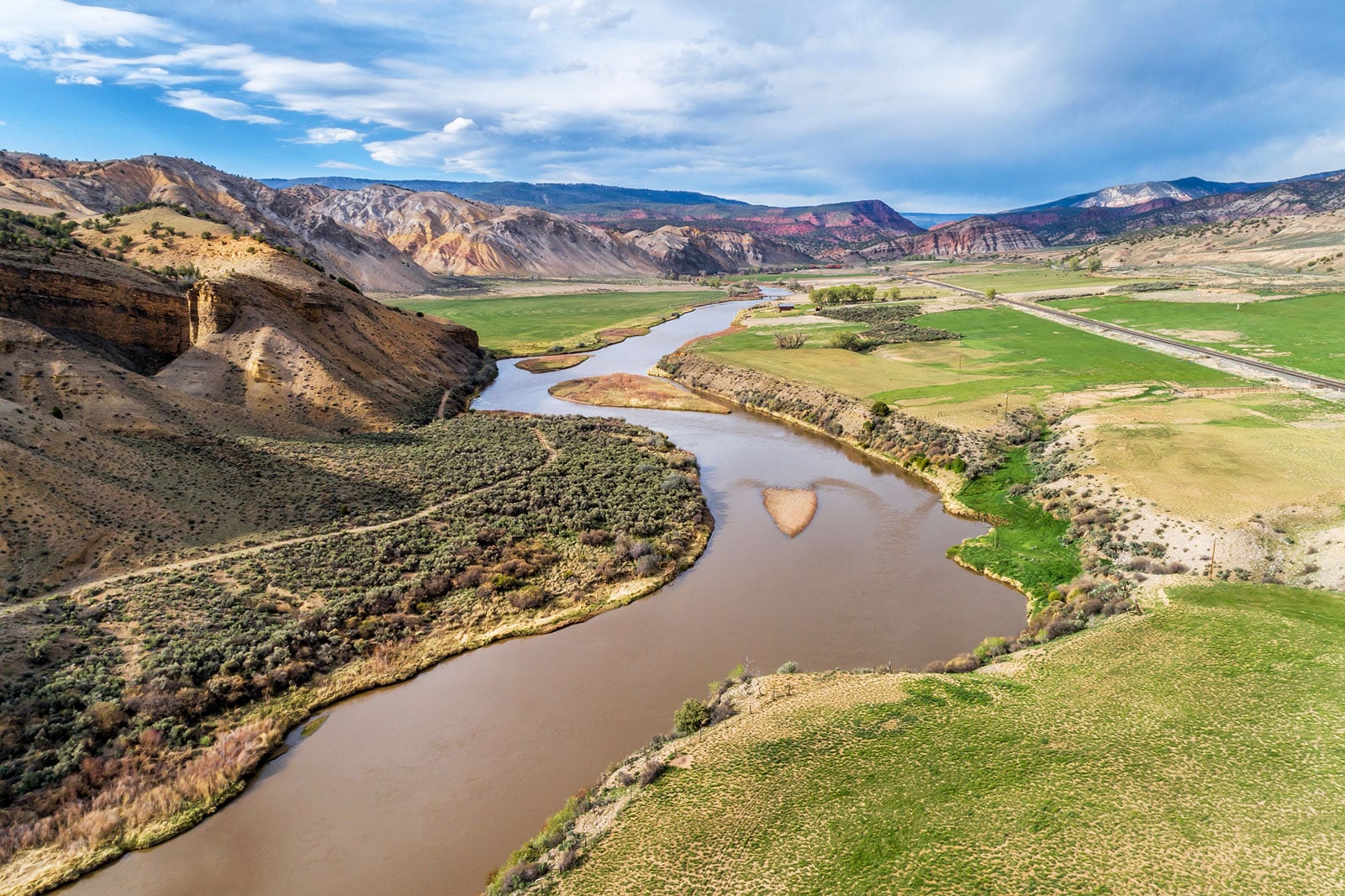
Header photo of the Upper Colorado River by marekuliasz, courtesy Shutterstock.