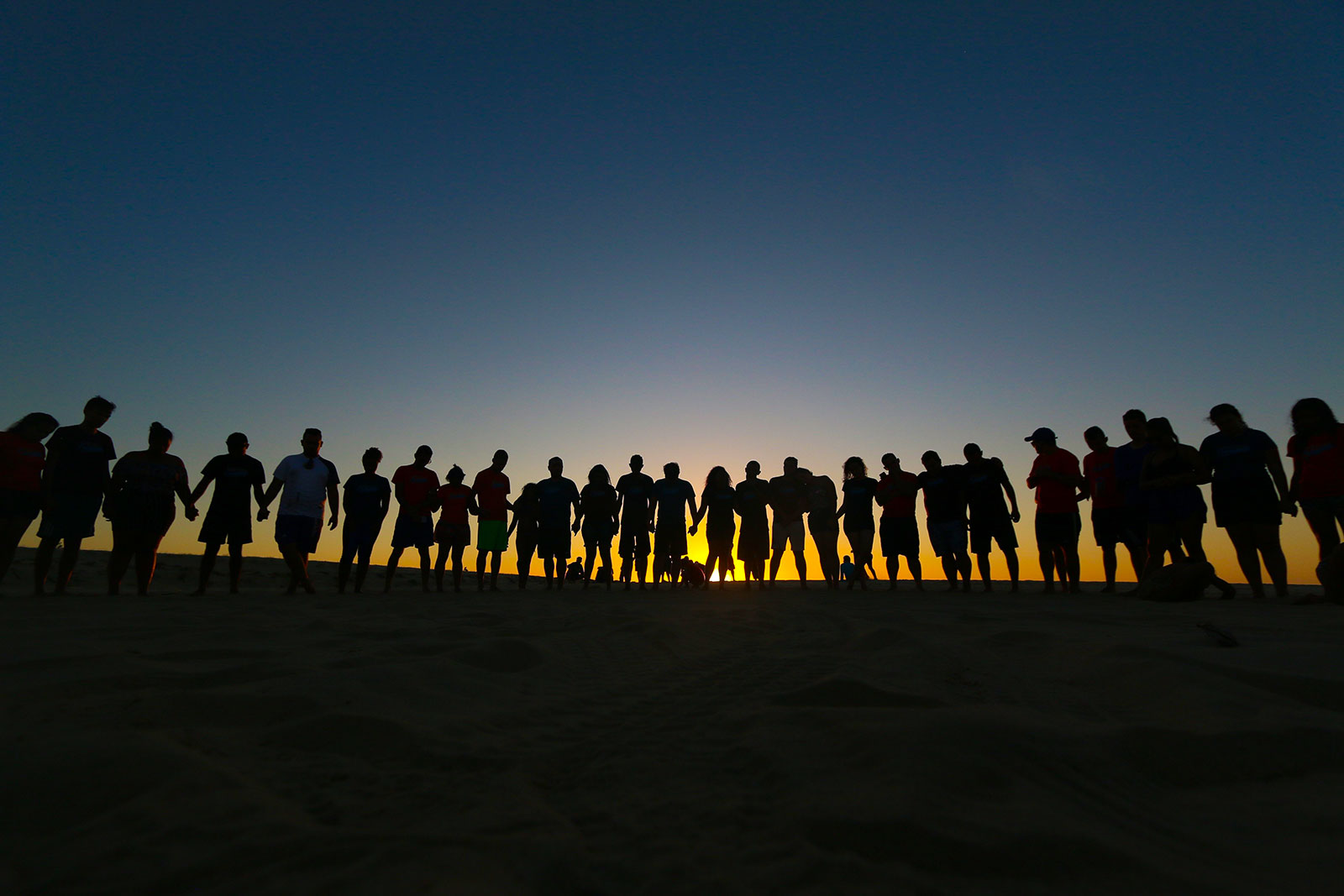

Democratic power is not physical power: it is not domination; democratic power is spiritual power: it is the power we collectively generate from building safe, inclusive, and vibrant communities in which we care for each other and for our shared life. We refuse to participate in the creation of hell to achieve heaven.
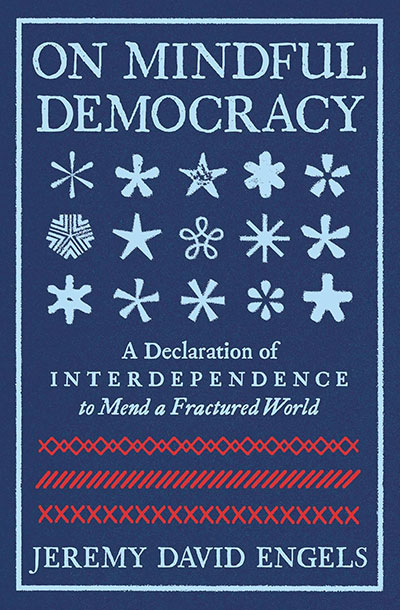
250 years after the U.S. Declaration of Independence, this incisive Declaration of Interdependence is a timely, tender, and transformative guide for citizens who care deeply about the world but feel disillusioned by the state of public discourse.
Democracy is a practice, a noun we must also understand as a verb, a form of collective action. Our English word “democracy” is derived from the Ancient Greek demokratīa, a combination of the words krātos, “power” or “rule,” and dēmos, “the community” or “the people.” “Democracy,” then, literally means “the power of the community to govern itself.” Power is a slippery word, of course, capable of papering over all manner of sin. When it comes to “power,” I find Mahatma Gandhi’s distinction between “physical power”—the power that comes from domination, exclusion, and repression—and “spiritual power”—the power that arises from respect, inclusion, and collaboration—helpful. Physical power is the power of armies. Spiritual power is the power of democratic communities committed to caring for each other and for the life we share.
Democratic power is not physical power: it is not domination. That’s what we’ve gotten so terribly wrong in thinking democracy is a fight or a battle or a war we must win by dominating and defeating our enemies. War is division. War splinters the world into friends and enemies. War dehumanizes. War degrades. War destroys. In stark contrast, true democracy is a practice of affirmation. The strategy of waging war for democracy is counter-productive, because democratic power is spiritual power: it is the power we collectively generate from building safe, inclusive, and vibrant communities in which we care for each other and for our shared life. You can’t create spiritual power with physical power. You can’t build an arsenal of democracy, you can’t wage a war for democracy (or for peace). Democratic power is the power of collaboration, not combat.
Democracy starts from what we share. Democracy builds connections and bridges. Democracy welcomes and includes. Democracy is not a war. The people we disagree with are not enemies, they are people, just like us, who suffer, just like us, and who have hopes and dreams and fears, just like us. We must meet them on common ground.
People who go to war are soldiers. People who practice democracy are citizens. Mindful citizens take responsibility for the world together. We do not commit violence. We treat ourselves and others with respect and dignity. We are aware that politics is a moral argument and that the most effective arguments start from what we hold in common, not what divides us. We remember that life is a miracle we share and that we are interconnected even when we disagree. With every word and every deed, we declare our interdependence.
Mindful citizens embody the world we seek to create in our thoughts, in our words, and in our actions. When we act, we do our best to ensure we do not add to the suffering of the world. We ask ourselves, “Are you sure?” and we double- and triple-check that our words and deeds do not affirm the divisions or oppositions that transform life into a war. We model a way of caring for our shared life. We refuse to participate in the creation of hell to achieve heaven. We remember the foundational insight of mindfulness practice: the present moment is the only moment. And we remember that each moment is a wonderful moment, even when painful, because the conditions for the transformation of that pain into care or even joy are also present.
We have hands and feet. We have a voice. We have each other. We are not stuck. We have agency. We can act. In every moment we choose mutual care over conquest, we are not preparing the ground for democracy—we are standing on it.
 Jeremy David Engels is the author of six books, including the forthcoming Living Namaste: A Practical Guide to Mindfulness, Yoga, and Building Community (Inner Traditions, June 2026) and On Mindful Democracy: A Declaration of Interdependence to Mend a Fractured World (Parallax, February 2026). He is the Liberal Arts Endowed Professor of Communication Arts and Sciences at Penn State University, co-founder of Yoga Lab, and a mindfulness and yoga teacher. Engels’ research reimagines democracy as a communal practice rooted in care, deliberation, and shared responsibility, emphasizing mindfulness as a core civic skill. His work has earned the Karl Wallace Award, the New Investigator Award from the National Communication Association, and Penn State’s Outstanding Tenure-Line Faculty Teaching Award.
Header photo by Nino Souza Nino, courtesy Pixabay. Photo of Jeremy David Engels by Anna Sunderland Engels.