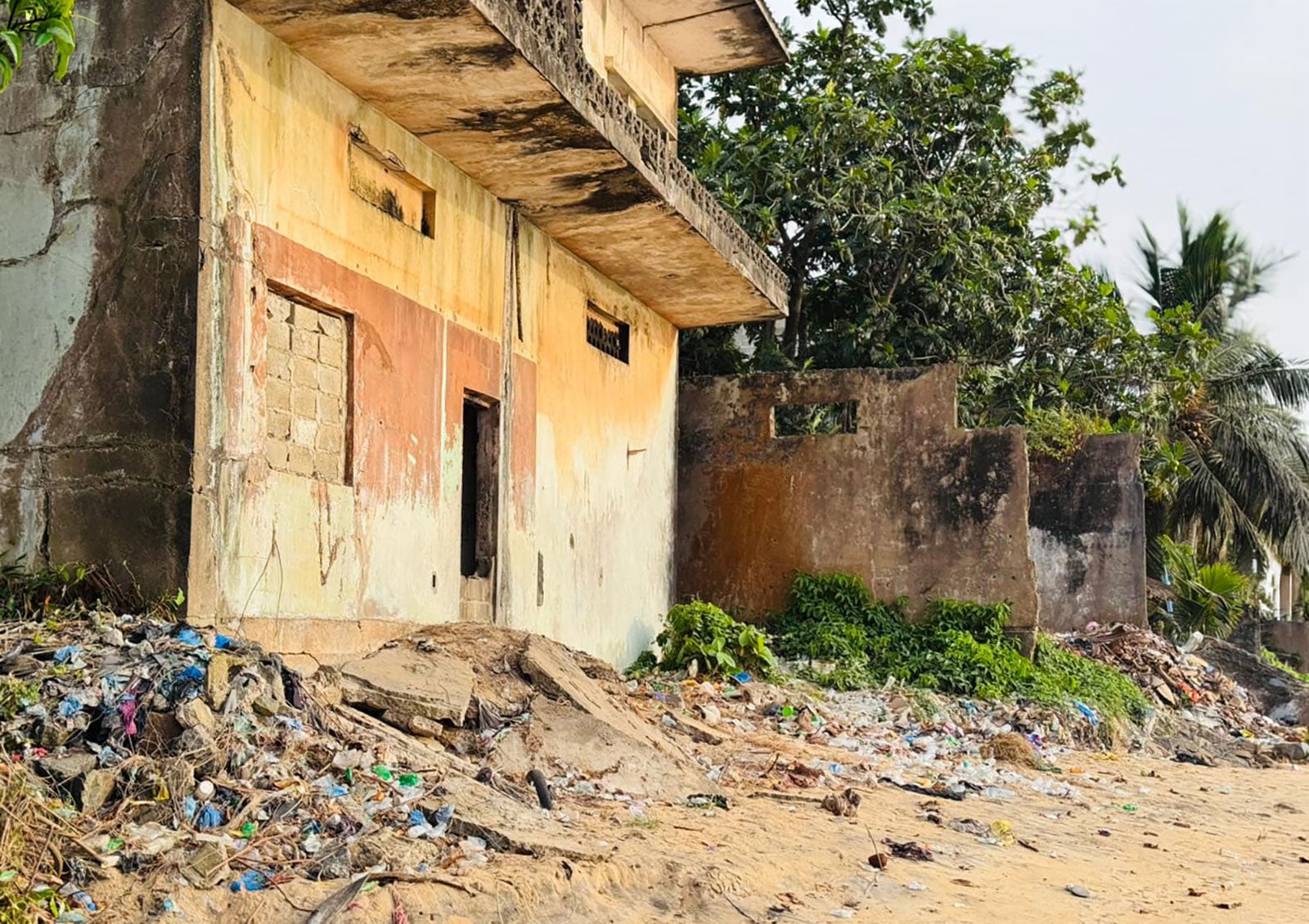

Reflections from Atlantic Street, Buchanan, Liberia
To the Residents of the Tremé, the Central City, and the Mississippi Delta:
I am writing to you from a porch in Buchanan, Liberia, that speaks your language.
In your country, you call them “shotgun houses.” You value them as the quintessence of Black architecture in the American South—those narrow, wooden structures built one-room wide and many-rooms deep, with doors aligned to let a “shotgun blast” of a breeze pass through in the humid heat. In neighborhoods like the Tremé in New Orleans, you have historical societies that fight to keep their timbers from rotting. You treat them as monuments to a resilient past. I am writing to tell you that your houses have a twin brother on the West African coast, and he is drowning.
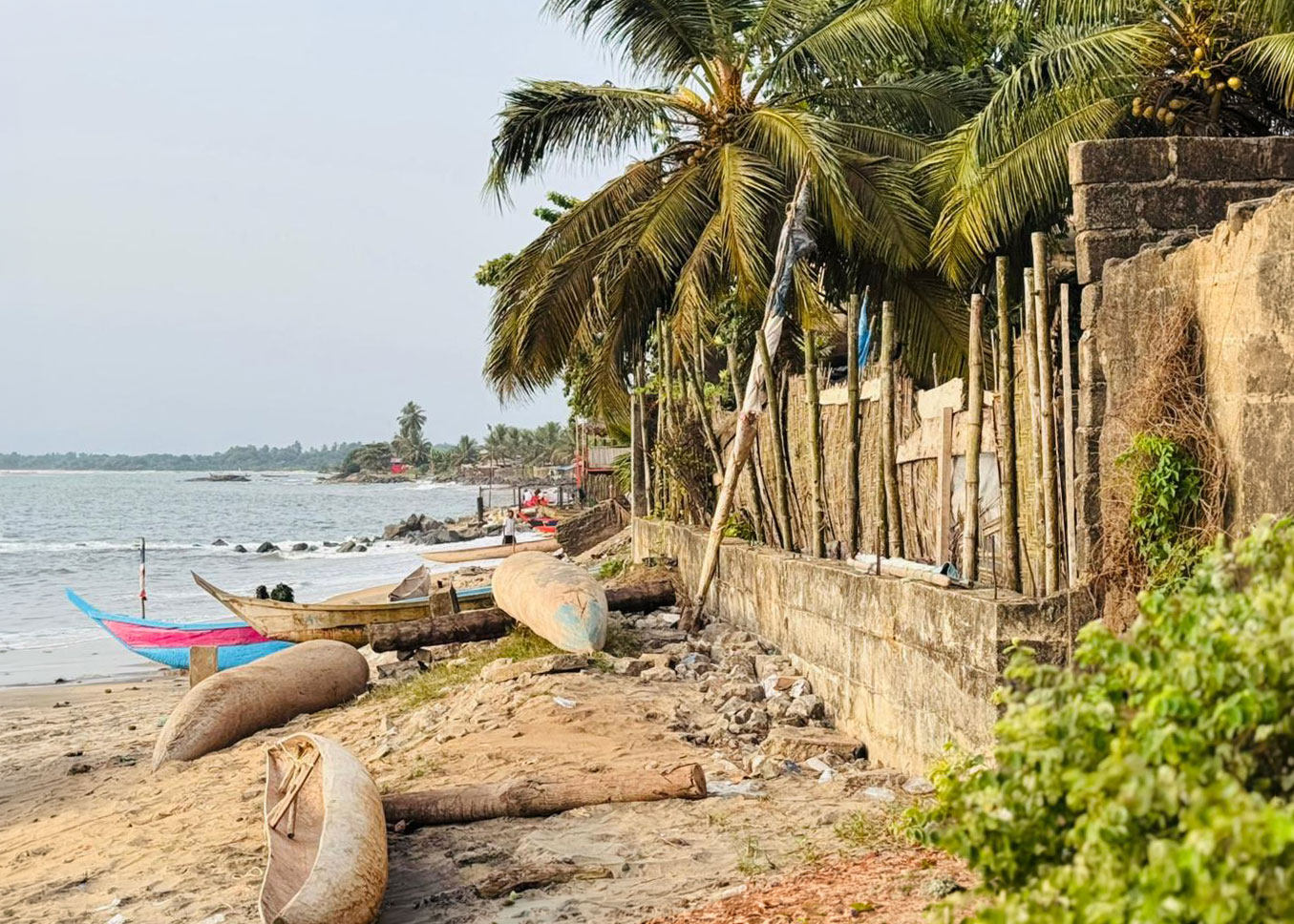
Photo by Marvin Garbeh Davis, Sr.
The DNA of the Wood
My great grandfather, Josiah, was part of the “Congo migration”—the Americo-Liberians who returned to these shores from the United States in the late 19th century. When he stepped off a schooner onto the muddy banks of Grand Bassa, he brought more than a new name; he brought the architectural DNA of the Mississippi Delta. He didn’t build with the mud and thatch of the indigenous Bassa people; he built with the memory of the American South.
He built our home of planks and pride, a one-story sentinel facing the Atlantic. It was designed with the same breezeway halls and small, shaded porches you walk today in Louisiana. For four generations, this house has been our anchor. It has survived civil wars, economic shifts, and the transition of centuries, but it is not surviving the ocean. To move would be to admit that the “Little America” my ancestors built has finally been conquered by the sea.
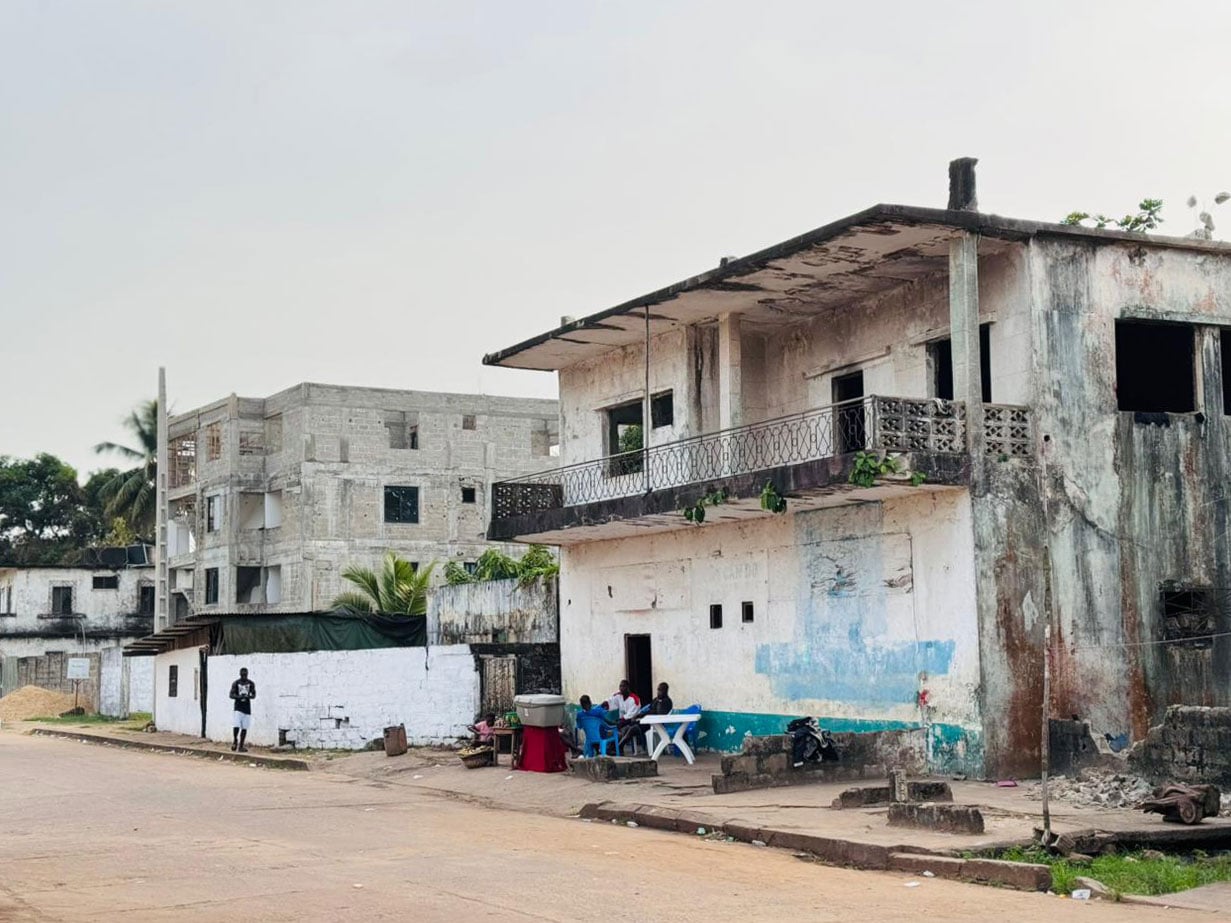
Photo by Marvin Garbeh Davis, Sr.
The Neon Ghost of Atlantic Street
You must understand what this place once was. In the 1960s and 70s, the air here didn’t just smell of salt; it smelled of iron ore, imported tobacco, and the heavy, spicy steam of pepper-soup. Atlantic Street was the bright, neon spine of our city. It was a place of highlife music and the dreams of a young Republic. You could hear the deep, bass-heavy horns of the massive ships docking at the Port of Buchanan, answered by the scratching of gramophone needles in the bars that lined the street.
Sailors from Liverpool, Hamburg, and Monrovia walked these stones, seeking the warmth of nightclubs like the African Riviera. Back then, the ocean was our provider—the “Road of the World.” Now, that road has turned into a predator. The nightclubs didn’t just close; they dissolved. Concrete walls that once vibrated with the sound of electric guitars now sit 30 yards out in the surf, covered in barnacles, looking like the ruins of a submerged civilization.
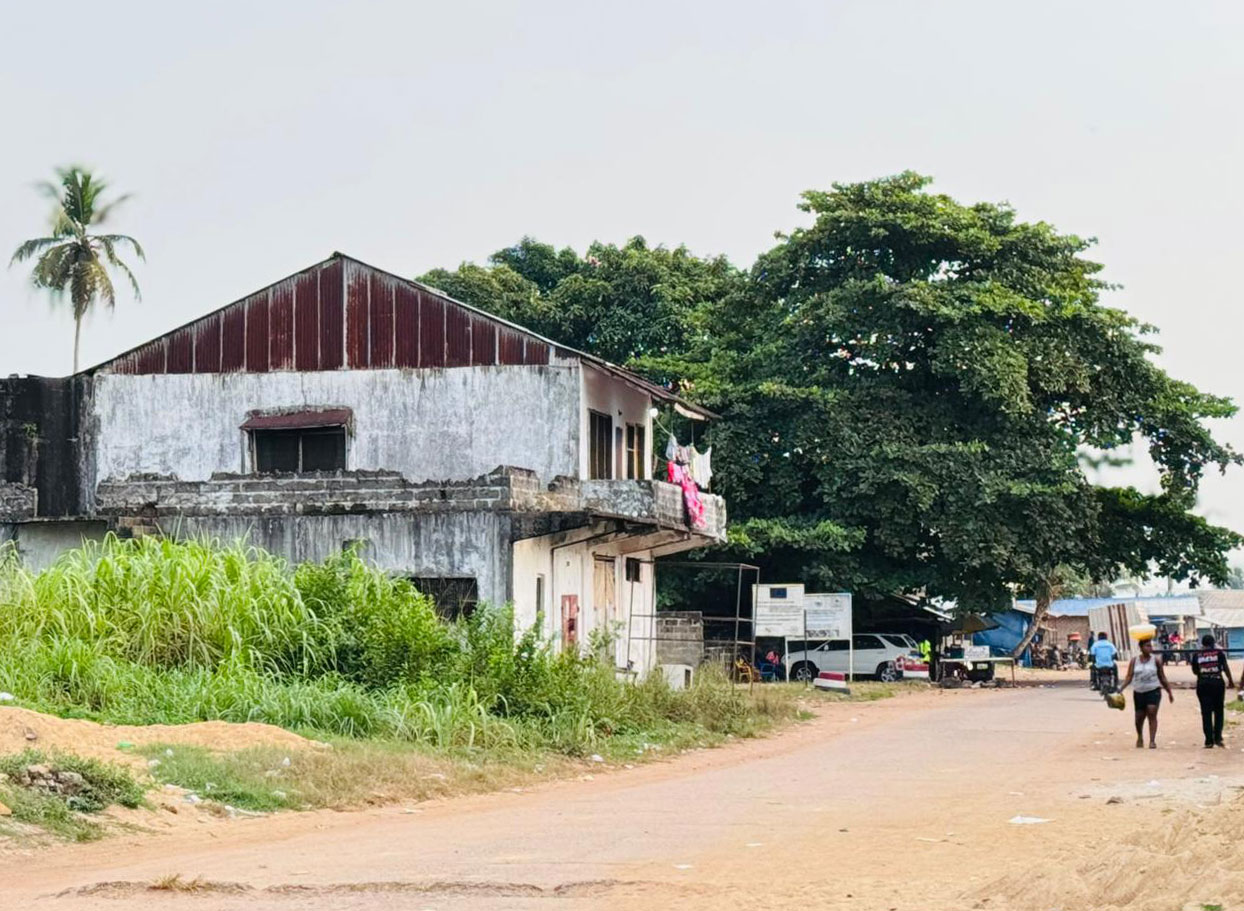
Photo by Marvin Garbeh Davis, Sr.
The Fanti and the Kru: A Dance of Survival
As I sit on my porch today, I occupy a front-row seat to a slow-motion collision. Below my house lies the Fanti Town enclave, a world that moves to a different rhythm. If my house represents the “settler” history, the Fanti fishermen represent the ancient, maritime soul of West Africa. These are the master mariners from Ghana who settled along our coast, bringing their emerald-colored nets and their massive canoes carved from Wawa trees.
The air in Fanti Town is thick with the scent of dry fish—the pungent, smoky aroma of Atlantic croaker cured over open fires. The relationship between my family and the Fanti community is one of mutual respect born of shared tragedy. While our “Congo” houses are built of timber and meant to stand forever, the Fanti structures are ephemeral. When the water comes, they pack their head-pans and move 50 yards inland. They know how to dance with the water.
But my house cannot dance. It was built to stand. It is anchored by timber and a history that refuses to be mobile. Every time a Fanti hut is moved, I am reminded that I am the last fixed point in a disappearing world.
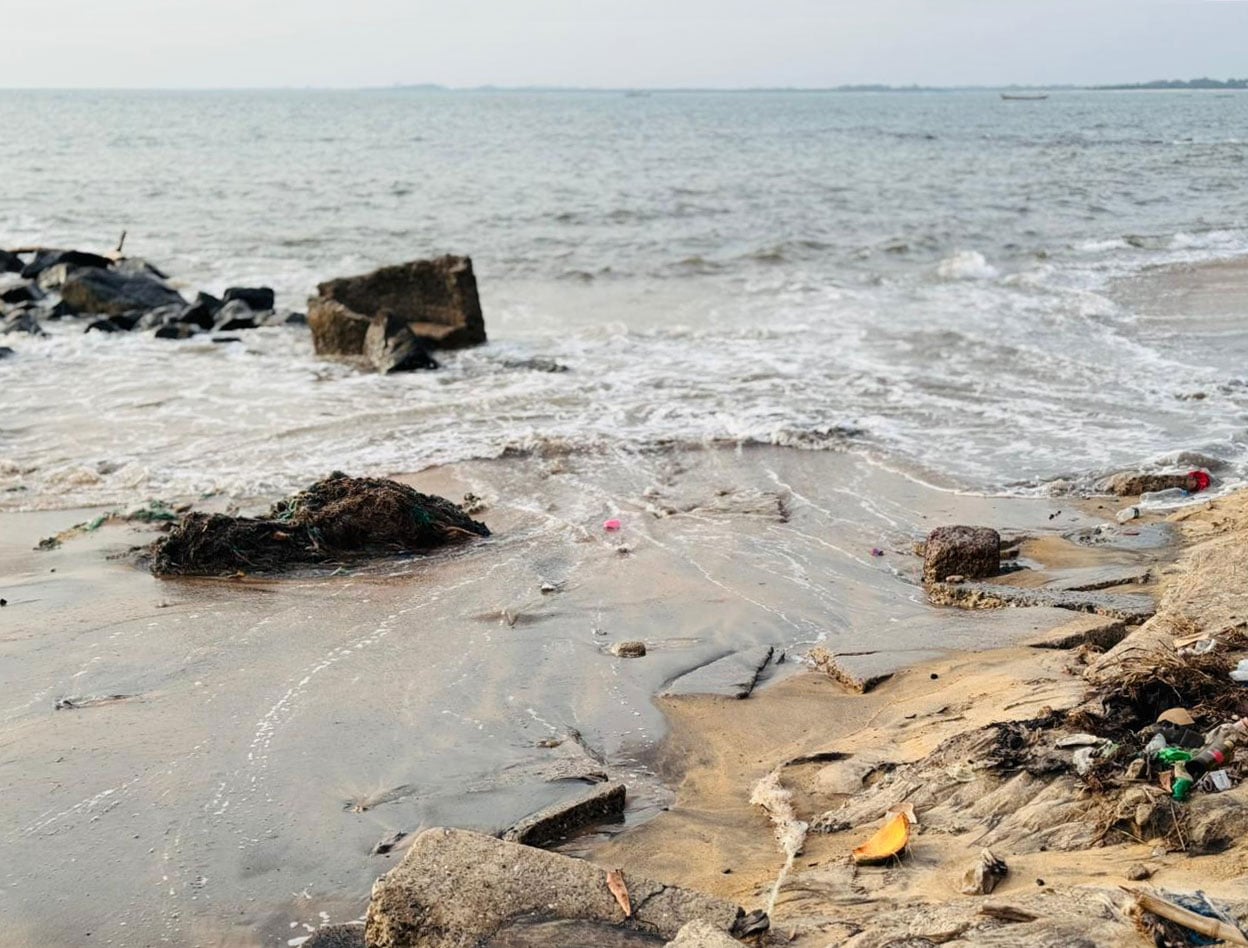
Photo by Marvin Garbeh Davis, Sr.
Twine vs. Tectonics
In the air-conditioned offices of NGOs in Monrovia, the destruction of my street is measured in “millimeters of sea-level rise per decade.” They produce colorful maps showing Inundation Zones where my home is colored a clinical blue. But my science is a piece of fishing twine and a notched stick.
Every morning at 5 a.m., I walk to the edge of my porch. I stretch my twine from the corner post of the house to the high-water mark left by the night’s tide. I mark the notch. In my ledger, I don’t record centimeters; I record steps. Three steps closer to the kitchen, I wrote last Tuesday. This is the incalculable core of climate change. The data in Monrovia says the sea is rising, but my twine says my history is being stolen. No scientific report can capture the sound of a 100-year-old road falling into the Atlantic in the middle of the night—a sound like the snapping of a nation’s bone.
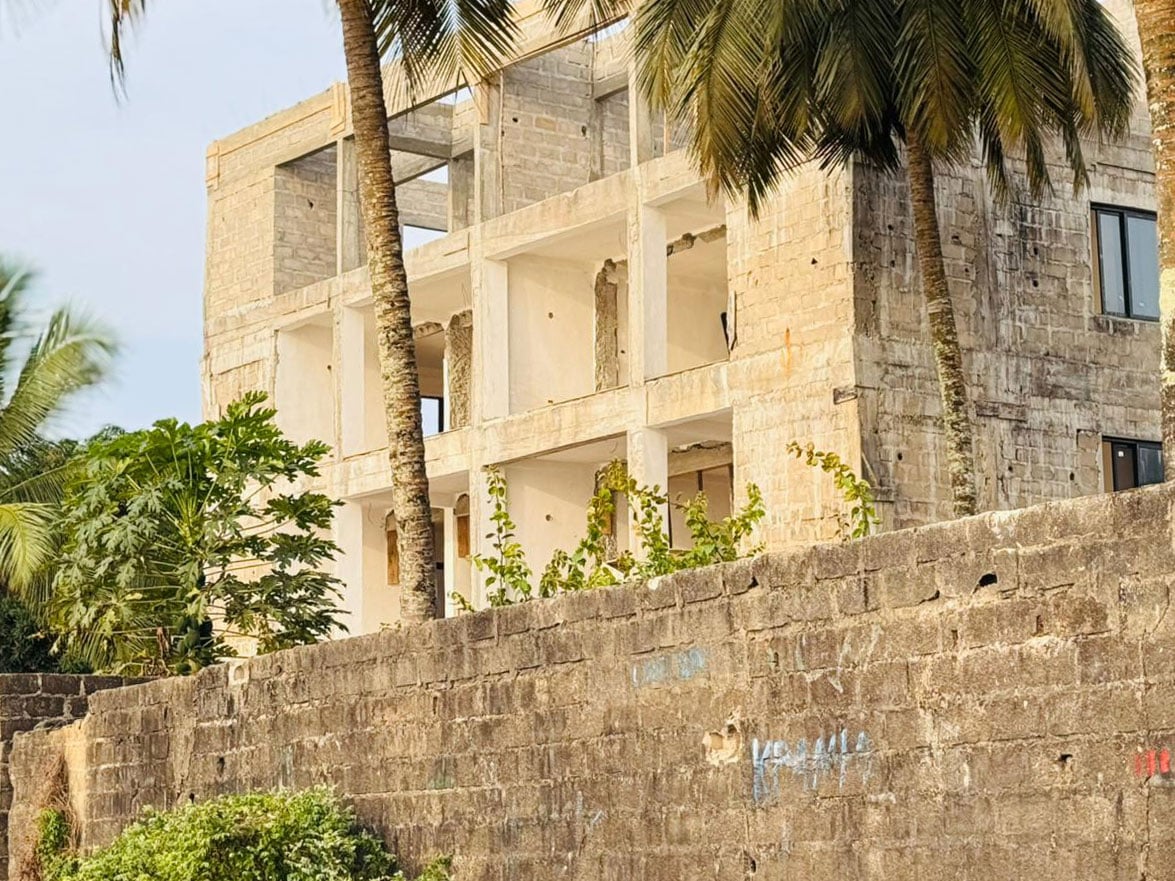
Photo by Marvin Garbeh Davis, Sr.
An Appeal to the Diaspora
When you look at your beautiful, restored shotgun houses in the American South, I ask you to remember Buchanan. We share more than just a style of wood and window; we share a vulnerability. The same rising tides that threaten the Gulf Coast are currently erasing the physical proof of our return to Africa.
In America, you talk of “resilience.” Here, we talk of the loss of the soul. Inside these wooden walls, I have a library of survival—family Bibles with pages so thin they feel like dragonfly wings, containing the handwritten births and deaths of four generations. I have faded photographs of men in high-collared suits who believed they were building a New Jerusalem on the edge of the Atlantic.
If I abandon this house, I am not just losing a roof; I am losing the witness. I am losing the evidence that we ever crossed the ocean twice.
From the other side of the Atlantic, I send you this warning: the water does not care for the beauty of our porches or the depth of our history. It only knows how to rise. As you preserve your streets, please, look toward ours. We are your mirror image, your brothers in wood and salt. Do not let the last of our shared houses become a reef.
With hope and urgency,
Marvin Garbeh
Atlantic Street, Buchanan, Liberia
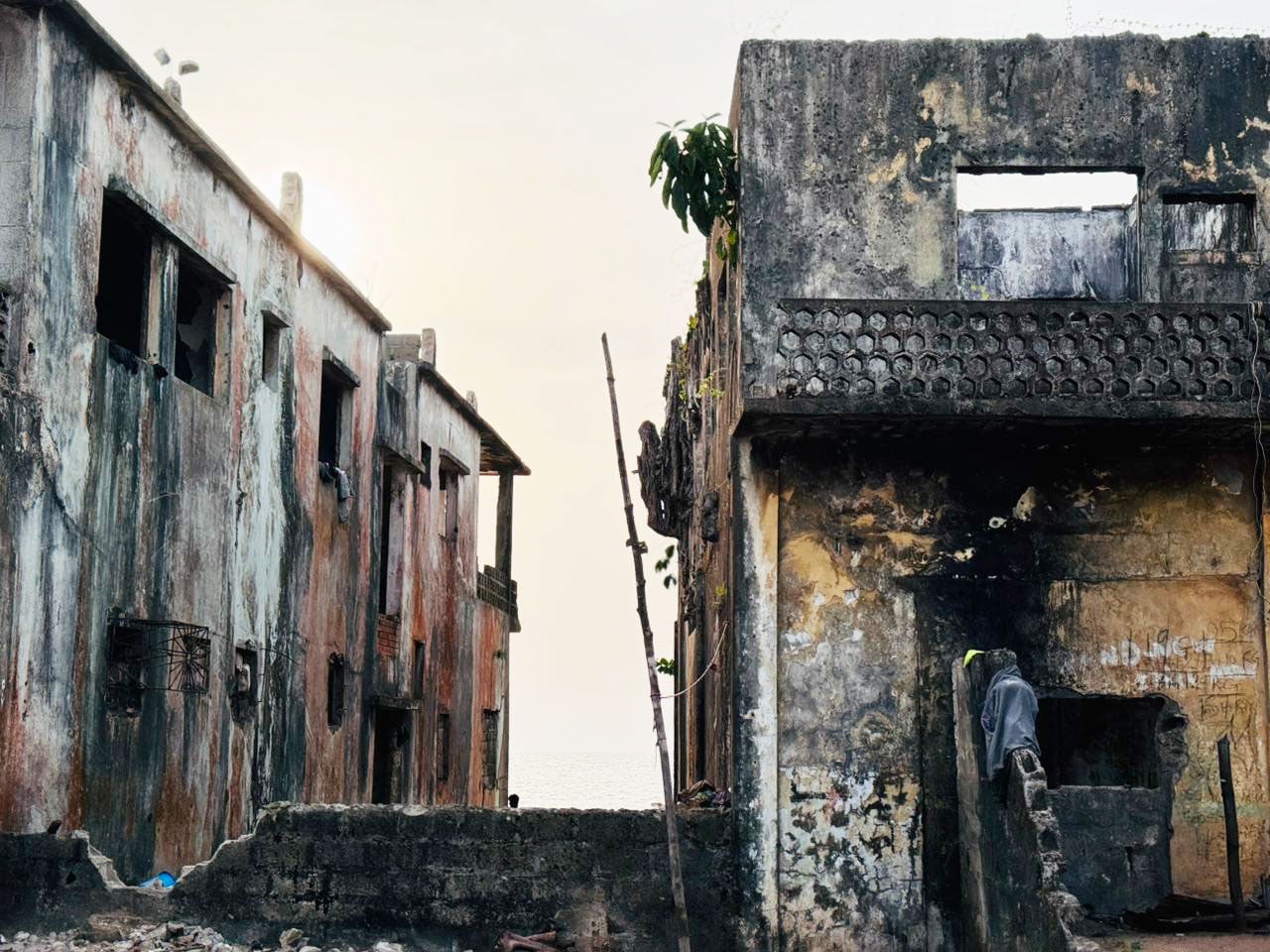
Photo by Marvin Garbeh Davis, Sr.
 Marvin Garbeh Davis, Sr. is a Liberian writer and poet whose work interrogates the intersections of memory, labor, and the human condition. Drawing from the lived histories of rubber plantations and river communities, his writing bears witness to the shifting landscapes and political complexities of post-war Liberia. His prose and nonfiction have appeared in Barrelhouse, Deadlands, Full Bleed, and Kalahari Review. He lives with his wife Angea in Monrovia, Liberia.
Read other Letters to America online or in Dear America: Letters of Hope, Habitat, Defiance, and Democracy, published in partnership with Trinity University Press.
Header photo—some of the last buildings standing on Atlantic Street—by by Marvin Garbeh Davis, Sr.