
Recovering from cancer was hard. Hand-crafting a guitar in Spain was one of its unexpected gifts.
The passages of La Herradura, in Spain, are paved in mosaics. There are dark stone pavers in brick patterns along the walls, but the way up the center is layered in empedrado granadino, “Granada cobblestones,” smooth white pebbles set in a mortar matrix. The way is adorned with curls and arabesques of gray pebbles, designs and figures of a delightful Spanish exuberance. There is a workshop along one of the ways, and the entrance to the workshop is marked by the silhouette of a guitar set in the mosaic, an honor conferred on the place by the people of the town and the crafters who turned the walkways of La Herradura into their own works of art.
The buildings are white, some trimmed in a brilliant blue, the color of the sky radiating its deep blue overhead. I spent six weeks in Spain and the sky turned gray only once, with thunder and lightning cracking for the first time in several years, I was told. The locals ran outside in the rain to witness this rare spectacle. But most days outdoors in La Herradura struck me as hot, blue, and white: The burning blue of the sky, the whitewashed buildings gleaming under powerful white sunshine, the blue of the Mediterranean Sea and the white-capped waves lapping endlessly onto La Herradura’s stony beach.
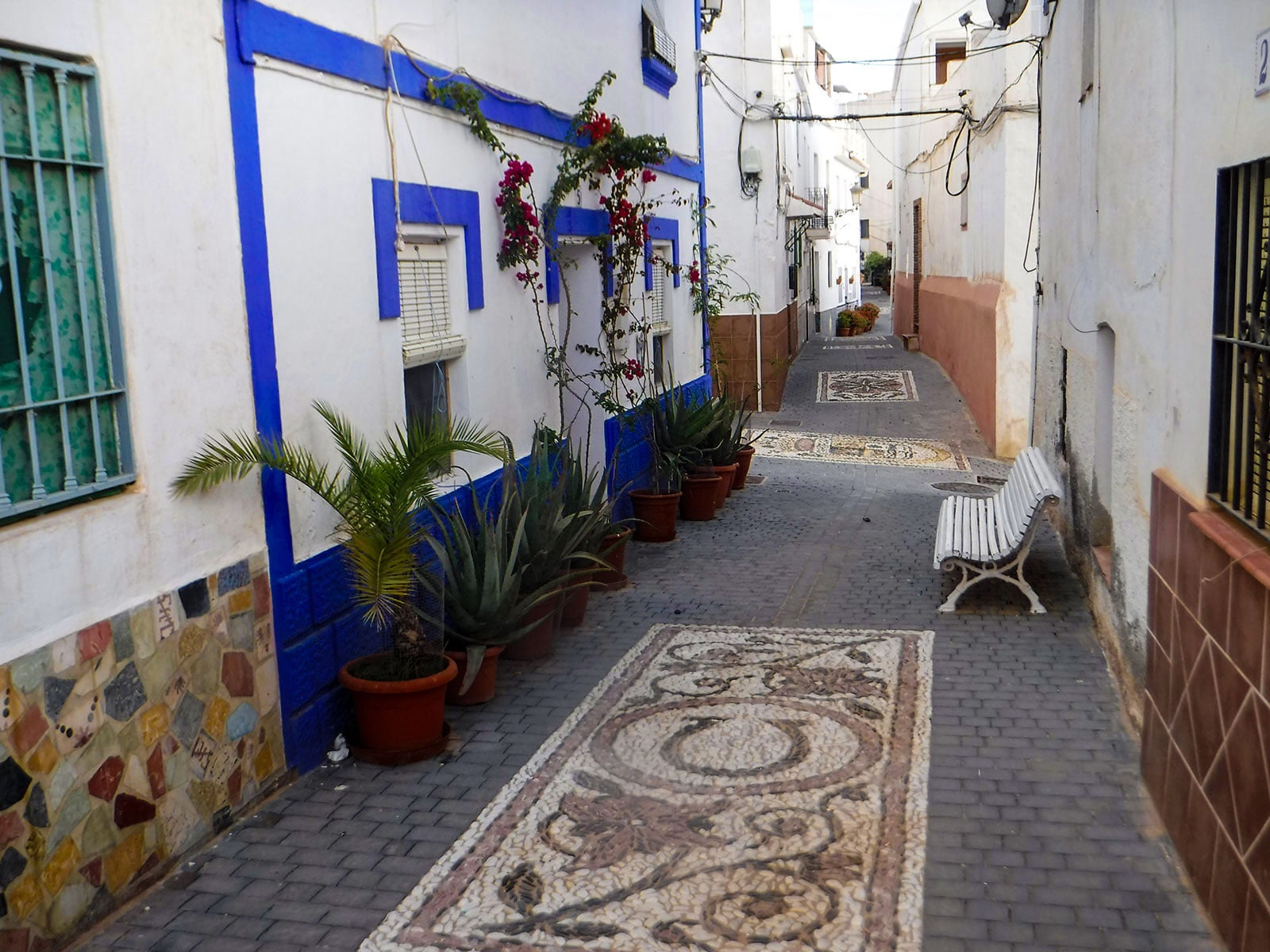
Photo by Karl Zuelke.
Blue and white were the colors, but the sounds I often heard, in contrast, blushed warmly to my ears, redolent of wood, singing from guitars whose music seemed to permeate the town: the clear resonance of cedar and spruce, the dark, warm-purple tones of rosewood, the misty orange of Cedrela odorata, the “Spanish cedar” from which the necks of most classical and flamenco guitar necks are fashioned.
Guitars had brought me to Spain.
The classical Spanish guitar is constructed almost entirely of wood. We often take wood for granted, don’t we? Some form of it grows in much of the world, harvested from the trees that crowd our planet, estimated at over three trillion. Wood: amalgamations of cellulose and resin, buttressing giant plants skyward. We build with it, make toys and tools, use it to make art and fire. And when the proper conditions unfold, we can follow wood toward a transcendence of its physical properties through music, where it communicates our spirits. Where it can heal. I’ve heard the chords of healing strum.
I bought my second guitar in 1980. The first guitar I owned was painted red, and even to my untrained ear, it didn’t have a pleasant sound, like maybe it was suffering a bad case of flu and its sinuses were stopped up. I gave it to my niece, and I don’t know what became of it after that. I still have my second guitar, which came to me when I was a struggling undergraduate at the University of Cincinnati. A girl across the street who was as desperate for money as me let me have the thing for $40. I didn’t know how to play it.
As soon as any neophyte picks up a classical guitar, Tárrega floats into their consciousness. There’s no escaping it.
The guitar was a fairly new Yamaha G-130A, made in Japan, a classical guitar, the back and sides fashioned from zebrawood, a pale wood with striking dark stripes that grows in West Africa, though the Yamaha company had stained the zebrawood brown. The soundboard top was made of western red cedar from the Pacific Northwest. The instrument had white plastic tuning keys with rusty gears—somebody had spilled beer all over it, no doubt—and it was fitted with black nylon treble strings. The top was scored with a thousand gouges from the pick the previous owner had sawed on the instrument with. You do not play a classical with a pick. But it was her guitar. I bought it, and it became mine, gouges, rust, and all.
Some guys in the dorm showed me how to pluck out the opening to “Stairway to Heaven” and “Dust in the Wind,” but soon the guitar retreated into its paperboard case and then just followed me around from one rental property to the next. It always ended up under the bed.
Two undergraduate degrees and an MFA later, I had become a brand-new father, teaching three classes at Northern Kentucky University and taking a full load of Ph.D. courses back at the University of Cincinnati. It was a grind, from which I was desperate for some relief, and there it was, where it had been all along: under my bed. On my 40th birthday I threw one of the biggest, best parties I’ve ever been to, and when it was over, I pulled the guitar out and promised it that I would be back.
After a few lessons, I taught myself to read music and play classical guitar. When my studies and assigned readings were done for the evening, I played to myself in the slumbering house, or while I watched late-night TV. I’ve never been a prodigious talent at guitar, but I did manage to learn some of the pieces from the classical repertoire, Francisco Tárrega and Fernando Sor, Augustín Barrios Mangoré and Isaac Albéniz. Gorgeous music that I never tire of. My fingers and my eyes and my brain would team up on the instrument and waft something acceptably melodious through the house late at night, following the lead of those amazing Spanish and Paraguayan composers.
Karl Zuelke plays Francisco Tárrega’s “Lagrima.”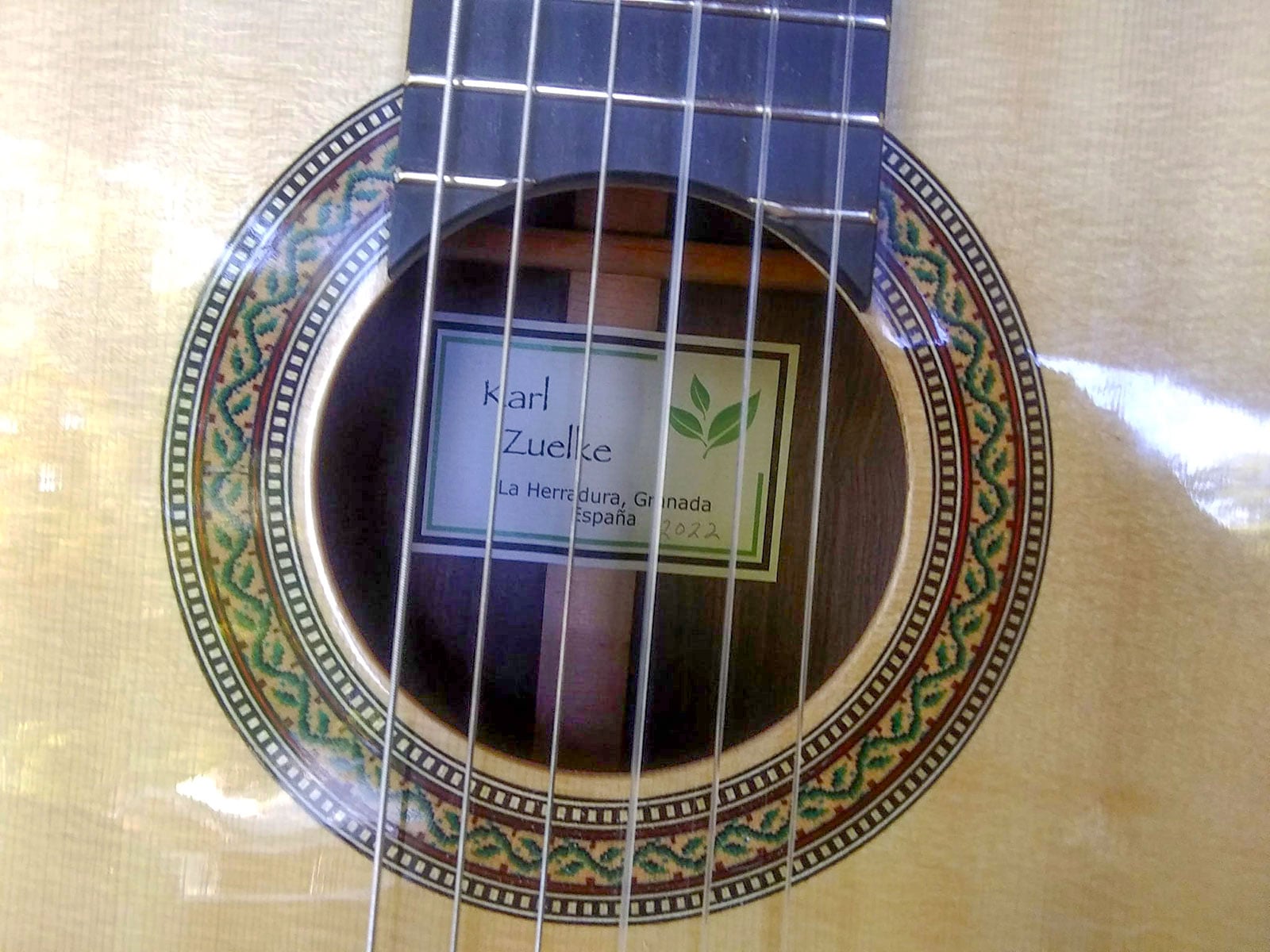
Tárrega, especially, spoke to me, his music emanating like a mist from the very landscape of Spain, emblematic to me of much that I have come to think of as “Spanish.” There was “Sueño (Mazurka)”— sueño, in Spanish, is a slumber or cozy nap, or a dream—a piece that gave me that feeling of peacefulness and security that a nap offers, and that I certainly needed as a harried young father and doctoral student. I would hold my drowsy toddler son in my lap and whistle the opening notes of Tárrega’s lovely mazurka in their gentle steps up the scale to a peak at high C, halfway down the fretboard on the E-string. Then the notes turn and drift downward, like a sheet of paper floating off a shelf, back and forth, coming drowsily to rest on the carpet, and the second section, after the descent into that slumber, feels dreamy, a dream of soft colors and pollen, the dream of the quiet march of a brook over smooth stones, the careful steps of slippers through clover along the trailside. The phrases that repeat remind the listener that dreams recur; we visit the same locales in our sleep and they evolve. And there was “Lágrima”—“teardrop” in Spanish—a piece that doesn’t evoke tears of grief or regret, but rather the comfort of melancholy, that strange peace emanating from the sadness that someday, this beauty of living will end, but in the meantime there are naps, and literature, and the fragrance of pollen, and the peace of a little boy asleep in your lap.
The Spanish guitar also invokes the bravura and percussion of flamenco, of course, the stomp of heels on loud boards, the proud pose and toss of the head, the flourish of passion caught in the women’s scarlet dresses and black lace, the glittering embroidery swirling over the men’s jackets. Tárrega can ride that Spanish bravado as well, but he so often speaks from more quiet, intimate corners of the Spanish soul. I grew to love his art, and I still do. I’m not alone. The fervid ardor of flamenco is alive and well in Spain, but gentle Tárrega is one of Spain’s cultural icons. As soon as any neophyte picks up a classical guitar, Tárrega floats into their consciousness. There’s no escaping it.
The repertoire of Spain’s classical guitar is as intricate as lace, as glittering as embroidery in gold floss. To play it, one has to develop precise and lithe fingertips. I learned to play the instrument, but I knew that I would never have the agility and exactitude needed to approach the skill of genuine guitarristas from Spain, or anywhere else in the world. I’m too clumsy. But I wasn’t out to show off or impress, or even to entertain. The music was for me, mostly coming at night when my family was asleep, the cats purring from their pillows, the old barn of a house we were renting resonating like the body of the guitar itself. And in those moments, carried by the music, just a touch of the place, of Spain, crept into my heart.
I earned the doctorate and was fortunate enough to land a full-time job right away, teaching at a small Catholic college in Cincinnati. And with the pressures of graduate school finally over with, the daunting task of writing a critical dissertation behind me, my need for the genial peace of the guitar ebbed. New professional pressures replaced earlier academic ones. The guitar spent more and more time in its case, back under the bed.
And then I was diagnosed with cancer.
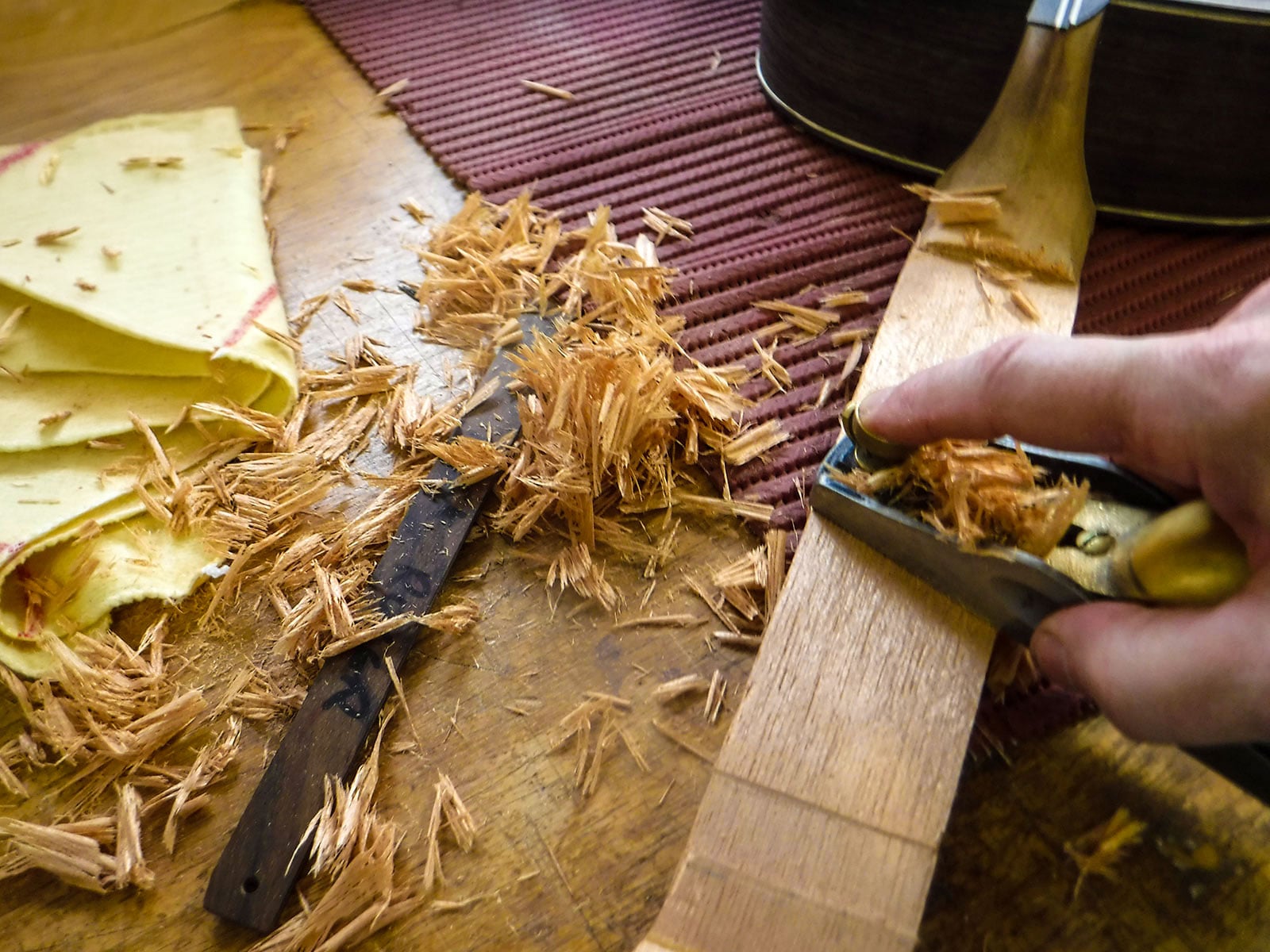
Photo by Karl Zuelke.
My oncologist wasn’t fooling around. We’re going to treat this disease aggressively, he told me, because part of his experience is that he loses patients to what I had, one of the many varieties of non-Hodgkins’s lymphoma, and he doesn’t like that. We will get through this, he assured me, but you won’t be able to undergo the treatments and maintain a full-time job. And he was right. I took a medical leave for the fall semester.
I was sick. I underwent six treatments of R-CHOP chemotherapy, each three weeks apart. The Sunday night before the next treatment was filled with dread. Monday, I drove to the cancer center, got hooked up through the port surgically implanted in my chest, and got hit with a dozen drugs. Including the pills I swallowed by the handful at home, my body absorbed 22 different drugs on a single Monday. That first week was nuts. All day in the chair, six hours of drip-drip-drip, sometimes passing out, sometimes jumping out of my skin, staring wide-eyed through eyelids I couldn’t keep open. Wheeling the rack of bags and electronics to the bathroom to pee something the shocking, chemical-red crimson of strawberry Kool-Aid. Tuesday night, some other drug was administered by an electronic device taped on my arm that bit into my skin like a lamprey. It would whine and click and give me the shot, and then a terrible sick would kick in. Anti-emetic drugs force the nausea down, but it’s always there, hovering, and you feel it, in your toes, waiting. Wednesday was when it rose up and got the upper hand. I was bald as a honeydew, pig sick, weak as decaf tea. Thursday night, the nausea lifted. I spent Friday feeling like a great blue heron hatchling. Find a picture of one of those critters: gawky, awkward, defenseless. Weak and wet. That was me. The third week, I was tentatively on my feet and could take a walk around the block with my wife or meet a friend for lunch for an hour, until I tuckered out. It was during the middle weeks of the treatments when the spirit of the Spanish guitar floated back into my awareness.
For that second week, as long as I didn’t move, I didn’t get sick. I felt tired, but I wasn’t tired. I was poisoned. You can push through tired. You can’t push through chemo treatments, and if you think you’re going to try it, the chemo reminds you that it has other ideas. Physical effort makes you extravagantly ill. I was okay as long as I didn’t move.
So you sit. I eased back into my chair, a good chair, a leather recliner that was comfortable and didn’t cause muscle spasms or aches or dead-asleep limbs. But apart from an occasional stagger to the bathroom, I had to stay put in it all day.
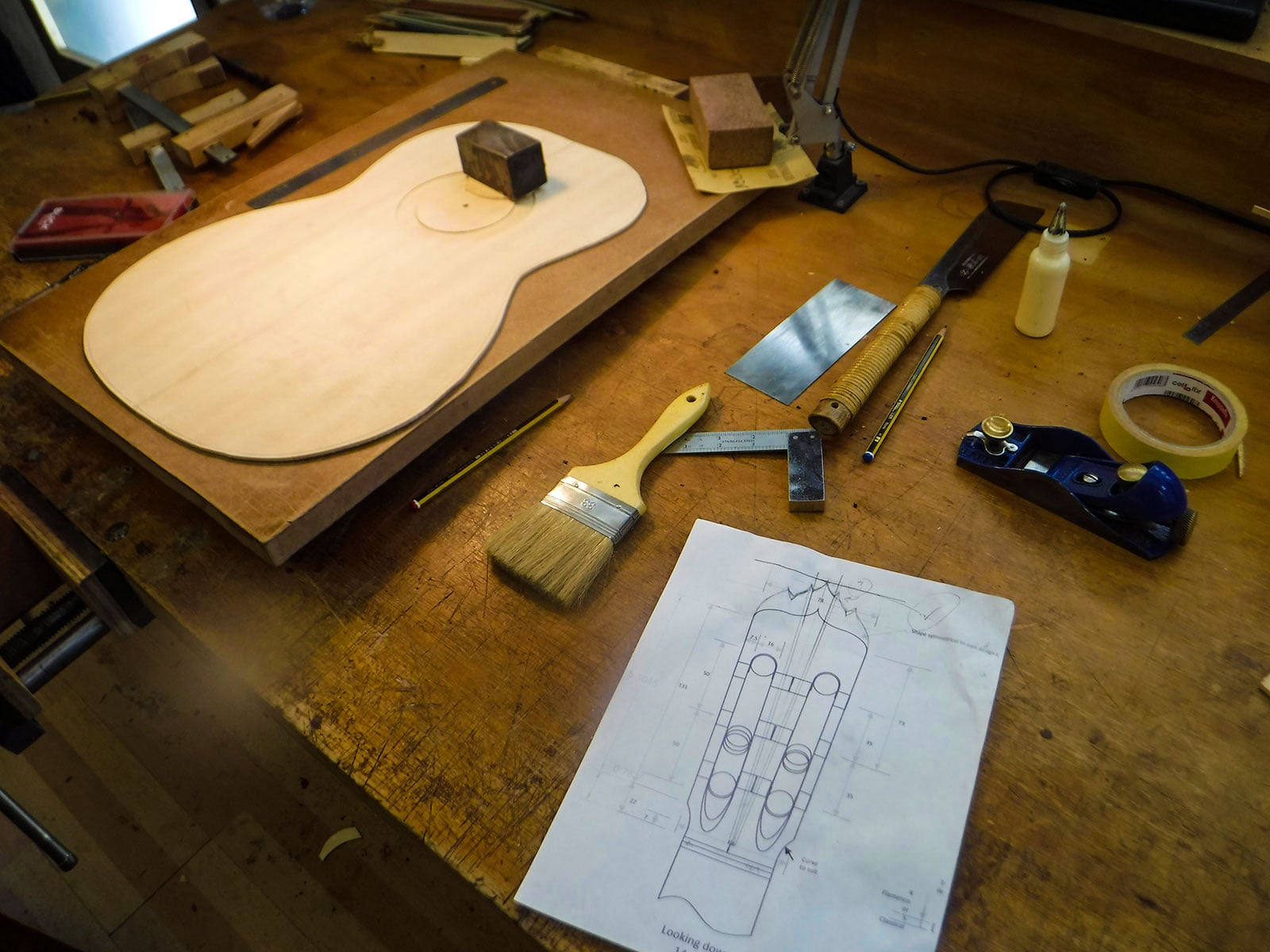
Photo by Karl Zuelke.
Even though my ravaged body couldn’t tolerate moving, that wasn’t the case with my brain. I still had to fill the time. I reread Gravity’s Rainbow and Moby Dick and Madame Bovary, transported by the words and the images and the chutzpah of those incredible writers. I listened to hours-long interviews with elderly World War II fighter pilots, extolling the virtues of the Spitfire, the Mustang, the P-38 Lightning or the F4U Corsair in life-or-death dogfights with Zeroes and Messerschmidts at 20,000 feet, back when they were handsome, skilled, badass 20-somethings, who sometimes watched their buddies go down in flames. I was on the precipice of joining them. I watched music videos—Indigo Girls, Cowboy Junkies, the Beach Boys, Ambrosia, Joni Mitchell, Genesis, Steely Dan. And listening to this music led me back to guitars. I fantasized about guitars.
I reminisced about the lyrical music of the classical guitar, the peace and intricacy I craved. But just as much, I was thinking about the instrument itself. The thing of it. The guitar. It was the wood. The wood—gift of trees, gift of the planet’s life: rosewood, black and purple, the dust smelling like flowers; pau ferro, hard as iron; bloodwood, red as fresh blood; the unique spilled-coffee flow of ziricote’s figure; curly maple that shimmers like satin and rings like bronze. Black Gaboon ebony, orange Cedrela odorata, warm brown mahogany. My father was a woodworker hobbyist who loved to build gunstocks and clocks and lamps. He built tables and cabinets. My father-in-law was a woodworker as well, who built sturdy, elegant furniture—bookshelves, tables, an aquarium stand. My father was curious about the exotics: prima vera, pernambuco, Macassar ebony. He bought boards of Oregon myrtle and Hawaiian koa. I have a lamp he made from African wenge and Mexican mesquite. And like most American woodworkers, he had a special love for our American black walnut. My father-in-law had sources for the fine American woods: black cherry, birdseye and tiger maple, white oak, and of course, piles of black walnut. The rafters in his garage were stacked with it. I learned from these guys, so I’ve been a woodworker hobbyist as well for much of my life. I built a canoe out of cedar and walnut. I built tables and bookshelves and clever little wooden boxes. Lots of game sets. I could chisel through-mortises that the tenons fit into perfectly, and I hand-sawed dovetail joints in the drawers of the desk I built out of solid walnut that I inherited from my father and my father-in-law when they passed away.
Wood had my attention, and so did guitars. I fantasized about fine classical guitars and the lovely wood that goes into them, and I came to the realization that the art of lutherie—guitar building—must take the craft of woodworking to a rarified level. A luthier-built guitar is among the most sophisticated, elegant things human beings create. They’re expensive, simply because so much time, training, and skilled attention to technique has to go into fashioning one. The finest materials. Absolute, merciless accuracy in measurement and execution. And an artisan’s response to the complications and vagaries that individual pieces of wood will always pose, to a degree that production-oriented guitar companies like Martin, Taylor, and Yamaha will never be capable of.
The modern classical guitar was developed by Antonio de Torres Jurado, the brilliant 19th-century Spanish guitar-maker. The instrument is descended from the ancient Greek kithara, which is related through complex cultural movements to the oud, the lute, the mandolin, the vihuela, and other plucked string instruments. The kithara moved into Arabic culture as the qitarah. The Moors brought it to Spain, where it evolved into the guitarra, and from there the instrument was adopted into the French- and English-speaking worlds as guitar.
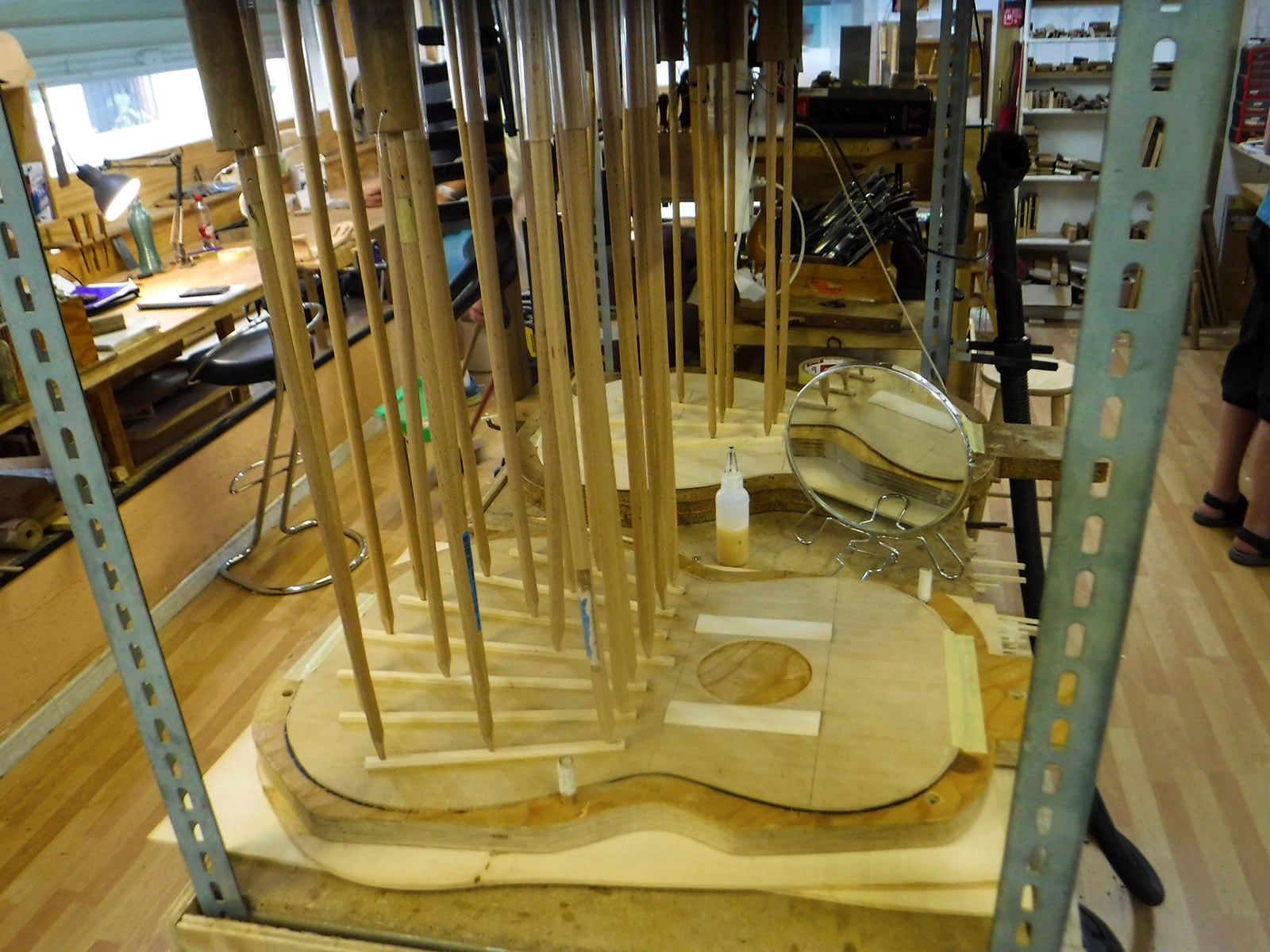
Photo by Karl Zuelke.
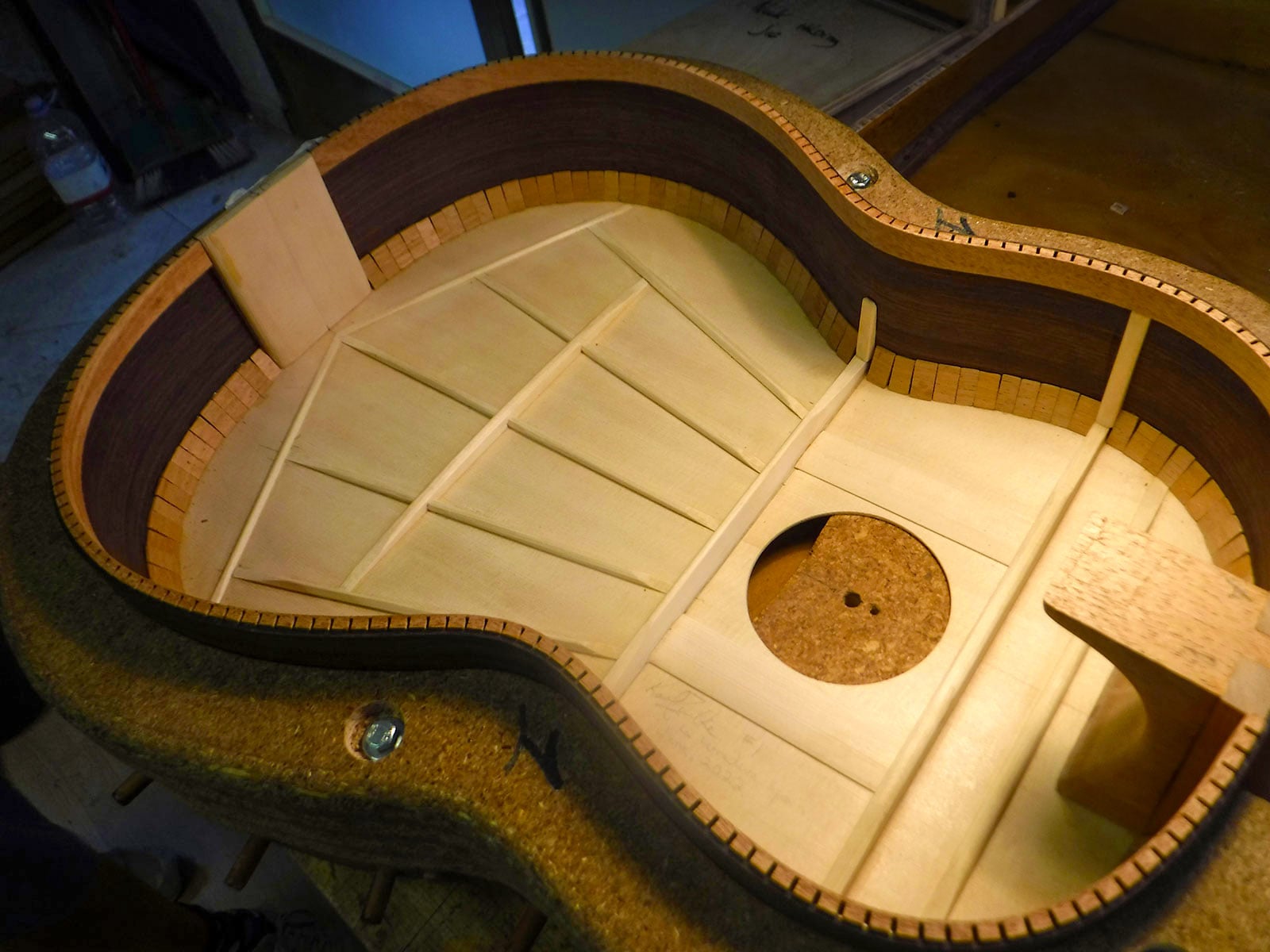
Torres took what was already a popular instrument and completely reconceived it, recognizing that the wood and treatment of the soundboard was key to the instrument’s tone, much more than the wood of the back and sides, which had been the prevailing idea. He enlarged the guitar, insisted on a thinner soundboard, and developed an approach to bracing the underside of the soundboard that is still often followed by guitar makers today. While the details in modern guitars may vary, the approach comes straight from Torres. The struts glued down to reinforce the fine, resonant top, that allow it to withstand the tension of the strings, are arranged in a “fan-brace” pattern, with the spacing of the thin struts narrowing toward the sound hole. The result in the Torres-inspired guitar is a rich, resonant tone that is penetrating, not loud. The tone of his guitars was revolutionary. Torres claimed that his instruments were the result of his fingertips sensing the individual characteristics of the wood, communicating their feel to his intellect, which determined how to work the wood until the top was ready. His instruments were products, then, of an uncanny sensitivity to the material—to the wood. Scores of talented makers since Torres have refined his approach, using their own sensitive fingers and their intellects. The modern classical guitar generally has more volume and projection than a Torres guitar from 150 years ago. But Torres set the standard, and contemporary guitar makers still follow his lead.
I sat in my chair all day like an egg in a carton, bald, fragile, but scooching down the difficult road that would lead me eventually back to health. And as I worked my way into learning about Torres and his genius with wood, I decided that when I came out the other side of this cancer/chemotherapy business, I would take it on. I would follow the example of Torres and make myself into a luthier. It’s an exotic word to my Midwestern American ear. The word was only coined in 1879, from the French. Originally applied to makers of lutes, the meaning has expanded to include makers of guitars and violins, and other wooden string instruments. You don’t see the word often, and many people wouldn’t be able to define “luthier” if they did encounter it. But that makes it all the more appropriate, as a snip of language that applies to such a specialized, demanding, and beautiful craft.
I spent motionless hours studying the instruments featured on guitar sites online. Luthiers these days have websites that showcase their work, and there are a number of broker sites that sell their instruments. These sites are professional and artful. They have to be, because they are catering to a clientele that is demanding, with significant disposable income, or else to serious professional guitarists looking to make a lifetime investment in a musical instrument they intend to merge their consciousness with. Through these websites I learned about the European Institute of Guitar Making (EIGM) in La Herradura, Granada, Spain. This was how to get started! I set my sights.
I recovered from chemo and the cancer was beaten. I don’t take credit for that. I couldn’t cure cancer on my own any more than I could ignore gravity or travel through time. The doctors, nurses, and scientists did it, though perhaps my desire to move toward a new adventure in life kept my spirits vibrant enough to make a difference. At any rate, I was back, and I had plans. I saved my money. I was just about ready to set up a visit to EIGM when the COVID pandemic hit, so that delayed things for two more years. But I got in touch with them and then approached my wife with the idea, who was a bit confused at first: “You want to spend how much? On what? In Spain? Really?” Well, a tentative initial reaction was understandable, though I had been obsessed with lutherie and guitars for a few years by then, and she knew that. But her support came around. I got in touch with Stephen, an Englishman living in Spain, who is among the preeminent master luthiers in the world and who started EIGM. I signed up, made arrangements for flights and lodging for a month, transferred funds, and in late May, boarded a plane bound for Spain.
You don’t have to explain why you love guitars in Spain.
La Herradura, in Spanish, means “the Horseshoe,” the town named for the horseshoe bay on the Mediterranean that situates it. The town has shaped itself to the bay’s concavity, arcing along the shore and up a hill that frames the east side of the bay. The west side is set aside as a marine nature preserve, reportedly one of the finest scuba diving sites in Europe. A main drag follows the curve of the shore, lined with restaurants, shops, and bodegas.
And because this is Spain, and in Granada to boot, the place seemed to me to be steeped in the guitar. We saw flamenco performances set up on small temporary stages in little public squares, where the locals drank wine and enjoyed the music and singing on warm summer evenings. We went to guitar concerts in the local municipal theater. Some talented guitarist practiced every night in the courtyard of my apartment building, so that flamenco echoed through every flat in the structure. It was wonderful. A major guitar competition is held in La Herradura every year. Andrés Segovia built a summer house that overlooks the bay. Segovia is responsible more than anyone in the world for encouraging the classical guitar’s worldwide acceptance as a serious solo instrument, on a par now with the violin and the piano.
I came to La Herradura to learn to build my own guitar. There were six people in my class, my roommate who was born and raised in Los Angeles, two British chaps, a woman from Ireland, and a guy from Finland. They were as friendly a group as anyone could wish for, and Stephen and his assistant, Alessandro, a 30-something Italian guy and an impressively accomplished luthier himself, were attentive and supportive teachers. They had to be supportive and attentive. I ran across a Facebook meme recently that explains why: “Building guitars looks hard, but it’s actually a lot harder than it looks.”
It was indeed challenging. It had been suggested that we design our rosettes, the pattern around the instrument’s sound hole, before we came. I did that, using the programs designed for that purpose, and designed the headstock shape as well. After a first meeting where we introduced ourselves and talked a bit about why we were in the course, Stephen asked what material we wanted to make our guitars out of, then pointed us to stacks of planks. The next month was going to be about working with wood. The planks included rosewood and some other species, and our choice of spruce or cedar for the soundboard, which will produce guitars that differ somewhat in tone. Spruce is known for its clear, bell-like tone, and its sound tends to project outward. Cedar is more intimate, surrounding the player with tones that are a bit more nuanced and complex. Though in the end, the luthier’s style and skill matter as much as the character of the soundboard wood in producing the guitar’s sound.
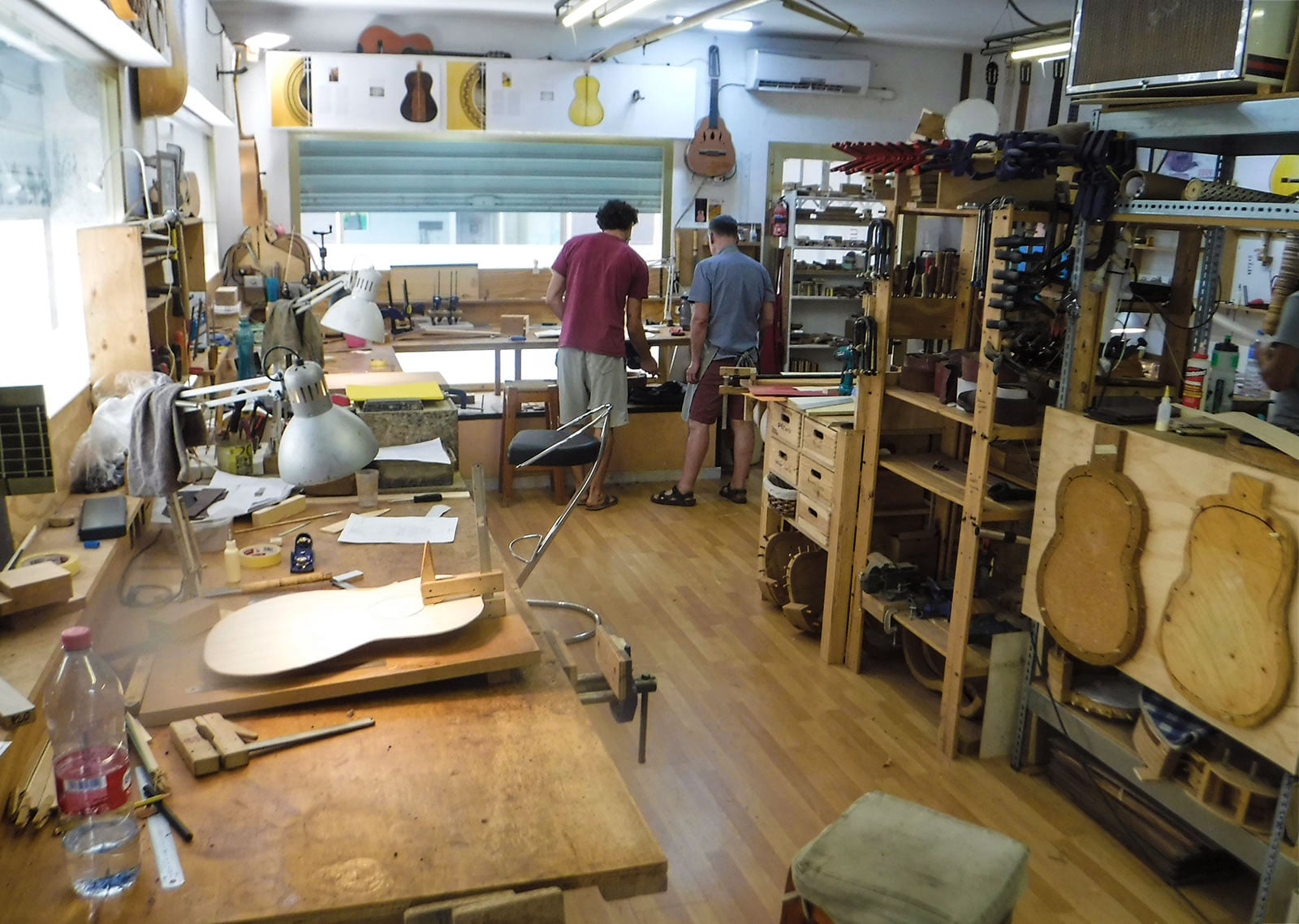
Photo by Karl Zuelke.
I chose a dark, purplish East Indian rosewood for the back and sides, a species that is usually plantation grown, mainly in India and Indonesia, and strictly controlled by both governments. Rosewood offers a brightness to the tone of the guitar. I chose a set of spruce planks for the top which had been cut in Germany 20 years earlier. I chose a thin board of black Gaboon ebony from Africa for the fretboard, the species that is most often featured on classical guitar fretboards. I also chose ebony strips for an insert and for the binding that circles the outside corners of the instrument, the ebony bordered by thin white strips of European sycamore.
For four weeks, we met at 9 a.m., worked for two and half hours, broke for coffee at a local café looking out to the sea, back in the shop by noon or so, worked until 2 p.m., then back to the flat for lunch, the main meal of the day in Spain, back in the shop at 3:30, working until 6. These were full days, characterized by wood dust, sandpaper and planes, chisels sharp enough to shave with, measurements down to the tenth of a millimeter, oscillating sanders, drum sanders, orbital sanders, routers and bandsaws, rasps and files, fish glue, hot animal glue, Titebond I glue, cyanoacrylate glue. The ryobi and the dozuki, Japanese handsaws engineered to cut a thin, precise kerf on the pull stroke. And the days were also about jigs and forms and plans: the “17 millimeter headstock jig,” the side bending machine, brass plans for tracing the guitar’s outline, a clever contraption to hold the router level while the binding channels are cut, the plantilla and the mold to shape the unfolding instrument, a jig to guide the drilling of string holes in the bridge, a jig to guide the drilling of tuning machine holes in the headstock, and another jig to guide the routing of the string slots in the headstock. The “go-bar” deck with its six-meter radius dish to form the subtle arch in the back and top of the guitar. Sanding blocks and calipers. In a word: heaven.
Stephen and Alessandro were terrific guides, showing us how to use the tools that for most of us were entirely unfamiliar. We had to learn them quickly and use them without a mistake. Mistakes would be more and more catastrophic as the weeks went on, threatening to ruin what had been accomplished up to that point. The teachers kept an eye out, saving us from many a tragic screw up, but we had invested so much time and effort that the dread of ruin hovered over us. But by the end of the month, we had made our guitars and were polishing the metal frets, filing the bone nuts and saddles, and stringing the instruments.
For the rest of my life, I’ll keep the ambience of the workshop in my heart. My bench, the sounds of the tools and the smells of the wood, the bitter taste of the Cedrela dust you lick off your lips, the music coming over the radio—always classical or flamenco guitar, since this was Spain—and the chatter of some excellent people who grew into luthiers together. And I think we all felt that for that month in the EIGM workshop, in La Herradura, there was nowhere else any of us wanted to be. While the workshop was run in English, the vibe was still Spanish. You don’t have to explain why you love guitars in Spain.
Karl Zuelke plays Fernando Sor’s “Etude in B Minor.”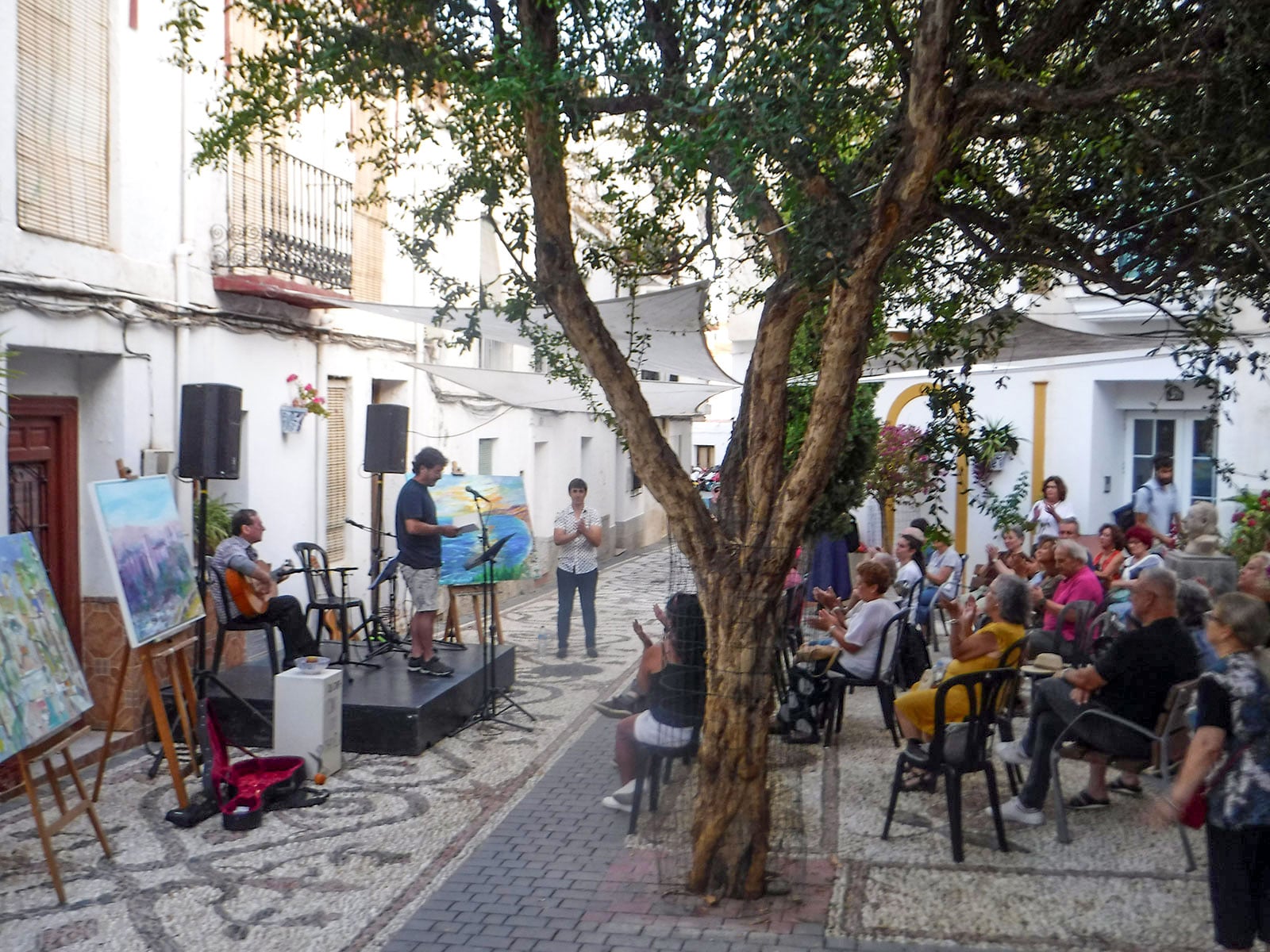
Photo by Karl Zuelke.
After the last Friday, after four weeks of painstaking work, EIGM threw a fiesta on Saturday morning. Five students remained. (One of the English members of our group was tragically forced to go home because COVID hit three of us, me included, but he just couldn’t shake it. He finished the course a year later.) We gathered along with 30 or so neighbors on the veranda of a beautiful villa high on the hill overlooking the bay, a magnificent setting, and listened to a performance on our guitars by some splendid musicians from the area. These guitars, as one performer explained, were babies. The music being played on them was moving, a wonder, but the instruments sounded new, and even my untrained ear could tell. It takes a cedar-top classical six months to develop its voice as the vibration of playing causes the wood to settle in and microscopically crystallize and rearrange at the cell level. It takes a spruce-top almost two years. The instruments weren’t grown up yet. But they would be, and when they came into their own, these were to be instruments of the highest concert caliber. They would fill Carnegie Hall with sound. They are lightweight, responsive, resonant. Their voices are not loud. They have a tone that is rich, and full, and like with all Torres-inspired guitars, it penetrates. The EIGM taught us how to build elegant guitars.
All during my month-long tenure in the workshop, I was never far away from an awareness of what had brought me there. The daydreaming, while I was stuck in my chair like one of those living animal sponges, or a barnacle out in the Mediterranean: animal, but like a plant, committed to being motionless. But out of my emplanted stillness arose a desire for motion again. Chemo and cancer left their marks: my feet are numb, my lips are numb, my fingers have lost some of their agility, my body will never have the energy and resilience it did before the disease and medication. I am still visited by bouts of nausea that can come from nowhere, at any time. I’m not complaining. These things all were with me in the workshop. But they were vastly outweighed by the sense that I was finally up and moving again, taking on something new and challenging in my 60s. I’ve continued now that I’m back on the Kentucky side of Cincinnati, setting up my own workshop, groveling through one mistake after another, on my own now without Stephen and Alessandro’s guidance. But once I make a mistake, and go back and redo it, I don’t do it again. I’m growing. Like those baby guitars, my voice will develop. I’ll be making guitars for real soon enough.
So, in a way, cancer brought blessings. Chemo brought something to me. One blessing was that out of those weeks of nauseated motionlessness sitting there in my chair, there arose movement, toward an adventure into craftsmanship and music, and a profound engagement with wood. The word “wooden” generally means dull, listless, immobile. But that is not fair to wood, because in the guitar—when it is treated with the empathy and understanding it deserves—wood moves. It is effervescent and vivacious, and it sings. Its wooden vibrations can even crystalize healing in the cells of our bodies and the cells of our souls. I grew to feel how wood moves, and I determined to move along with it. I’m still going. I built a guitar, a thing of immense beauty. I can play music on it: Tárrega, Sor, Barrios. And I will make other guitars, so that others can play too. Among the several things I am—son, teacher, dad, husband, writer, patient, friend, cancer survivor—I’m a luthier now. It’s a beautiful word.
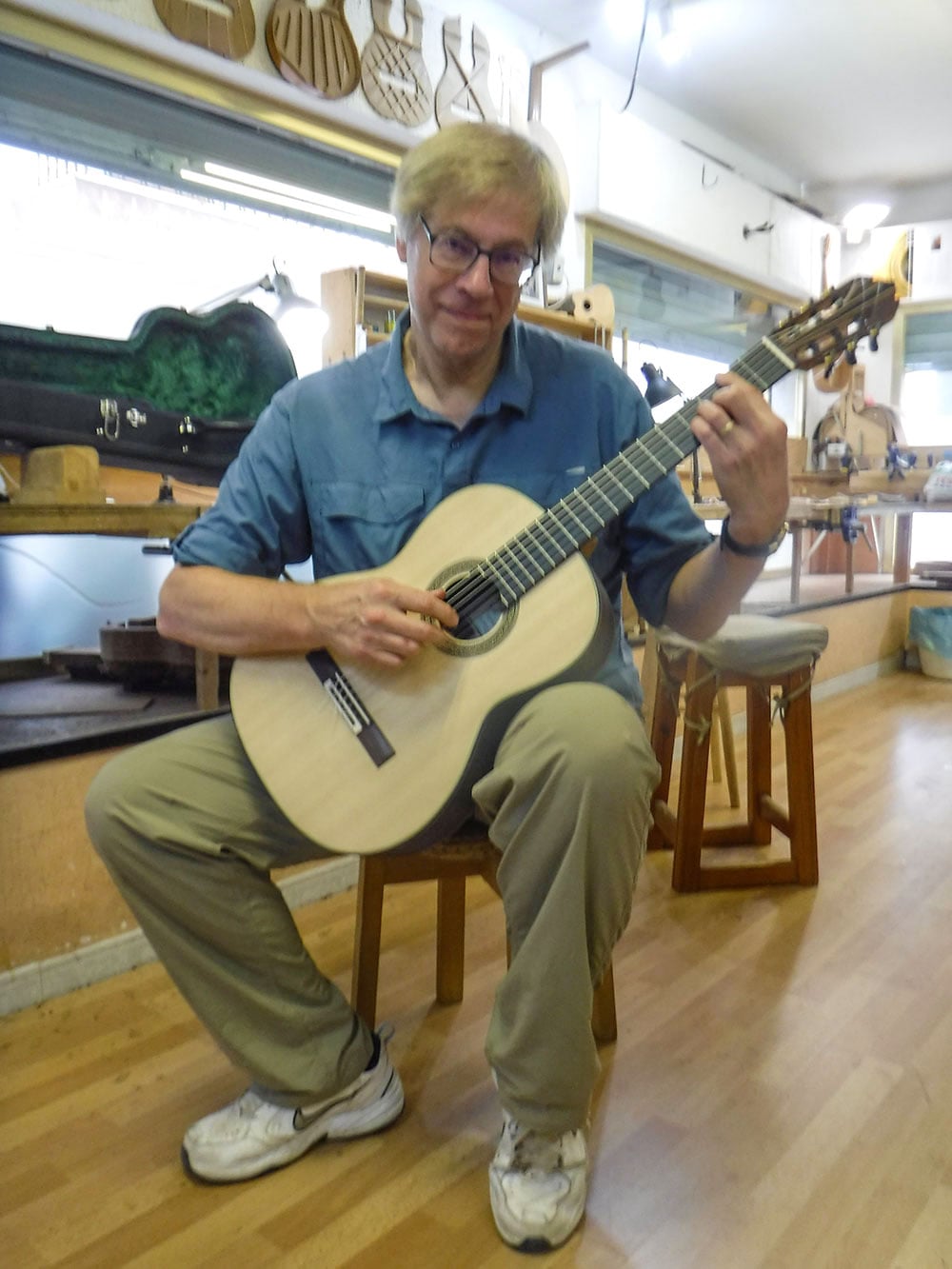
 Karl Zuelke’s stories, essays, and poems have appeared in The Antioch Review, The Journal of Kentucky Studies, Willow Springs, The Briar Cliff Review, ISLE, and elsewhere. His collection of poems, Petting the Bumblebees, is available from I-BeaM Books. Dr. Zuelke is a writer, a teacher at the Art Academy of Cincinnati, and a luthier.
Header photo by Karl Zuelke. Photo of Karl Zuelke by Jennifer Morris.