
Old Roads, New Stories: A Literary Series
Leading up to the nation’s 250th birthday, “CBS News Sunday Morning” put together an “Essential American Songbook”—250 songs, so quite a long list, nearly four times longer than the list of 71 from NPR. I think both lists are interesting, and far better than whatever Trump’s Great Fair/Capitol Fourth concert was. But even so, though I looked and looked, I couldn’t find Thelonious Monk.
Duke Ellington was there on the lists. And Louis Armstrong, Billie Holiday, Ella Fitzgerald, Dizzy Gillespie, Nina Simone. John Coltrane, yes. And Miles Davis too (except it should have been for “So What” from Kind of Blue. That album belongs on the Voyager alongside J.S. Bach). There were even two songs by Charles Mingus, and one of them was “Goodbye, Porkpie Hat.” An excellent song and a fitting choice since “Porkpie Hat” was Lester Young; it was one of his nickname’s along with “Pres.” Lester Young played with Count Basie and Billie Holiday, so he was like a through-line from swing to be-bop. An excellent through-line, a tenor-sax inventor, and he also coined the word “cool,” so that’s cool too.
The other song by Mingus isn’t the one I would’ve chosen. They chose “Orange Was The Color Of Her Dress, Then Blue Silk,” but that song seems less “American Anthem” to me than “Better Git It In Your Soul.” That’s a better-fitting title, for one thing. It’s also a kick-ass song, including the spot with the growl-shout “Hallelujahs.”
But where was Thelonious Monk?
It’s possible that I missed his name. Easy enough to do with a list this long. And, really, they could’ve had a simpler arrangement, more like the opening credits in a movie: lead actors first, or else save the big name for the end. Like, “Starring these musicians ‘with Thelonious Monk’.”
Actually, that’s the way I first found out about Monk. The library would let you check out albums, and I did it a lot. Art Blakey, for instance. I liked Art Blakey. So one time I grabbed a few records, including Art Blakey’s Jazz Messengers with Thelonious Monk.
My first impression, as I listened, was Monk was… weird.
Weird mixed together with Man, but I like this!
He sounded half brilliant, half plunking through a piano lesson. Like the jagged atonality and off-note raggedness were the point.
Then I saw in the newspaper that there was a documentary about him: Straight, No Chaser. It was screening at the Neptune up in Seattle, only an hour from Tacoma, so I went, and that cemented it. Monk became a new favorite.
The CBS and NPR lists are like this too—full of people’s favorites—and I’m grateful that they’ve given us these catalogs to listen to, given us this music to appreciate… but also to quibble with, quietly, in our heads. Like, No way that I would’ve picked this song… Like, Yeah, okay, but I can think of better ones…
Take “Oklahoma!” for example. If that song’s on the list to be satirical (and I can’t think of any other reason it would be), then why not go with Tom Waits singing “Step Right Up”? A fantastic song back in ’76 (our bicentennial year), and it’s even more satirically American-anthem-ish today. It’s the best like Monk is the best.
Or take Helen Reddy’s “I Am Woman.” To me, that’s a good song. Sure, it’s fine. But I would’ve gone with Nikki Giovanni. Her “Ego Tripping” is the best like Monk is the best.
And what in the world is up with Twisted Sister? How did they make it on the list? I would’ve sidelined “We’re Not Gonna Take It” to clear a spot for Gil Scott-Heron. “The Revolution Will Not Be Televised” is Monk-level good, and Twisted Sister isn’t. Nope. Not even when I was in high school and MTV played their video every hour.
Anyway, Thelonious Monk. Monk is why I’m adding these songs to the list, even though I shouldn’t need to:
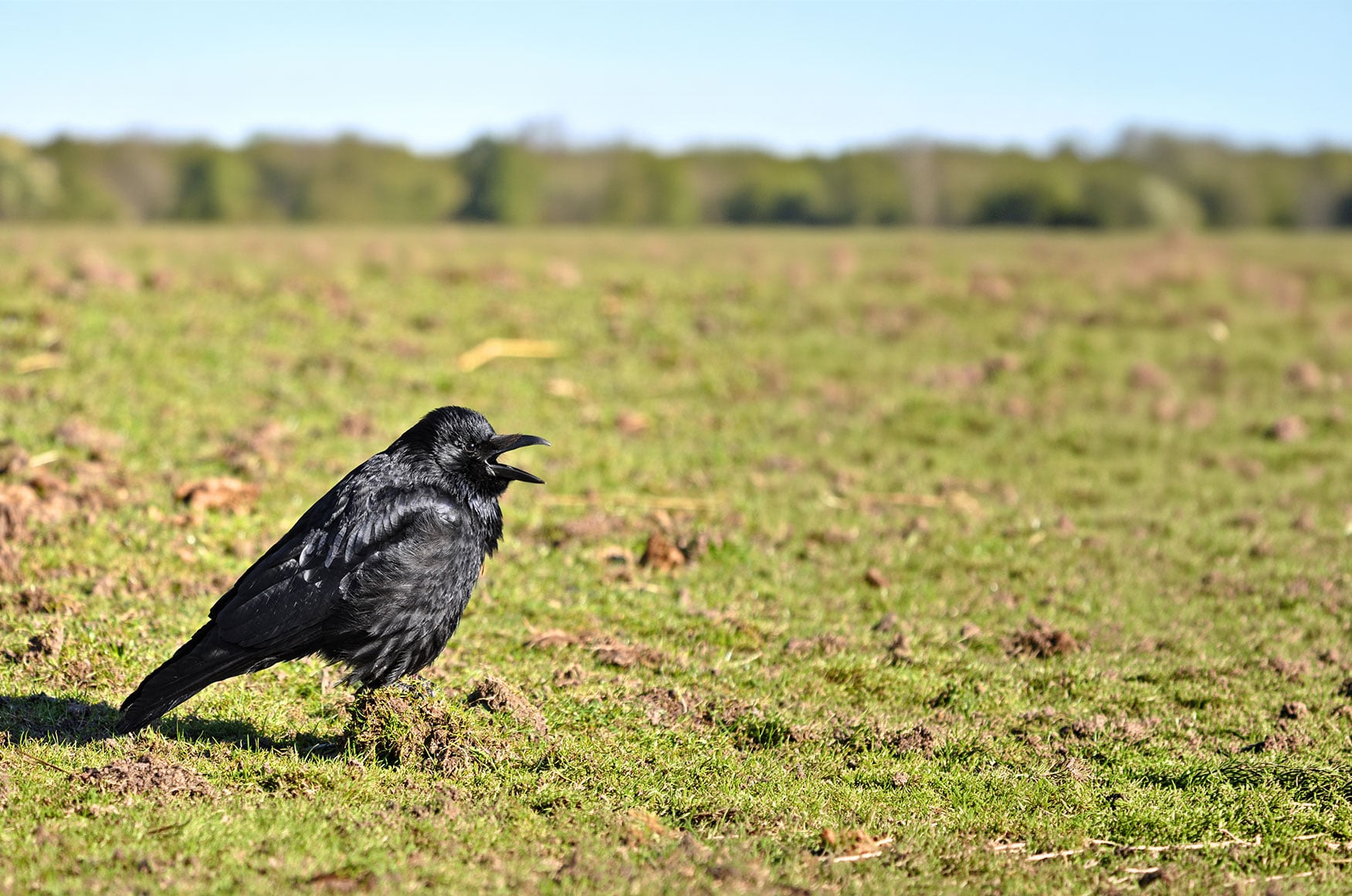
I realize this month is already full of listed highlights. But doing the same thing a lot of times doesn’t stop crows. They’re always listing things: what they see, what they hear, what they’re thinking about. They’re always cawing out with gratitude or warning, cawing out good discoveries or problems to avoid.
Now that we’ve turned 250, maybe that could our birthday wish. Nothing excessive or greedy, just to be more like crows.
 Rob Carney is the author of nine books of poems, including The Book of Drought (Texas Review Press, 2024), winner of the X.J. Kennedy Poetry Prize, and Call and Response (Black Lawrence Press, 2021), and his collection of creative nonfiction, Accidental Gardens: New & Revised (Wakefield Press, 2026). His work has appeared in Cave Wall, The Dark Mountain Project, Sugar House Review, and many other journals, as well as the Norton anthology Flash Fiction Forward (2006). In 2013 he won the Terrain.org Poetry Award and in 2014 he received the Robinson Jeffers/Tor House Prize for Poetry. He is a Professor of English at Utah Valley University and lives in Salt Lake City. Follow his Terrain.org series Old Roads, New Stories.
Read an interview with Rob Carney appearing in Terrain.org: “The Ocean is Full of Questions.”
Read Rob Carney’s Letter to America in Dear America: Letters of Hope, Habitat, Defiance, and Democracy, published by Terrain.org and Trinity University Press.
Read poetry by Rob Carney appearing in Terrain.org: 6th Annual Contest Finalist, 4th Annual Contest Winner, and Issue 30. And listen to an interview on Montana Public Radio about The Book of Sharks.
Header photo by Mabel Amber, courtesy Pixabay.