



Introduction
 Suzanne Stryk’s ARTerrain portfolio is a series of drawings using freely applied plant stains (made from walnuts and coffee) along with acrylic and pencil for the details of animals.
“I see the drawings as a dialogue—as in life itself—between the overwhelming tangle of life and the crisp, if fragmentary, vision emerging from it,” she says.
These works include creatures found around the artist’s home turf in the Blue Ridge Mountain region of Virginia. “Among all the chaos of leafy growth I might discover a warbler, snail, or a salamander, and for a brief moment our lives intersect,” Stryk says. “That’s a magical moment for me.”
ARTerrain Gallery by Suzanne Stryk
Conceptual Nature | Drawings
Images in this gallery may not be copied or otherwise used without express written consent of the artist. Click image to view in larger size.


About the Artist
Suzanne Stryk was born in Chicago and grew up in the prairie state of Illinois, where as a child she’d hide in tall grasses pretending to be Meriwether Lewis observing a new bird or bug. In 1986 she left the Midwest to settle with her husband and son in the “salamander capital of the world,” southwest Virginia. Without knowing she had connections to the city, a Virginia curator once said her art seemed Chicagoan—strongly figurative with a touch of surrealism—and she’s been puzzling about that recognition ever since, wondering how place roots itself in the psyche.
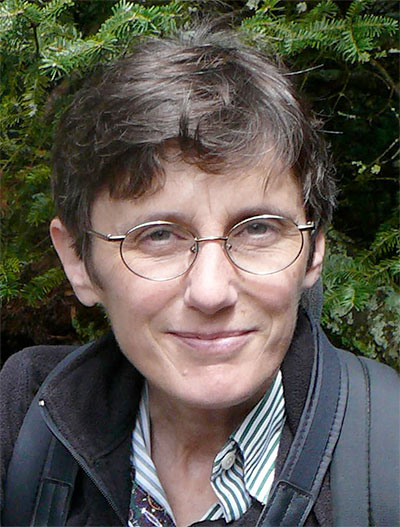
Since 1990 Suzanne’s shown her conceptual nature paintings in over 40 solo exhibits throughout the country. Her installation Genomes and Daily Observations was exhibited in 2007 at the Morris Museum of Art (Georgia), and later that year she showed a new series of paintings, Green Evolution, at the United States Botanic Garden Gallery (Washington, D.C.). Her images have appeared in numerous publications, including Art Papers, New American Paintings, and Writing the Future: Progress and Evolution (MIT Press), with full portfolios in Orion, Shenandoah, and Ecotone.
Many of her paintings have been acquired by permanent collections, encouraging her to feel that “if the world as we know it continues, a few of my images might be there for those who care.” These venues vary from The Taubman Museum of Art (Roanoke, VA) and The Tennessee State Museum to the National Academy of Science (Washington, D.C.). The Smithsonian’s National Air and Space Museum added one of Suzanne’s paintings to its Art and Flight collection. “It’s nice to think my homage to bird flight is nestled beside all those metal flying machines,” says the artist, “reminding people the invention of flight was long before us.”
In 2005 the William King Museum, an affiliate of the Virginia Museum of Fine Arts, organized her mid-career survey—Second Nature: The Art of Suzanne Stryk. “This was a milestone in my life. Preparing for it made me aware of my evolution as an artist,” she states, “and helped me discover my own natural history.” Beginning with her gouache painting Prairie Cycle from the early 1990s, the exhibit was brought up to the moment with the sculpted nest and bird in Little Wing (2005). It even had one slightly surreal painting of a salamander.
Stryk’s series “Notes on the State of Virginia” toured the state from 2013-2018 and is now in the collection of the University of Virginia. The creation of that series inspired her hybrid art/creative non-fiction book, The Middle of Somewhere: An Artist Explores the Nature of Virginia. The artist explains that she can express different things through writing and art. She writes, “Nothing compares with the visceral, intuitive act of smearing viscous paint or arranging some rusty metal with ripped paper to create a suggestive object. Yet nothing compares with chiseling an experience into words.”
Learn more about Suzanne Stryk at suzannestryk.com.
All images courtesy Suzanne Stryk.
