
because the world didn’t end
the year the butterflies were due, we waited.
my father, a man made of salvaged wood
taught me to find the north star
by following the arc of the dipper’s handle.
he never said what to do if the sky fell.
i remember the texture of a peach. the fuzz
against my teeth, the juice a modicum of forgiveness.
what does it mean to have a body? this,
i think, and the scar on my knee from dying young.
the boy who lived next door, the one who smelled of chlorine
and blacktop, he told me once a tooth is a star
that has forgotten how to burn. his are gone now.
somebody’s father was a closed fist. somebody’s mother
was a window left open in the rain.
we learned to measure time in songbirds.
the mourning dove, a question.
the cardinal, a streak of blood
against the snow. i catalogued the names
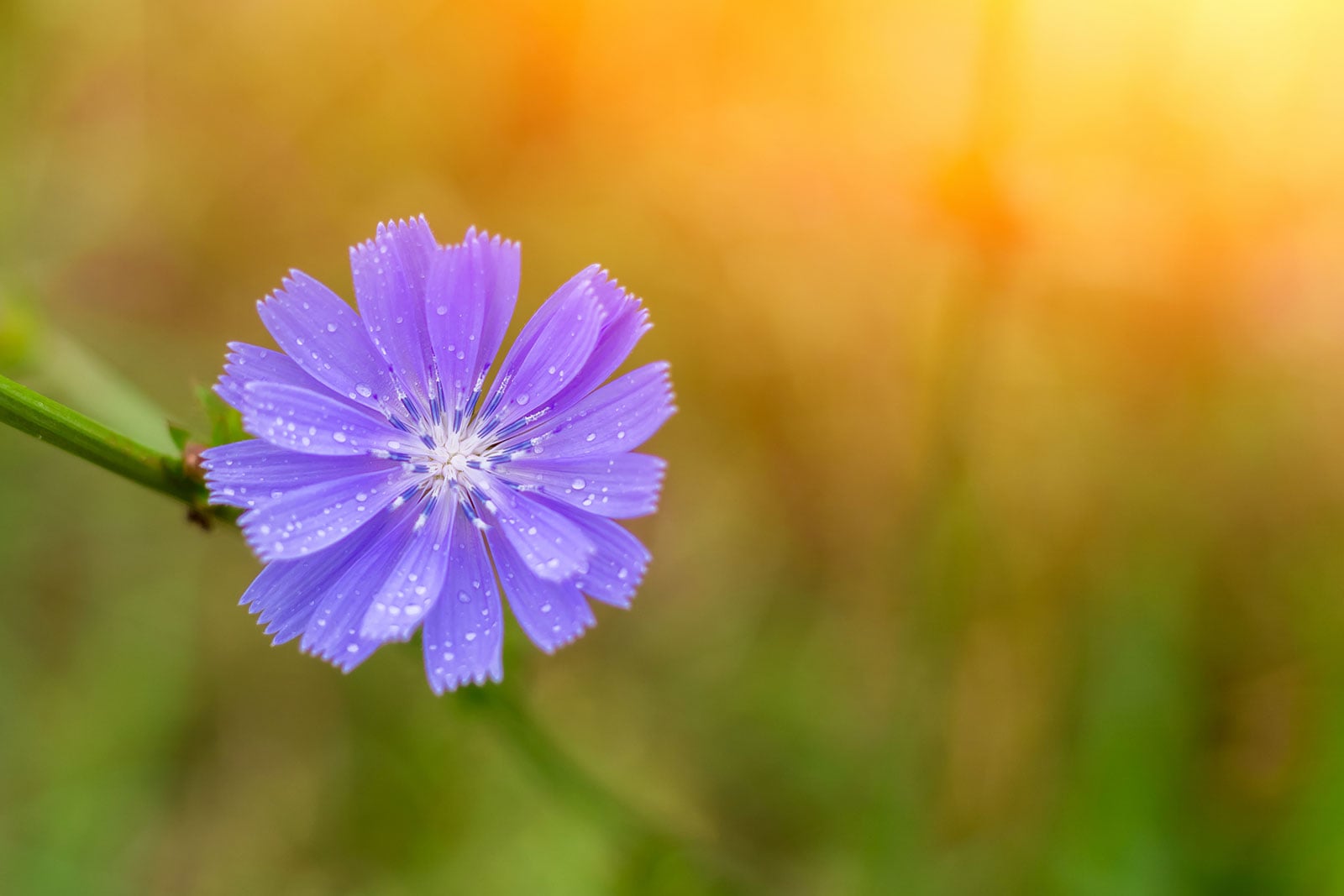
of wildflowers: black-eyed susan, chicory,
the wild, feral blue of a bluet.
it felt important, this naming of things that would die anyway.
it was a kind of thanksgiving, i think.
a way to say i was here. i saw this.
today, a headline about a dead whale, its stomach full
of our discarded plastics. it is hard to know what to do with such a thing.
hard to know what to do with the fact of my own breathing,
the small, steady engine of my heart.
you taught me a poem is a house with two addresses.
i am still trying to find my way home.
i am still trying to write a door.
the world didn’t end, so we woke up.
we made coffee. we took out the trash.
my father’s hands, how they tremble now
when he holds a glass of water. the world didn’t end.
and for that, we are both terribly, terribly grateful.
and for that, we are both terribly, terribly sorry.
Affidavit for the Floodplain
I said I would not speak of the water but the water speaks in me, a brackish
syllabary in the back of the throat. Says nothing of thirst. Says everything of the taking.
This was the pact: for 12 kinds of meadow grass to prosper, the river
would keep its own counsel between the teeth of the levees,
the cottonwood seeds would remain a scripture for wind, not for currents.
A quiet husbandry of acreage and sky.
But the water is a poor negotiator, an apostate of every promise.
It comes now not as a cleansing but as an erasure of pigment. The world rendered down
to a single alluvial shade, a sepia stain over the property line.
It finds the flaw in the concrete foundation, the hairline fracture
that becomes a door. It enters not as a guest but as the deed-holder.
My neighbor’s mare, a ghost of a thing tangled in the low branches of an oak.
Her eye a black pearl, an unblinking verdict. There is no catechism for this.
§
Let this be entered into the record:
the field swallows the sky’s pewter light & does not give it back.
The submerged fenceposts are notes on a staff a music for no ear.
At 37.8 feet, the bridge became a myth.
At 38.1 the spire of the white church belonged again to the mud.
This is the body as a low-lying pasture, how it learns the weight
of what falls from above. A sovereignty of skin tested by accumulation,
the slow rising of a foreign weather system inside the sovereign state.
You asked for a sign and the world gave you saturation.
The deer are learning to be fish, their panicked hearts fluttering gills into existence.
I am learning the patience of the silt, which takes everything it is given and makes
a new floor. A feral cartography.
To stand on the roof with the last of the dry kindling is its own kind of prayer,
a pyre waiting for a god who has already looked away.
The chimney, a cold throat.
I hold this granule of truth:
a thing does not have to be beautiful to be holy.
The drowned field does not ask for my love.
It asks only that I witness its shimmering, terrible claim,
that I remember the exact pitch of the barn buckling under the pressure—
a sound like the first gasp after a long time spent under.
A sound like a lung filling with its own dark country.
Where the Reservoir Gave Us Its Last Three Coins
It was summer.
The cicadas drilled the sky until it was hollow
and the chemical plant across the water
breathed out a plume of pale, industrial fog
that we called God’s tired breath,
& we were prophets of the bruised twilight, our knees
stained with the gospel of iron ore and runaway thistle.
The sun was a hammer, the air a sheet of warped glass,
and the reservoir, our blue-throated god, was shrinking.
Every day another foot of cracked earth appeared,
a new shoreline of mud and busted glass
gasping at the heat, a ribcage of old sorrows
emerging from the water’s
slow exhale.
We were not children. We were
feral committee of limbs & whispers,
sworn to the jurisdiction
of railroad ties and the sweet, black bleed of creosote
under our fingernails. We knew the secret names
of the drowned town beneath us—the steeple’s ghost,
the phantom of the general store—
& that summer, we became its archaeologists, its frantic, sunburned curators.
The water pulled back and offered up its dead:
a doll’s head, porcelain-crazed and eyeless,
a clutch of soda bottles thick with green algae,
a single patent leather shoe breathing mud.
And we walked the receding edge
as if it were the lip of a new planet, the ground still wet
with a memory of being submerged.
The heat made the world shimmer and bend. You said the horizon was a lie
the sky told the earth to keep it from leaving.
I believed you.
I believed everything then.
Then, the discovery. Near the stump of a petrified oak, half-sunk in the grey, sucking clay,
three coins. Not pennies. Not dimes. Something older, heavier.
Silver dollars, maybe, or tokens from a forgotten transit. They were slick with a primordial cold,
heavy with the pressure of decades spent in the dark, silent deep.
They did not belong to us. They belonged to the water, to the quiet, to the crushing
weight of all that blue.
We held a council among the cattails, the air thick with the drone of dragonflies.
There was no question of keeping them. That would be a kind of theft from a lung, a sacrilege.
You, with the hawk-scowl and the chipped front tooth, you decreed the ritual.
One for the past—for the drowned houses and the silent, floating bell.
One for the present—for the magnificent, terrible drought and the thirst of the cracked earth.
And one for the future for the return of the water, a prayer that it would come back
and swallow the ugliness of the world whole again.
We threw them, one by one, arcing them out toward the pathetic, diminished center
of the lake. We didn’t hear a splash. Just the soft, greedy thump
of metal hitting mud. A sound like a heart stopping.
A sacrifice. A payment. A pact.
§
The memory is a faulty engine.
It sputters. It catches on a scent—not creosote, but the ozone-tang of an old CRT monitor.
The adult mind attempts a diagnostic:
function recall_the_bottom()
{
let mud = texture.slick + smell(decay_root, lost_metal);
let sun = intensity(108.3_F) * vector.glare;
let boys_voice = timbre.hoarse + pitch(prophecy);
let coins = array[Ag_1, Ag_2, Ag_3];
if (location.is_real == false) {
panic(“ERR_404: LANDSCAPE NOT FOUND”);
self.destruct(sequence.nostalgia);
}
for (i = 0; i < coins.length; i++) {
throw(coins[i]).to(vector.center_of_loss);
await(sound.promise);
// promise does not resolve
}
return event.significance;
}
// returns null. always returns null.
§
There is no map to that country now, only the ghost-ache of a horizon
where the chemical plant once stood. The reservoir was deemed a hazard, a liability,
and was drained by men in white suits, its muddy bottom scraped clean and filled
with gravel and earth movers that groaned all night under sodium lights.
Now a distribution center hums its one low, electrical note where the water used to dream.
Tractor-trailers slide into docking bays built over the spot where we threw our silver prayers.
The ground is flat. The sky is empty. The cicadas are gone.
And you, you have a place like this. Not a reservoir, maybe. A field. An alley.
A stretch of woods behind a house that has since been torn down. A place where you were
more yourself than you have ever been since. A territory of the soul that has been paved over,
and you are its sole, exiled citizen, holding a passport stamped with invisible ink.
Sometimes, in the silence between one thought and the next, you can almost feel it—
not the memory itself, but the shape of its absence.
The boy who was you, the girl who was you, still standing there on the cracked, baking earth,
arm still raised from the throw, waiting for a sound that will never arrive,
waiting for the rain, for the water to rise and keep its promise.
That summer is a closed file, marked § 3.14159… an irrational and endless number
you can recite a hundred digits of but never, ever reach the end.
You can buy a silver dollar online for 27 dollars plus shipping.
It will feel light in your hand. It will feel like nothing. It will feel like a lie.
Because the truth of it cannot be held, only felt as a sudden, sharp drop in atmospheric pressure inside you,
the phantom coolness of a metal thing pulled from a dying god’s muddy palm,
and all you own of it is the phantom weight of three coins in a pocket you no longer have,
a cool, metallic trinity promising a return to a shore that the water, and then the world,
swallowed whole.
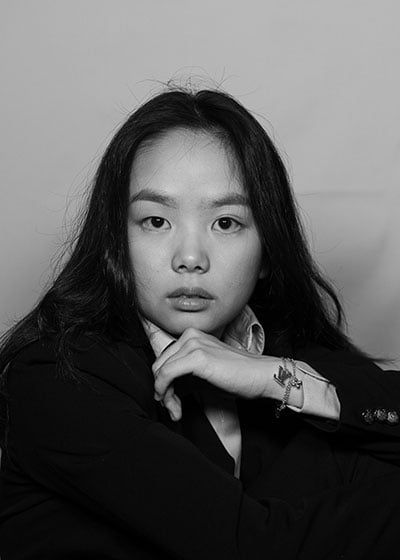 Hayden Park is a writer and musician from Southern California. She is the winner of The Malahat Review’s 2025 Constance Rooke Creative Nonfiction Prize, a Pushcart Prize nominee, a YoungArts Winner with Distinction in Fiction and Winner in Nonfiction, and a Scholastic National Medalist. Her work appears or is forthcoming in Zone 3, The Shore Poetry, Moon City Review, and elsewhere.
Header photo of chicory by BokehStore, courtesy Shutterstock.