
Prose by Gregory McNamee
Photos by Stephen Strom
 |
 |
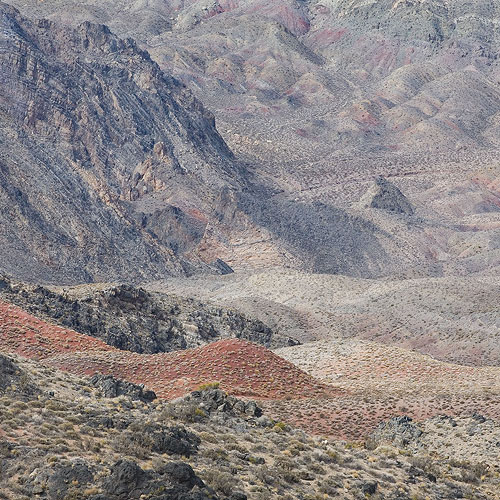
The world’s great desert systems, which make up some 20 percent of the planet’s surface, comprise harsh environments: landscapes of burning sands and desiccated vegetation, gravel and dead streambeds, and everywhere a chaos of mountains and dust. They are less single entities than a multifaceted series of microenvironments, which some scientists break down into types like sicci deserta (dry desert, like that of the Great Basin), mobili deserta (wandering desert, like the great dunefields of the central Sahara and of the westernmost Sonoran Desert, where California, Baja California Norte, and Arizona meet), rupi deserta (rocky desert, like that of southern Arabia and the Laramide orogeny–formed hoodoo fields of the Arizona highlands), and saxi deserta (stony desert, like that of central Afghanistan and the Papaguería). By one measure, such microenvironments, punctuated by riparian corridors and mountain-island systems very familiar to those of us who live in the Southwest, comprise the largest geographical feature on Earth: the Eurasian Palearctic Desert, which begins at the Atlantic and ends very near the Pacific, embracing the Saharan, Arabian, Iranian, Turkmen, Indian, Taklamakan, and Gobi deserts. Layered hillsides, Titus Canyon, near Death Valley, California |
| |
Terrain.org: A Journal of the Built & Natural
Environments
© Copyright 2010 by Gregory McNamee and Stephen Strom. All rights reserved.