|
||
|
||
|
||
|
|
|
 |
 |
 |
|
|
|
What a Fool Believes... Back to Basics
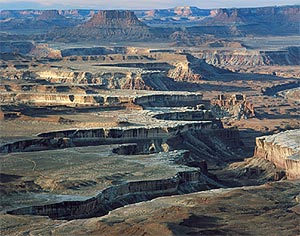
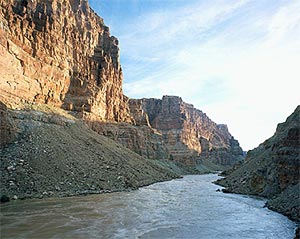
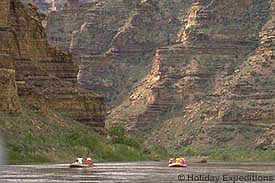
I haven’t spent much time in the true desert, or in the increasingly watered version that is replacing it. I did glimpse, though, the true desert’s power during a weeklong canoe trip on the Green River in Canyonlands National Park in July 2001. I hesitate to say that we canoed, however, because that implies we exerted ourselves by paddling our boats down the river. Perhaps floated is a better descriptor. It is not that we didn’t paddle at all, though. On the first day of the trip, for instance, we rowed with all the vigor of a college crew team, which had an intoxicating effect on us. After spending almost eight years hiking and snow-shoeing through the mountains of Colorado, it felt wildly different to primarily rely on my upper body to propel my movement in the world. Notwithstanding the exhilarating rhythms of rowing, we soon experienced a couple of things that changed how we approached the river. As we were putting the canoes in the water at the beginning of the trip, one of the fellows who rented the boats to us mentioned in passing that we may encounter a few bugs during the first fifteen to twenty miles of the trip. We listened politely, but sort of shrugged him off and hit the water. About five o’clock, we pulled over to the east side of the canyon and climbed up a hill to an open, flat area suitable for camping. The hordes descended on us immediately. To protect myself, I put on long pants and a long sleeve shirt. It worked, kind of—I didn’t get bit up as bad, but I still got bit up. Although the clothes covered my legs and arms, the bugs chewed through the additional layer to feast on my skin. Besides gaining a newfound respect for the tenacity of the bugs on that stretch of the river, we learned an invaluable lesson about summer in the canyon. Remember, this was July, in the desert, with the sun beating down on us. I was now in long pants and a long sleeve shirt, and it looked like it was going to be a few hours before the sun set behind the west side of the canyon. I was face to face with a serious choice: To be hot and bit up or to be roasting and bit up, just not as bad. I chose the latter.
When the sun finally set behind the canyon, we started a fire to cook our dinner. We also thought the smoke from the fire would keep the bugs at bay. We were wrong—again. The bugs plowed through the protective layer of smoke to where we were standing near the fire and sent us scurrying to our tents to eat our dinner. Shortly after we finished, we turned in for what proved to be a long night of fitful sleep. As we lay in the sauna-like conditions of our tents, the bugs made their way through our tent walls and descended upon us. I eventually passed out in the fetal position, covered in sweat and bugs. Although I am typically a late riser, I was the first one up the next day. We packed up our gear in record time and hit the river. While weary from the lack of sleep, we were equally desperate to get another five to ten miles down the river and away from the bugs. We paddled vigorously until lunchtime, when we found a sandbar in the middle of the river. The clouds covered the sun as we sat in the sand and concentrated on chewing our sandwiches. I had been so focused on rowing that I forgot what I was rowing away from. After a couple of minutes of sitting in silence, I remembered. I looked around and was ecstatic to see that we were free of the bugs. We were also way ahead of schedule. Between our enthusiasm on the first day and our desperation on the second, we had paddled further down the river than we expected. It was time to slow down. After lunch, the sun came back out. We spent the rest of the afternoon drifting from one shady spot to the next along the canyon walls. As the late afternoon approached, we began to look for real estate for the night—this time along the already shady west side of the canyon. Soon thereafter, we found a sandbar large enough to hold our three tents. Upon setting them up, a tremendous gust of wind came roaring through the canyon and sent us diving onto our tents to keep them from blowing away. We laid in the sand, holding our tents down, for a solid sixty seconds. And then it stopped. It was time to eat. While a few folks prepared the meal, a couple of us gathered scraps of driftwood on the sandbar and built a fire. We glanced at the ridge on top of the eastern wall. The sun shone brilliantly on it. Just glancing at it made me sweat. That evening, we ate and relaxed around the fire—free of the indefatigable bugs and oppressive heat of the night before.
The rest of the trip was pretty simple. We got up each day, put our boats in the water, and drifted down the river. We actually spent most of the time out of the boats, floating next to them in the water. In the late afternoon, we found our spot on the west side, endured the daily gust of wind that soon occurred, and then went about fixing dinner and making the fire. Not one specific thing moved us from the paddling to the floating perspective. It was the cumulative impact of several—the relief of being free of the bugs and the heat, the comfort of the sandbars on the west side, the simplicity of preparing food and building a fire. In the true desert, you are brought back to basics. Over the course of several days, the person that enters the desert—the one that paid attention to the almost deafening noise of modern life—is broken down bit by bit, leaving pieces of himself floating down the waters through the canyon. In its place, the person that remains focuses on the simplest of things, like finding a shady spot along the canyon wall. This kind of focus creates space for something else to be built up. This something is much more mysterious—some think of it as religious, others think of it as spiritual. I don’t know what it is, but I have been fortunate to feel it. Even though it is rare, and it dissipates soon after you return to the daily grind, it does leave its imprint on you. There is many a day that I feel the sun upon my face and see the blue sky above me and the red canyon walls out of the corners of my eyes as I float effortlessly on my back down the river.
|
|
|
|||||||||||||||||||||||||||||||||||||||||||||||||||||||||||||||||||||||||||||||